 Main menu

Financial
Macau Gambling Revenue Surges 28 Percent in April, Confounding Expectations
Posted on: May 1, 2018, 04:00h.
Last updated on: May 1, 2018, 12:28h.


Macau recorded its 21st consecutive month of growth in April as the enclave blew analysts’ expectations out of the water with a 27.6 percent year-on-year increase, according to figures published Tuesday by the Gaming Inspection and Coordination Bureau.
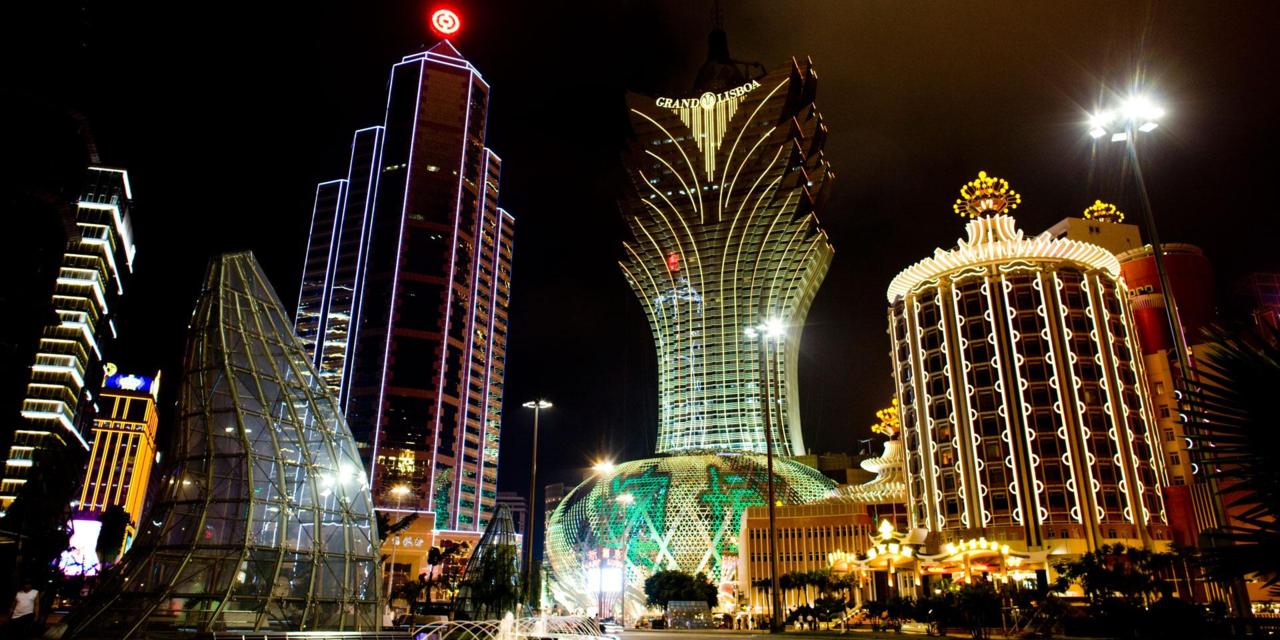
Separate figures, released by the Macau Statistics and Census Service, showed a 9.2 percent year-on-year increase in the number of tourists visiting Macau during the first quarter of 2018, to 3.4 million. This resulted in an average hotel-occupancy rate of 88.8 percent, up 6.3 percent in comparison with the previous year.
Macau gambling revenues in April reached $3.2 billion. These figures soundly beat the consensus of 20.5 per cent growth – the median total of analysts’ predictions compiled by Bloomberg.
Growth Despite ‘Unfavorable Calendar’
Angela Han, analyst at the China Renaissance investment bank, told the South China Morning Post that predictions for April had been cautious because, after a strong March, it was thought that mass market customers from the Chinese mainland would defer their visit to Macau until later in the year.
But gamblers appear to have flocked to the enclave during the three-day “mini Golden week” holiday, from April 29 to May 1.
Grant Govertsen, of Union Gaming Securities Asia Ltd, said in a note:
The growth came despite an unfavorable calendar, with one fewer Saturday… On a gross gaming revenue (GGR) per day basis, April’s … was impressively in line with both of the recent holiday months: October (Golden week) … and the combined Jan/Feb (Chinese New Year).”
“With GGR growth accelerating and both VIP and mass remaining above 20 percent growth, we remain bullish on the market and have a high degree of confidence in our 17 percent GGR forecast for the year with a bias to the upside,” he concluded.
The Gamblers Are Back
Macau was damaged by Chinese President Xi Jinping’s “anti-graft campaign,” which kicked off in 2014 and scared off the high-rollers that once accounted for 60 percent of the casino sector’s gambling revenues.
The crackdown triggered a two-year economic slump before the market bottomed out in the summer of 2016.
In the meantime, Cotai’s integrated resorts repositioned themselves as family friendly destinations with new non-gaming attractions. The mass market drove the recovery, but, slowly, the high-rollers returned too.
Macau’s gaming revenues are not yet close to their 2013 high of $45 billion, but they’re heading in the right direction.

 Most Read

Another Shooting Near Las Vegas Strip Casino Injures Man
 972,601 views
Vintners Oppose Napa Valley Casino
556,217 views


Conversation (0)
Be the first to comment on this article.