 Main menu


Vegas Myths Busted
VEGAS MYTHS BUSTED: The El Cortez Invented the Vegas Casino Buffet
Posted on: November 16, 2026, 07:23h.
Last updated on: November 16, 2026, 05:28h.


Historian Hal Rothman, writing in his 2002 book Neon Metropolis, credits casino executive Davie Berman and chef Nat Hart with introducing the Las Vegas casino buffet at the El Cortez around 1945. The Jewish-style spread reportedly featured lox, whitefish, herring, and other traditional foods.
“A Las Vegas tradition, the buffet, was born,” Rothman wrote.
There is, however, a much better-documented candidate, whose buffet is already credited by most experts as the town’s first.
Smorgasbord of Baloney
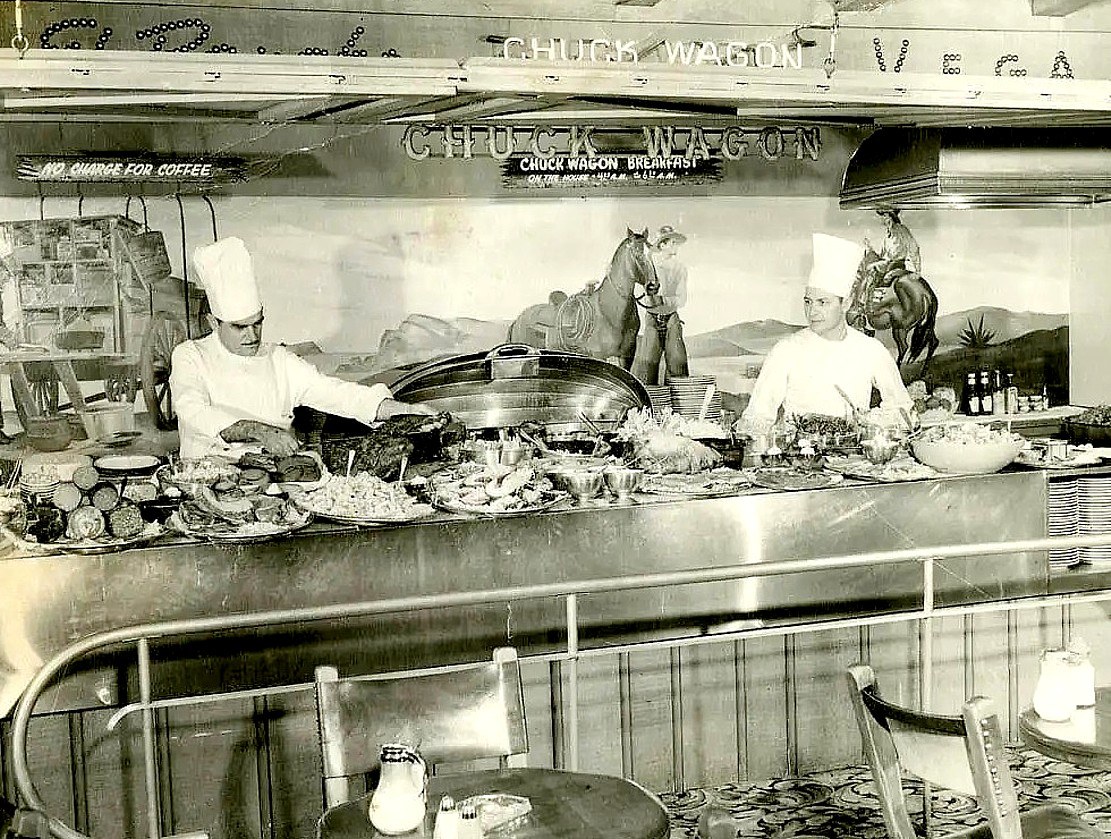
On Nov. 21, 1946, the Las Vegas Review-Journal reported that the Chuck Wagon buffet had held its grand opening at the El Rancho Vegas the previous night, attended by local dignitaries. The newspaper described it as a regular nightly feature, served from 1 a.m. to 4 a.m., followed by a complimentary breakfast served from 4 a.m. to 6 a.m.
The Chuck Wagon helped establish the late-night buffet model that other Strip casinos quickly copied. Less than three weeks after its debut, the Last Frontier introduced a $1.80 midnight buffet with a floor show.
Herb McDonald, the El Rancho’s publicity director, later claimed he came up with the idea accidentally while assembling cold cuts and cheese for a late-night snack.
“Gamblers walking by said they were hungry, and the buffet was born,” he is quoted as having said in his 2002 obituary.
The only other earlier close contender was a “Saturday Night Snack Bar” from 12:30 a.m.-2:30 a.m. at the Last Frontier. The casino advertised it in the R-J as far back as March 1943. But a snack bar isn’t necessarily a buffet, and the advertisement doesn’t establish that it offered an all-you-can-eat spread.
Rothman’s earlier El Cortez claim faces a chronological problem, too.
Facts Not on the Menu
In a 2014 oral-history interview archived at UNLV, Nat Hart’s son Steven recalled that his father came to Las Vegas with Davie Berman to help reopen the Flamingo after Bugsy Siegel’s June 1947 murder.
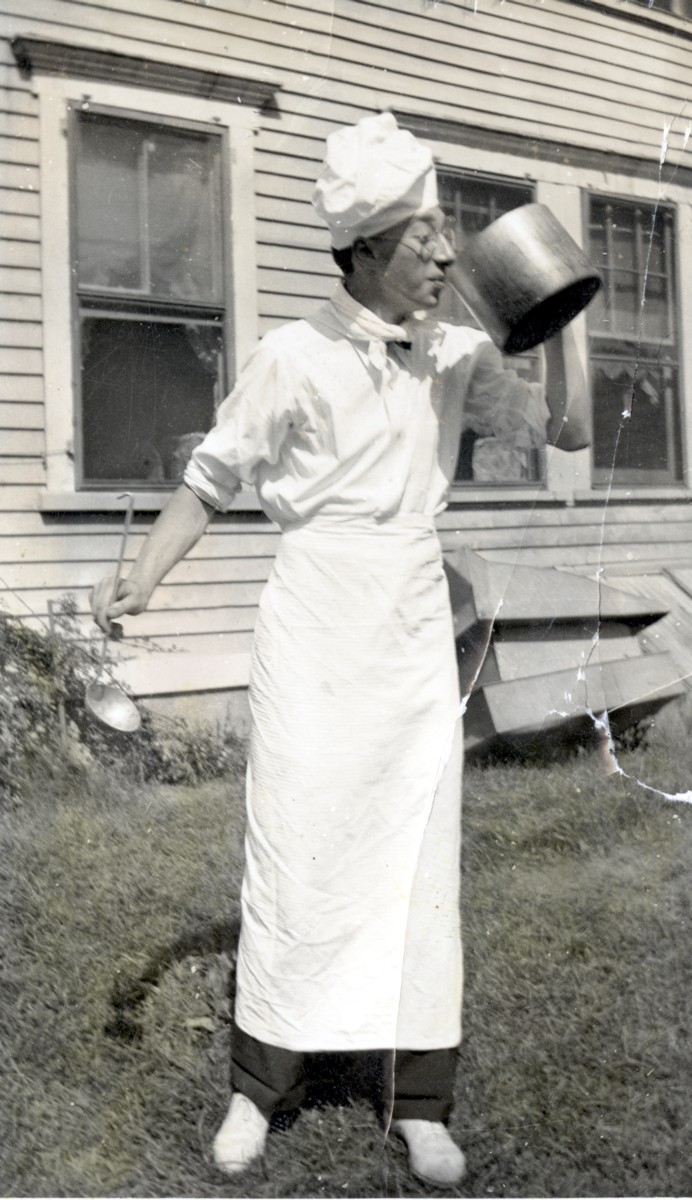
UNLV’s archival records also place Hart’s move to Las Vegas after Rothman’s proposed 1945 buffet date. A biographical note in the finding aid for the Nat Hart Professional Papers says he moved to Las Vegas in 1947. A separate biography in UNLV’s Southern Nevada Jewish Community Digital Heritage Project says he arrived in 1949. Both identify the Flamingo as his first Las Vegas employer.
By the way, Steven Hart’s recollection gets the Flamingo’s chronology wrong. It never closed and reopened after Siegel’s murder. It closed on Feb. 6, 1947 and reopened on March 1 of that same year, more than three months before his murder.
None of this proves Hart never visited Las Vegas earlier or couldn’t have once put out a buffet at the El Cortez before the El Rancho’s Chuck Wagon opened. But for Rothman’s account to be correct, Hart would have had to have:
- Visited Las Vegas before his documented relocation.
- Helped create a buffet for which no contemporary evidence has surfaced
- Done so for a casino that doesn’t even appear in his employment history.
Possible? Yes. Supported by the historical record? Not even close.
The El Cortez, which opened on Nov. 7, 1941, enjoys several historical distinctions, including being the oldest continuously operating casino in Las Vegas by 14 years. Having invented the casino buffet just isn’t one of them.
Look for “Vegas Myths Busted” every Monday on Casino.org. Visit VegasMythsBusted.com to read previously busted Vegas myths. Got a suggestion for a Vegas myth that needs busting? Email corey@casino.org.

 Most Read
Another Shooting Near Las Vegas Strip Casino Injures Man
 973,132 views
Vintners Oppose Napa Valley Casino
556,715 views


Conversation (0)
Be the first to comment on this article.