 Main menu


Prediction Markets
CFTC Sues Louisiana After State Bans Prediction Markets
Posted on: November 14, 2026, 11:45h.
Last updated on: November 14, 2026, 11:45h.


Key Points
- The CFTC has sued Louisiana after a state judge ordered prediction markets to suspend operations
- Chairman Michael Selig argues federal derivatives law gives the agency exclusive jurisdiction of prediction markets
- The lawsuit marks the CFTC’s 12th state-level legal challenge, with the outcome potentially shaping whether prediction markets must comply with state gaming laws


The Commodity Futures Trading Commission (CFTC) has filed a lawsuit against Louisiana, alleging that the state has unlawfully applied its gaming laws to federally regulated event contracts.
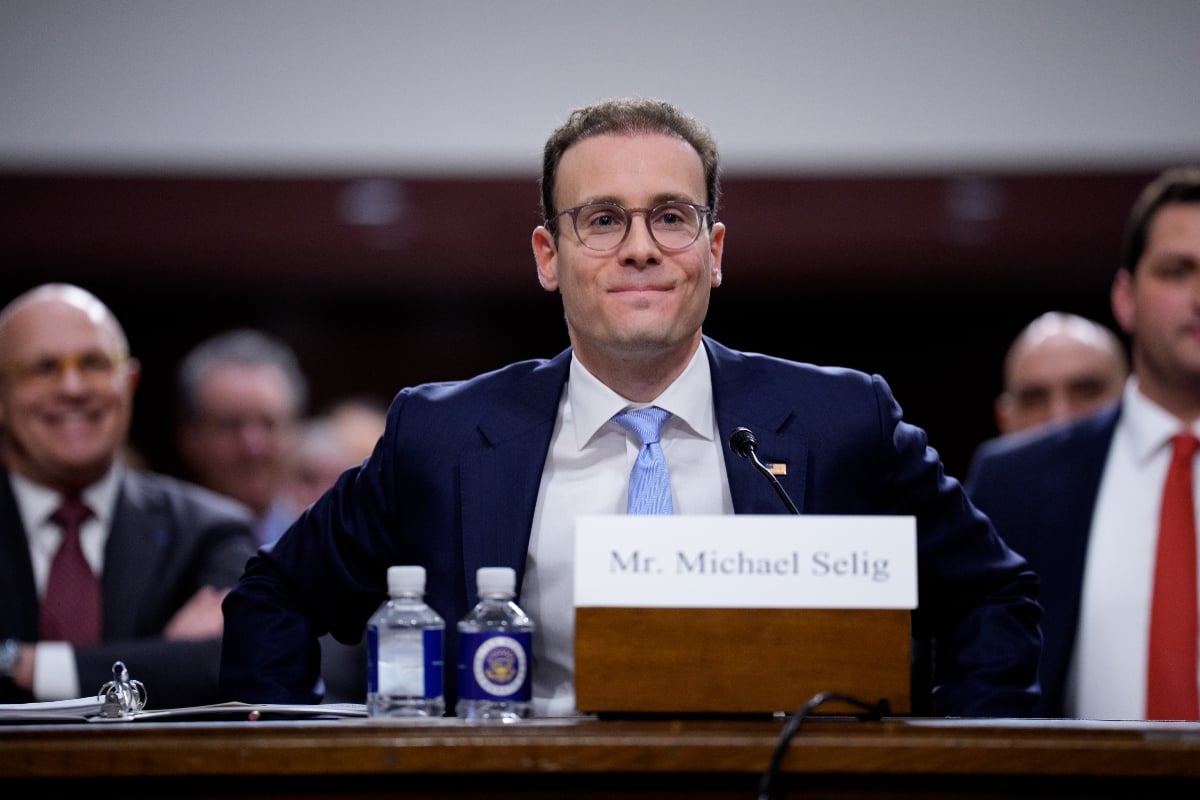
On Thursday (Nov. 12), a Louisiana judge granted Attorney General Liz Murrill’s plea for a temporary restraining order to immediately force prediction markets to stop operating within the state. In response, attorneys with the CFTC filed a claim with Louisiana’s Eastern District federal court seeking declaratory and injunctive relief from the state order.
Event contracts have traded openly in Louisiana for years, in compliance with the Commodity Exchange Act (CEA) and CFTC regulations,” said CFTC Chairman Michael Selig. “The state’s eleventh-hour ’emergency’ lawsuit seeking to shut down the entire prediction market industry is naked lawfare and a cynical political stunt.”
The CFTC lawsuit against Louisiana marked the 12th state that the federal regulator has sued to defend its claimed “exclusive jurisdiction” of derivatives markets.
Federal Preemption
The CFTC said its licensed prediction markets do not need to adhere to state gaming laws or court orders because of the Supremacy Clause. The constitutional principle states that when a federal law conflicts with a state law, the federal law takes precedence.
Louisiana’s efforts to prevent CFTC-regulated Designated Contract Markets (DCMs) from offering CFTC-approved financial products intrude on the exclusive federal scheme Congress designed to oversee United States commodity derivatives markets,” the CFTC lawsuit read.
Selig said the lawsuit is to “maintain the status quo” as federal courts decide the issue “in an orderly manner.”
Murrill, who is named as a defendant in the CFTC case, said prediction markets are allowing Louisianans to gamble on “virtually anything.” The state attorney general believes prediction markets are violating Louisiana law by operating online gambling and sports betting products without a license.
“It’s not complicated: if you aren’t a licensed gaming operator, you aren’t legal. Illegal gambling is a crime and is subject to jail time and significant penalties,” Murrill said.
Selig has repeatedly instructed CFTC exchanges to ensure they’re operating in all 50 states. The CFTC chair says operating on a uniform basis at a national scale is key to achieving the intended purpose of the CEA.
No judge has yet been assigned to the CFTC lawsuit, as it was filed late Friday (Nov. 13).
State AG Responds
On X, Murrill said Selig’s comment that prediction markets have operated in compliance with the CEA for years is not accurate.
Flatly false statements by the ‘obsequious standard bearer’ for prediction markets,” Murrill said. “Gambling has been regulated by states for 250 years.”
Louisiana has online sports betting, commercial casinos, and tribal casinos. In 2025, state gaming revenue grew by 10% to $2.17 billion.


 Most Read

Another Shooting Near Las Vegas Strip Casino Injures Man
 973,098 views

Vintners Oppose Napa Valley Casino
556,688 views


Conversation (0)
Be the first to comment on this article.