 Main menu

Golf
PGA Tour Embraces Betting, But Keeps Player Health in the Dark
Posted on: August 25, 2026, 10:55h.
Last updated on: August 25, 2026, 11:29h.


Key Points
- Scottie Scheffler revealed he played through hand, foot, and mouth disease at the BMW Championship, triggering fresh calls for PGA Tour injury reporting
- The PGA Tour has deeply integrated sports betting into its brand, featuring live odds on leaderboards and in-broadcast gambling analysis
- Industry experts and bettors argue that a lack of mandatory health disclosures compromises market integrity for the favorite-heavy sport


The PGA Tour is as closely intertwined with legal sports betting as any other major professional sports league. Betting odds now accompany leaderboards, while television commentators regularly reference live lines and in-round parlays offered by the tournament’s sportsbook sponsor.
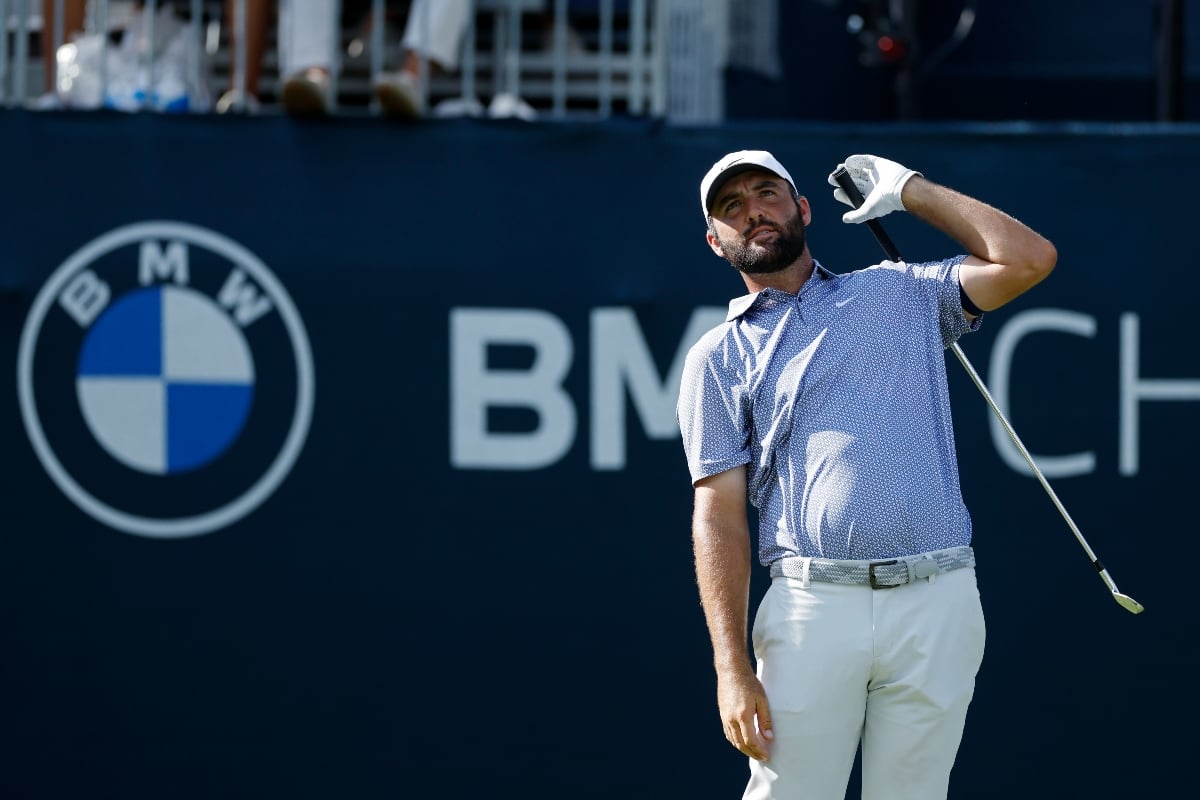
Some golf fans, however, believe the Tour should provide greater transparency about players’ health if it intends to continue embracing sports betting.
Such concerns heightened following this past weekend’s BMW Championship, in which world No. 1 Scottie Scheffler revealed after the FedExCup Playoffs Event that he battled hand, foot, and mouth disease throughout the week.
I got sick Monday night. It hit me pretty good all week; I’m not 100% now. I got hand, foot, mouth. Blisters on the hands, throat, and feet. It was pretty painful to grip the club,” Scheffler told reporters.
“If I were smarter, maybe I would have pulled out, but I was playing so good I felt like if I could knock it out quickly and get through the first couple rounds I would have a chance,” Scheffler continued.
Scheffler says he didn’t shake hands with his playing partners.
“I’m starting to heal up. My throat is still bugging me, but my hands feel normal. I actually caught myself almost shaking hands with Cam [Young] on 18,” Scheffler said.
Should Medical Be Disclosed?
Scheffler is almost always the favorite when he tees it up.
Ahead of the BMW, DraftKings had Scheffler, fresh off his win at the FedEx St. Jude Championship, the first leg of the FedExCup Playoffs, at +305 to win outright.
Those odds have an implied probability of 24.69% in the 70-man field. The player with the next-shortest odds was Rory McIlroy at +1300 (implied probability of 7.14%).
Scheffler commands considerable action, prompting oddsmakers to keep his lines short. But had bettors known that Scheffler was battling hand, foot, and mouth disease, a highly contagious viral illness that often causes fever, sore throat, and painful blisters and sores, perhaps some bettors would have looked elsewhere.
“The PGA Tour has to implement some sort of injury report. If they’re going to be in bed with betting, having it be completely unknown that the betting favorite was dealing with an illness isn’t acceptable,” commented Iain MacMillan, senior editor at Sports Illustrated.
In the NFL, teams are required to disclose a player’s illness on the daily injury report if the condition limits or prevents their participation in practice. Game-day illnesses must also be disclosed if they threaten to alter a player’s expected playing time or starting status.
Similarly, the NBA mandates that sick players be listed on official injury reports, typically under the designation of “Illness.”
Why Injury Reports Matter
Injury reporting in American professional sports dates back nearly eight decades. The NFL instituted the first mandatory injury reports in 1947 after the 1946 NFL Championship Game was shrouded in controversy when gamblers attempted to bribe players.
The league introduced official health reports to prevent players, trainers, or staff from leaking nonpublic medical information to gamblers for financial gain. At their core, mandatory injury disclosures are designed to safeguard sports integrity through total market transparency.
Applying that standard to golf remains an ongoing debate. Heading into this week’s Tour Championship, Scheffler is once again the consensus betting favorite at +350, with Rory McIlroy following at +780—though bettors will once again be left to guess whether any player in the field is quietly dealing with physical limitations.


 Most Read
Another Shooting Near Las Vegas Strip Casino Injures Man
 972,818 views
Vintners Oppose Napa Valley Casino
556,418 views


Conversation (0)
Be the first to comment on this article.