 Main menu

Commercial Gaming
ON THIS DAY: The Harvey’s Resort Bombing
Posted on: August 27, 2025, 06:34h.
Last updated on: August 27, 2025, 07:17h.


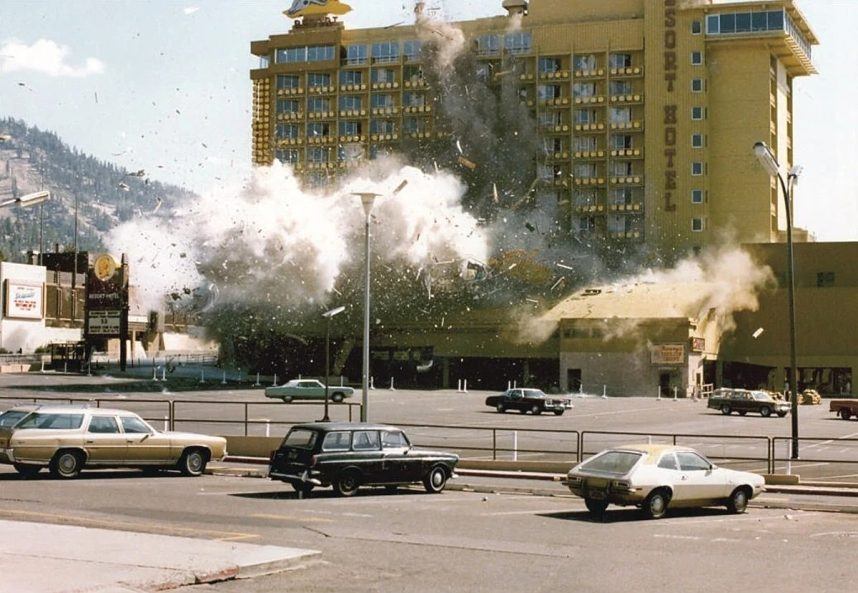
Forty-five years ago today — at 3:46 p.m. on Aug. 27, 1980 — the Harvey’s Resort Hotel and Casino in Stateline, Nev. was spectacularly rocked by one of the largest and most audacious bombings in US history. The culprit: a disgruntled degenerate gambler attempting to extort $3 million.
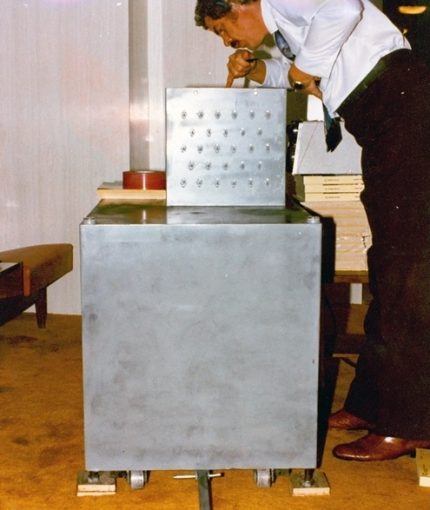
The day before, at 5:30 a.m., two men in coveralls — later identified as Willis Brown and Terry Hall — wheeled what appeared to be an IBM copier into the casino’s second-floor executive offices.
Slot shift supervisor Bob Vinson noticed the two metal boxes they left behind — a smaller one bristling with switches perched atop a larger one.
There was also an envelope. It was addressed “To Harvey’s Management.” Inside was a three-page typed letter with demands that gave Harvey’s staff 24 hours to act.
“Any deviation from these conditions will leave your casino in shambles,” the letter warned.
Harvey’s executives attempted to comply, but the FBI intervened, refusing to allow the ransom to be paid.
For hours, spectators watched as specialists tried to disarm the bomb, which contained 1,000 lbs. of dynamite. One local entrepreneur even sold T-shirts reading, “I survived the blast at Harvey’s.”
At 3:43 p.m. on Aug. 27, technicians made the fateful decision to detonate a small charge on the top box, hoping to disable the triggering mechanism.
It didn’t go the way they hoped.
The catastrophic explosion that resulted sent chunks of concrete flying. Dust and ash billowed out of a three-story hole in the building’s side. The bomb was the largest homemade explosive ever detonated on US soil at the time.
Fortunately, no one was hurt or killed, as Harvey’s and all neighboring businesses had been evacuated the day before.
“It was a really good thing that security didn’t start to move it,” Douglas County Sheriff Ron Pierini told the Reno Gazette Journal in 2015. “If they would have tried to move it, it would have exploded. It had mercury switches and it was set in such a way there were 37 switches. Most were up, but some were down. If it had gone off when they first found it, 600 people would have been dead.”
The Immediate Aftermath
Harvey’s and other Stateline casinos posted a $200,000 reward for information leading to the arrest of the responsible parties.
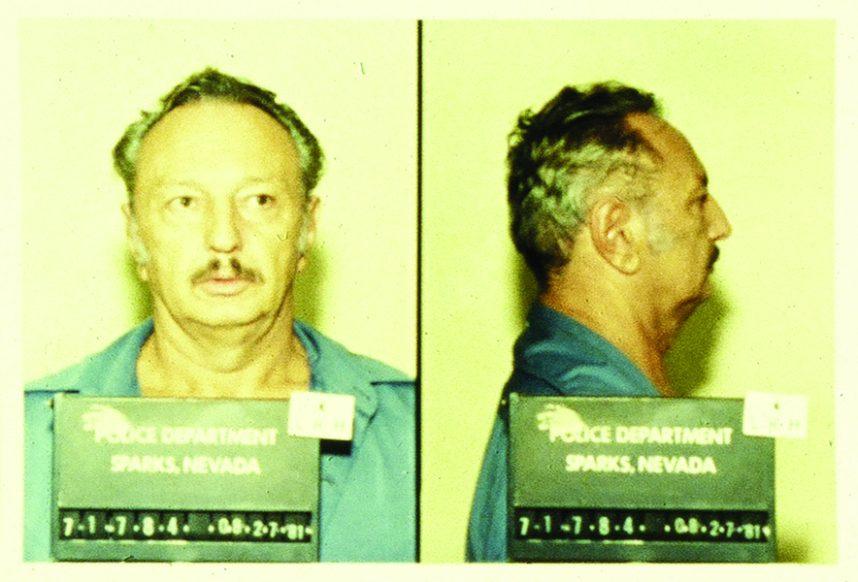
Investigators quickly identified John Birges Jr. as the owner of the white van used to transport the bomb. But the FBI initially dismissed him as incapable of orchestrating such a sophisticated attack.
Only after the reward was raised to $500,000 did a new tip emerge. The ex-boyfriend of Birges Jr.’s former girlfriend told agents to look at his father. That man — John Birges Sr., a Hungarian immigrant and former steelworker and landscaper — had gambled and lost heavily at Harvey’s and was already planning a second bomb.
With help from Birges’ sons, the FBI built its case. Birges Sr., his girlfriend Ella Williams, and accomplices Brown and Hall were all arrested and convicted. As the mastermind, Birges Sr. received the biggest sentence: 20 years in federal prison, where he died of liver cancer in 1996.
Rebirth and Legacy
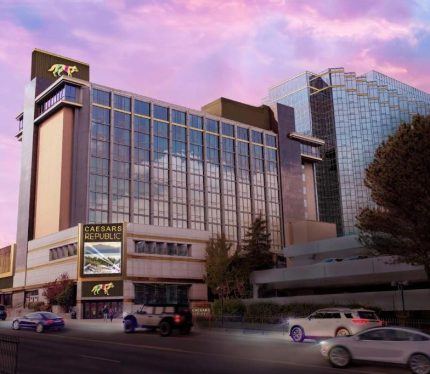
Despite $18 million in damage, Harvey’s core structure survived. The resort was rebuilt and reopened as Harveys Lake Tahoe, continuing to operate for decades.
In August 2001, Harrah’s Entertainment (now Caesars Entertainment) acquired the property from Harveys Casino Resorts. And in July 2025, the resort was rebranded as Caesars Republic Lake Tahoe, part of a sweeping $160 million renovation.
Investigative techniques developed during the Harvey’s bombing would later inform federal responses to the 1993 World Trade Center bombing and the 1995 Oklahoma City bombing, making this bizarre extortion attempt a pivotal moment in US counterterrorism history.

 Most Read
Another Shooting Near Las Vegas Strip Casino Injures Man
 972,667 views
Vintners Oppose Napa Valley Casino
556,272 views


Conversation (0)
Be the first to comment on this article.