 Main menu


Legal
Louisiana Casinos Accused of Conspiring With Police to Identify Advantage Blackjack Player
Posted on: November 5, 2026, 07:10h.
Last updated on: November 5, 2026, 07:10h.


Key Points
- Temeyer alleges an officer removed his driver's license during a parking-lot detention and handed it to casino security
- L’Auberge initially refused to redeem approximately $2,800 in blackjack chips without ID, but paid him later that day
- Louisiana law prohibits casinos from excluding patrons solely for their skill, a protection cited in Temeyer’s nine-count lawsuit


An Iowa blackjack player is suing two Louisiana casinos and several police officers, alleging police handcuffed him in a casino parking lot, searched his pockets, and handed his driver’s license to casino security after he repeatedly refused to identify himself.
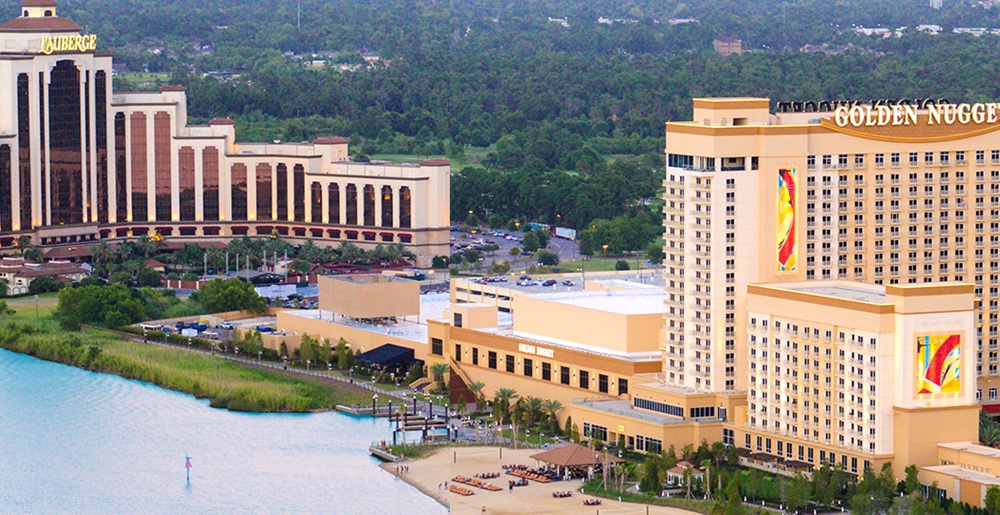
Eric Michael Temeyer claims Golden Nugget Lake Charles and neighboring L’Auberge Lake Charles conspired with officers to obtain and share his personal information because he was a skilled “advantage player.”
The federal lawsuit, filed Tuesday in the Western District of Louisiana, alleges Fourth Amendment violations, civil conspiracy, and violations of state law.
According to the complaint, Temeyer played blackjack at L’Auberge from approximately 5 p.m. on Nov. 2, 2025, until 2:40 a.m. the following morning.
When security personnel requested identification, he declined. He then attempted to cash out approximately $2,800 in chips, but a cashier allegedly refused without ID.
Temeyer then went next door to the Golden Nugget, where security employees again requested identification. After declining, he was asked to leave, which he did.
‘That’s Not How It Works Here’
Police arrived while Temeyer stood outside his vehicle in the parking lot, according to the lawsuit.
When an officer demanded identification, Temeyer argued that police needed reasonable suspicion of criminal activity to compel him to produce it.
“That’s not how it works here,” the officer allegedly responded before handcuffing him.
The officer then searched Temeyer’s pockets, retrieved his identification, and handed it to a Golden Nugget security employee, who photographed the document, his license plate, and his vehicle, the complaint claims.
Temeyer also alleges an officer entered his vehicle without consent to inspect its obscured VIN while he was confined in a police car.
He was released at approximately 3:36 a.m. without a citation or criminal charge.
Later that day, Temeyer returned to L’Auberge to redeem his chips. A cashier initially refused again but, following a telephone call, paid him without requiring identification.
“There you go, Eric,” the cashier allegedly said, prompting Temeyer to suspect his information had been shared between the casinos.
Louisiana Protects Advantage Players
The lawsuit cites a Louisiana statute prohibiting casinos from excluding patrons solely because of their skill level.
It states: “A person may not be excluded from a gaming establishment operated by a licensee or the casino operator for reasons based solely on the skill level of the person.”
Temeyer alleges the casinos sought his identification to facilitate his exclusion as a lawful advantage player, rather than to investigate cheating or other criminal conduct.
Typically, an advantage blackjack player gains an edge by counting cards—a system where they track which cards have been dealt to estimate when the remaining deck favors the player over the house—though Temeyer’s lawsuit does not explicitly describe him as a card counter.
Card counting is not cheating, but casinos frequently eject players suspected of using the technique.
The complaint raises concerns about casino surveillance databases that allow information about advantage players to circulate between properties, potentially affecting their ability to gamble elsewhere.
The nine-count lawsuit seeks compensatory damages, potential punitive damages against individual defendants, and attorney’s fees. It does not specify a total monetary demand.
Casino.org reached out to L’Auberge for comment but had not heard back at the time of publication.


 Most Read
Another Shooting Near Las Vegas Strip Casino Injures Man
 972,974 views

Vintners Oppose Napa Valley Casino
556,568 views


Conversation (0)
Be the first to comment on this article.