 Main menu

Tribal Gaming
Native Americans Were Gambling 12,000 Years Ago, Study Finds
Posted on: April 5, 2026, 03:51h.
Last updated on: April 7, 2026, 05:03h.


- Humans gambled thousands of years earlier than previously believed
- Ice Age artifacts reveal early Native American games of chance
- Study reinterprets museum objects as some of the world’s oldest dice
Human beings have been gambling for at least 12,000 years – six thousand more than had been previously supposed, according to a new study published in the journal American Antiquity.
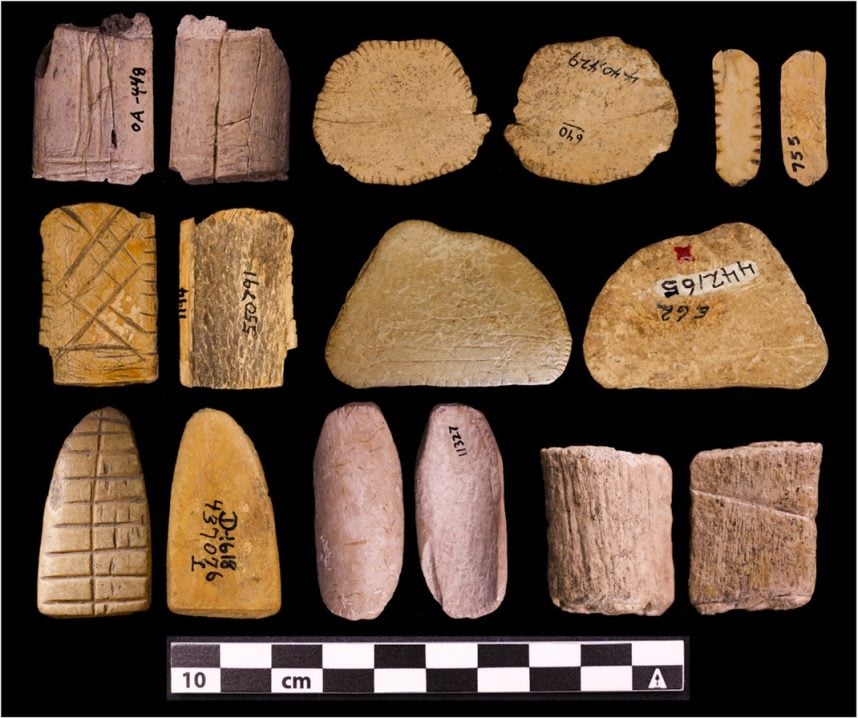
The researchers have identified “dice” used by hunter-gatherer cultures in the western Great Plains region during the Ice Age, which suggests that ancient Native Americans were playing games of chance and exploring probability thousands of years before Old World societies.
Previously, the oldest dice, found in places like Mesopotamia and the Indus Valley, were dated to around 5,500 years ago.
“Historians have traditionally treated dice and probability as Old-World innovations,” said doctoral researcher in archaeology Alexandre Madden, who led the study.
“What the archaeological record shows is that ancient Native American groups were deliberately making objects designed to produce random outcomes, and using those outcomes in structured games, thousands of years earlier than previously recognized.”
Prehistoric Craps?
Madden didn’t need to dig up new artefacts. Instead, he took a fresh look at ones already in museum collections.
He started with a detailed record of Native American dice collected in the early 1900s by anthropologist Stewart Culin, which documented what real dice looked like and how they were used.
From there, he built a kind of checklist, looking at things like shape, markings, and whether an object clearly had two distinct sides designed to produce random outcomes.
He then applied that checklist to hundreds of artifacts from archaeological sites across the western United States. By combing through published reports and museum records, he identified more than 600 objects that fit the criteria for dice.
The study shows that archaeologists had been finding these objects for decades, they just hadn’t had a reliable way to recognize them as tools for games of chance. That’s because they look very different from the numbered cubes we recognize as dice.
Instead, they’re often things like split animal bones, carved sticks, or asymmetrical pieces with one side marked or flattened. But the key feature is that they’re designed to land in different ways and produce a random outcome, according to Madden.
Chance and Belief
In many later Indigenous North American cultures, games of chance were closely linked to social gatherings, storytelling, and shared beliefs about luck or fate. The outcome of a throw might not have been seen as purely random, but as something shaped by unseen forces.
“Games of chance and gambling created neutral, rule-governed spaces for ancient Native Americans,” Madden said. “They allowed people from different groups to interact, exchange goods and information, form alliances, and manage uncertainty. In that sense, they functioned as powerful social technologies.”

 Most Read

Another Shooting Near Las Vegas Strip Casino Injures Man
 972,700 views
Vintners Oppose Napa Valley Casino
556,304 views


Conversation (0)
Be the first to comment on this article.