 Main menu

Vegas Myths Busted
VEGAS MYTHS BUSTED: The Scout Who Named Las Vegas
Posted on: October 12, 2026, 07:21h.
Last updated on: October 12, 2026, 05:57h.


Rafael Rivera is credited with bestowing Las Vegas with its name. In return, Las Vegas named Rafael Rivera Park in his honor. The 10-acre park features the Rafael Rivera Community Center, in front of which stands an 11-foot fiberglass statue of Rivera on horseback, sculpted by Jim Casey in 1978 and originally erected at the Old Vegas amusement park in Henderson, Nev.
Except that there is zero evidence that Rivera named Las Vegas.
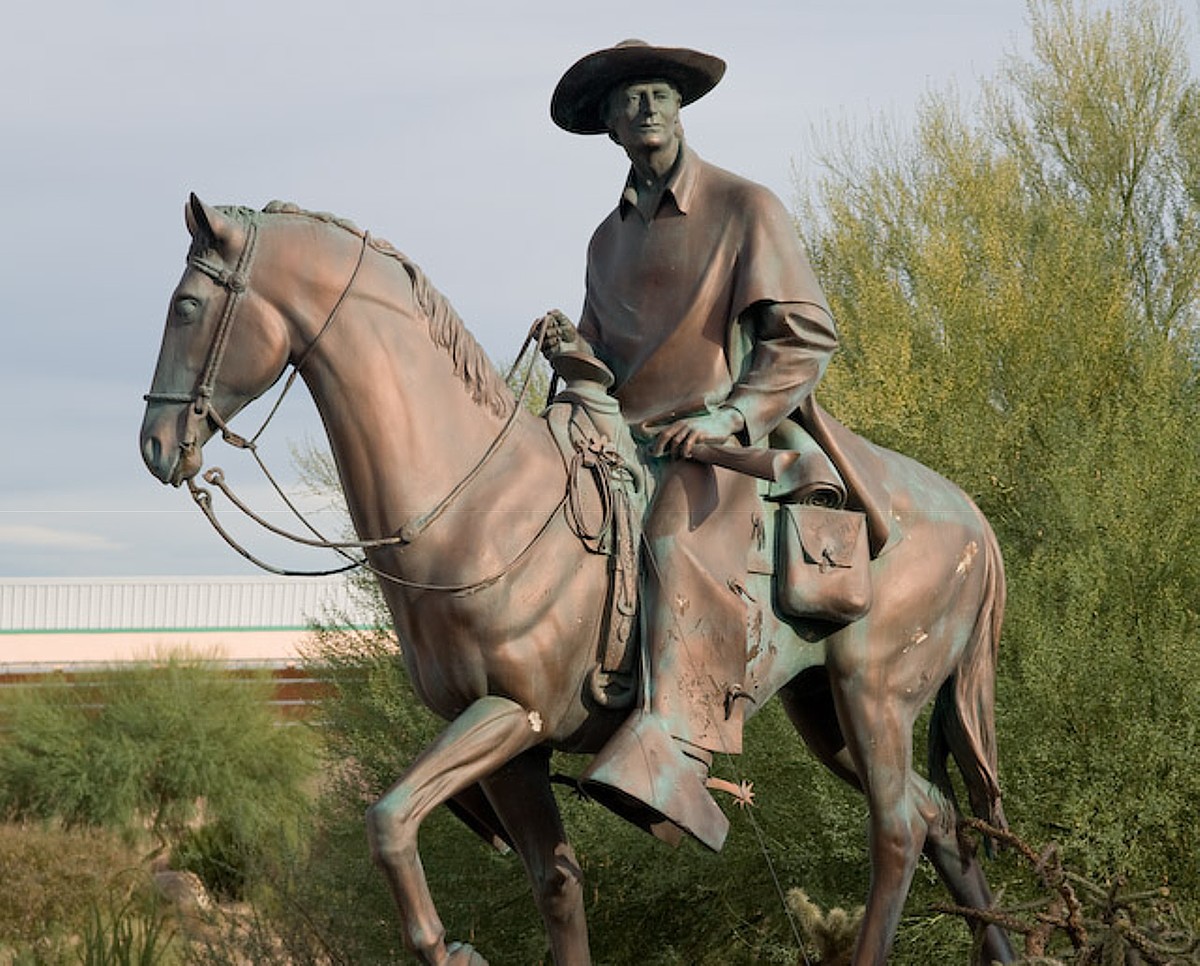
From late 1829 through early 1830, Rivera was a member of the first trading caravan from Santa Fe, New Mexico, to Los Angeles’ Mission San Gabriel—both of which were located in Mexico at the time. The party of 60 was assembled and led by merchant Antonio Armijo to trade woolen goods from Santa Fe for horses and mules in California. But they’re better known for blazing a 2,700-mile route that we now call the Old Spanish Trail.
Water became scarce as the caravan penetrated deeper into the Mojave Desert. So Rivera and a few other scouts peeled off on a horseback reconnaissance mission to find a source in late December 1829.
This part of the story, taught in Las Vegas schools for decades, is supported by evidence. Where it loses credibility is what happened when Rivera rejoined the caravan after a week or two with news of his discovery: an oasis he named Las Vegas (Spanish for “the meadows”).
What Rivera Discovered
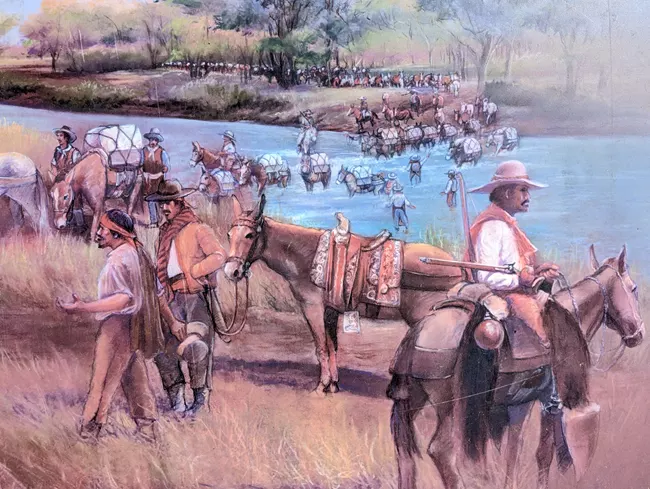
The best reconstructions of Armijo’s journey—especially historian Elizabeth von Till Warren’s 1974 master’s thesis at UNLV—suggest that, upon Rivera’s return, the main party, using Rivera’s intel, came up the Las Vegas Wash and hit water in the south valley—Duck Creek is the usual candidate—before cutting southwest toward Jean, Nev.
This suggests that Rivera probably discovered water south of Las Vegas, not in the famous artesian Big Springs (today’s Springs Preserve) suggested by the myth.
No Paper Trail
On May 3, 1844, explorer John C. Frémont camped at the Big Springs and noted that it was already “a camping ground called las Vegas—a term which the Spaniards use to signify fertile or marshy plains.”
The map drawn by cartographer Charles Preuss for Frémont’s 1845 report labeled the spot “Vegas”—the first known published map to carry the name.
We don’t know who gave it that name, but we know there is no evidence that it was Rivera.
Rivera kept no diary of his journey, and Armijo’s official expedition log—reprinted in LeRoy Hafen and Ann Hafen’s 1954 book, Old Spanish Trail: Santa Fé to Los Angeles—does not mention the name “Las Vegas.”
And Armijo’s log is not silent about Rivera. It records that he was discovered missing on Dec. 31, 1829 and rejoined the party on Jan. 7 to report finding villages of the Cucha Payuches (Paiute) and Hayatas (Mojave) peoples. It does not record a naming or his discovery of a meadow oasis.
What Rivera Did Do
Modern historians and state institutions generally accept that Rivera was the first non-Native American of record to enter the Las Vegas Valley. They also credit him with scouting crucial water sources that helped Armijo link existing indigenous and regional paths into the Old Spanish Trail.
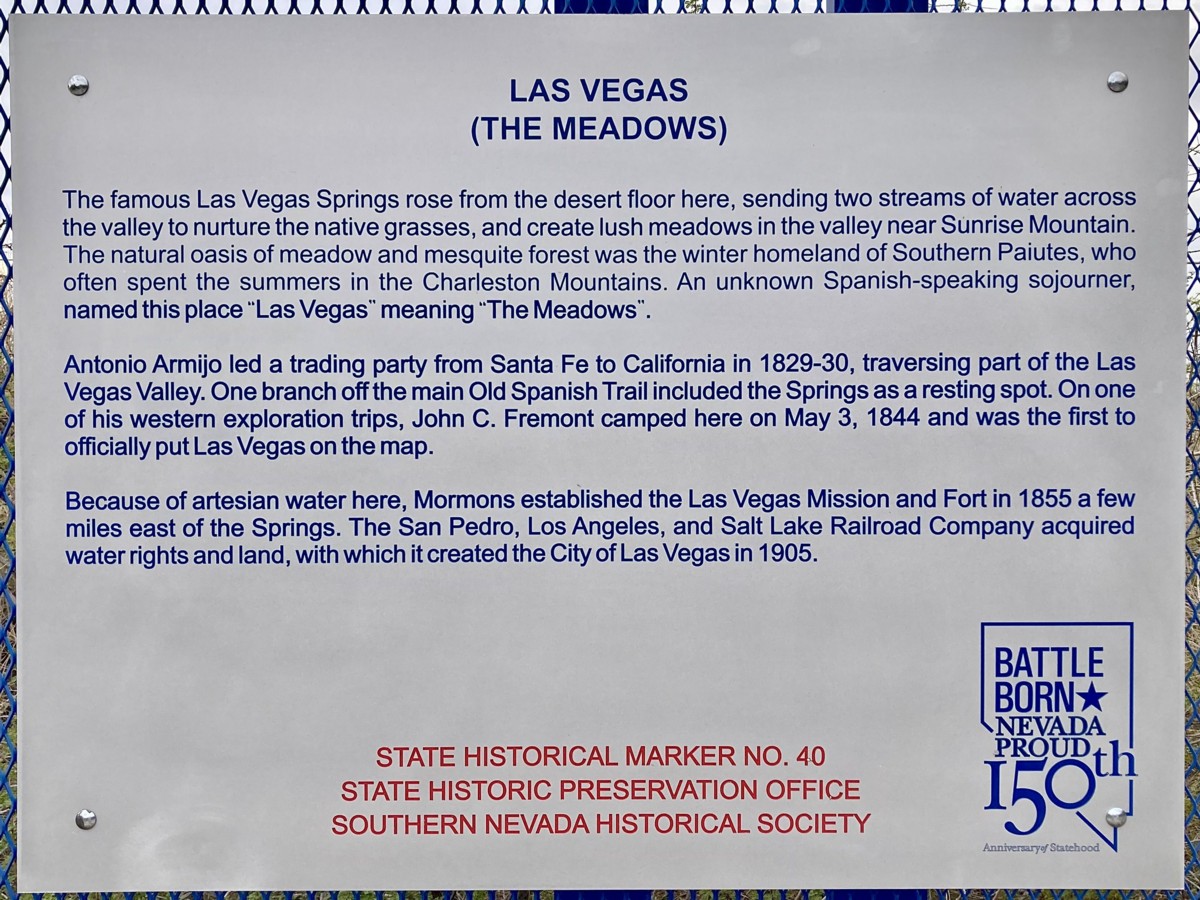
However, as evidenced by Nevada Historical Marker No. 40—located at the Springs Preserve—they’re slowly bringing the story of Las Vegas’ naming more in line with the evidence.
That marker states that Las Vegas was named by “an unknown Spanish-speaking sojourner.”
Look for “Vegas Myths Busted” every Monday on Casino.org. To read previously busted Vegas myths, visit VegasMythsBusted.com. Got a suggestion for a Vegas myth that needs busting? Email corey@casino.org.

 Most Read
Another Shooting Near Las Vegas Strip Casino Injures Man
 972,573 views
Vintners Oppose Napa Valley Casino
556,191 views


Conversation (0)
Be the first to comment on this article.