 Main menu

Vegas Myths Busted
VEGAS MYTHS BUSTED: Casinos Banned Sunlight and Clocks to Trick Gamblers
Posted on: July 27, 2026, 07:21h.
Last updated on: July 27, 2026, 01:59h.


Do casinos ban sunlight and clocks to trick players into losing track of time? This theory gets repeated constantly in guidebooks, documentaries and on social media. It’s a holdover from the 1950s to ‘80s, when Strip casinos were designed as dark environments with no windows or clocks.
But the myth here is why this was done.
One man knows better than anyone else because he wrote the book. Quite literally. Bill Friedman wrote two of them, in fact: Casino Management (1974) and Designing Casinos to Dominate the Competition (2000).
Friedman ran both the Castaways Hotel and Casino and the Silver Slipper Casino from to 1977 through 1990, transforming both from money‑losing operations into highly profitable ones. His expertise was highly regarded at the time.
In the August 2021 tweet below, Friedman called it a “myth” that windows and clocks were banished “to manipulate players to gamble longer,” explaining that “it was the serious players who demanded they remove them by threatening not to return.”
Gamblers “don’t want time,” Friedman elaborated to The Hustle in 2024. “They are in a fantasy and an escape world.”
Losing to Wynn
In both his books, Friedman argued that casinos should be designed like mazes that keep visitors curious about what’s beyond every corner while giving them walled-off areas in which to be entranced by casino games.
Friedman’s “maze” model was flipped on its head by Steve Wynn and his executive VP of design, Roger Thomas, who began collaborating on interiors at the Golden Nugget in 1980. Their version of casino design, called the “playground” model, favored gaming floors resembling luxury mansions decorated with works of art and high-end furniture.
The idea is that gamblers don’t place the biggest bets when they feel trapped and confused. They do so when they feel safe, relaxed and important. The casinos that tore up Friedman’s rulebook became some of the most profitable in the world.
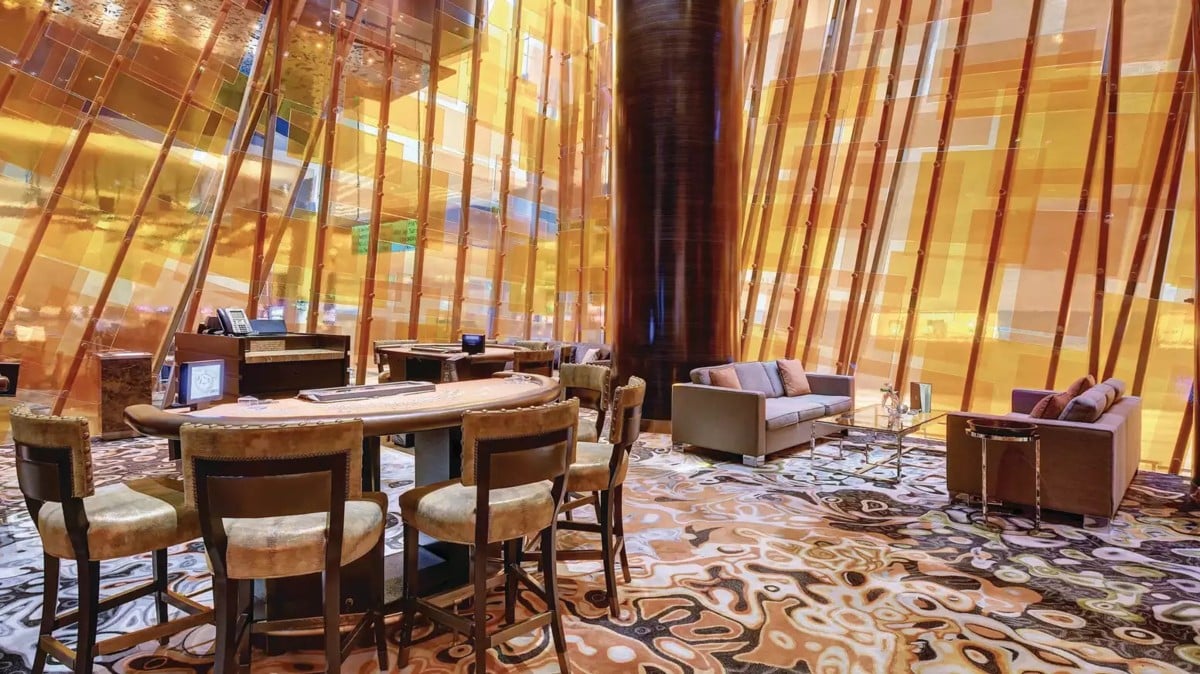
Under the playground model — epitomized by The Mirage, Bellagio and Wynn — natural light began featuring prominently in lounges, sportsbooks, and even near slot areas. Almost all modern properties follow this model.
As for clocks, no one bothers keeping them out of casinos anymore since everyone carries one in their front pocket.
Myth Information
Serious critics of the casino industry have floated plenty of theories about how casinos keep players glued to their gaming chairs, but the idea that operators manipulate time cues has never been taken seriously.
What is blamed today is the sidelining of social, communal games like craps and roulette in favor of video‑screen slot machines.
For instance, in Addiction by Design: Machine Gambling in Las Vegas (2012), New York University cultural anthropologist Natasha Dow Schüll argued that video slots are engineered to create a “solitary, absorptive activity” — an experience so enveloping that it can dissolve a gambler’s sense of time, space, monetary value, social identity, and sometimes “one’s very sense of existence.”
In other words, casinos have more effective ways of manipulating gamblers into playing more than lying to them about what time it is.
Look for “Vegas Myths Busted” every Monday on Casino.org. Click here to read previously busted Vegas myths. Got a suggestion for a Vegas myth that needs busting? Email corey@casino.org.

 Most Read

Another Shooting Near Las Vegas Strip Casino Injures Man
 972,705 views

Vintners Oppose Napa Valley Casino
556,311 views


Conversation (3 comments)