 Main menu

Legal
Vegas Matt Threatens Lawsuit Against Anti-Gambling Advocate Over Defamation Claims
Posted on: August 30, 2026, 02:27h.
Last updated on: September 1, 2026, 05:41h.

Key Points
- High-limit slot creator Vegas Matt issued a 17-page legal demand letter to recovery advocate Rob Minnick over a YouTube video that used him as an example of unethical practices
- Minnick's critique argued that high-stakes influencer gambling glamorizes severe financial losses and normalizes dangerous wagering behavior for viewers
- Refusing to comply with demands for an apology and content removal, Minnick publicly rejected the claims and published his letter online


A legal battle is brewing between two major YouTube gambling personalities: slot streamer Vegas Matt and recovery advocate Rob Minnick, better known online as Rob ODAAT.
The dispute raises broader questions about how gambling creators, critics, and platforms handle commentary, fair use, and the blurry line between opinion and defamation.

The conflict started with a video Minnick published on July 12, 2026 that critiqued gambling‑influencer content and the incentives behind it. The video framed its critique as a consumer‑protection message aimed at viewers who may not understand how gambling‑content economics work.
At the same time, the video’s YouTube thumbnail was a photo of Vegas Matt next to the words “FAKE GAMBLER.”
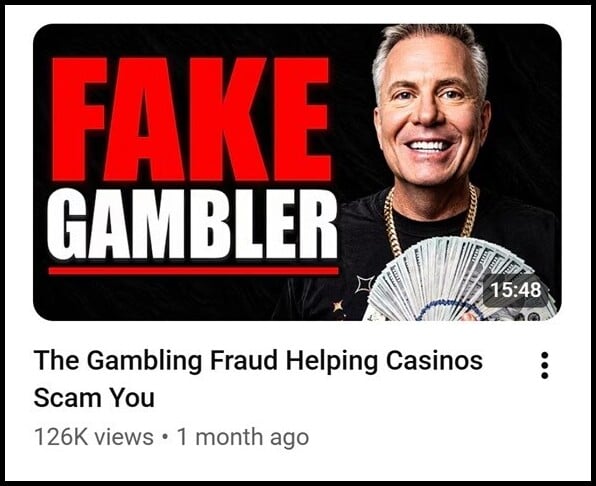
Vegas Matt operates one of the biggest slot‑focused channels on YouTube, with publicly visible subscriber counts placing him above 1.6 million. His content features high‑limit slot play, casino partnerships, merchandise and live appearances.
Minnick runs ODAAT (One Day At A Time) Gambling Awareness, an addiction recovery‑focused channel with more than 50,000 subscribers and thousands of uploads.
Minnick’s Point
Minnick’s critique focused on how gambling‑influencer content can shape viewer perception. He argued that high‑limit gambling filmed inside casinos can make extreme wagering feel normal, aspirational and socially rewarding.
He pointed to examples from Vegas Matt’s channel, including a session where Matt lost roughly $147,000 and described it as “a hell of a YouTube video.”

Minnick contrasted that with the experience of an ordinary gambler: losing that amount “would be one of the worst days of their life.” His argument was that for creators, losses become content, not consequences, offset by their other income streams.
He suggested that this dynamic can distort how viewers understand risk, probability, and financial harm.
Minnick’s video highlighted moments where Matt described escalating bets or hiding losses from loved ones. He paraphrased Matt recounting losing thousands of dollars early in the day and joking about lying to his wife about losses.
Minnick’s point was that behavior which would normally signal a gambling problem can appear harmless when edited into entertainment. As he put it, the same conduct “gets packaged as fine” when surrounded by humor, friends, and production value.
Matt’s Response
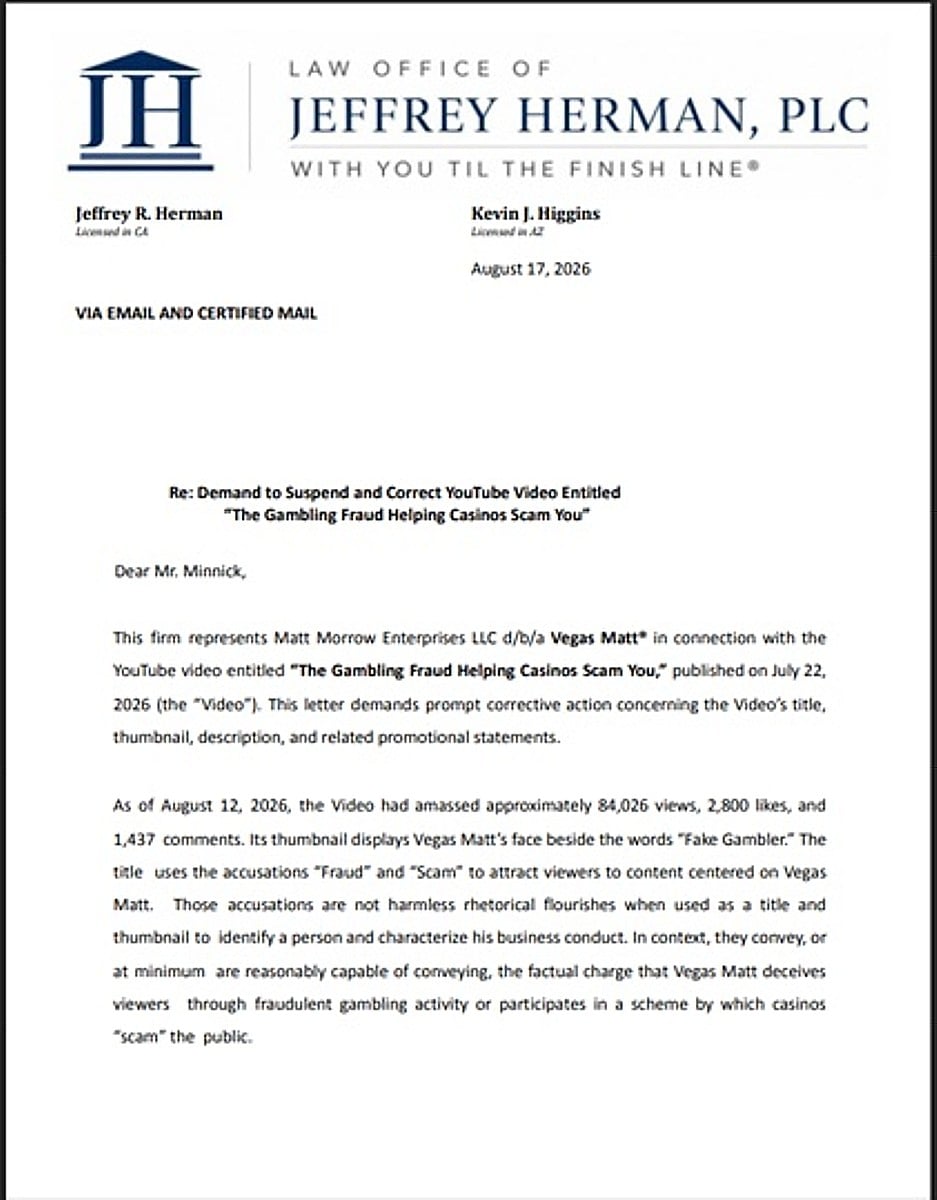
After the video was posted, Vegas Matt’s team contacted Minnick requesting changes. When Minnick declined to make them, he received a formal 17‑page legal demand letter from an attorney representing Vegas Matt.
The letter — dated Aug. 17 from Jeffrey Herman, PLC — alleged defamation, false light, and potential interference with business relationships.
It highlights specific words used in Minnick’s video, including “fraud,” “scam,” and “fake gambler,” arguing that viewers could interpret those terms as literal accusations of criminal behavior. The letter asserts that Minnick’s phrasing could cause reputational and commercial damage.
It demanded that Minnick remove or alter the video, change its title and thumbnail, remove related promotional material, edit specific statements, and publish a correction and apology by Aug. 28 to avoid further legal action.
Minnick’s Next Move
Instead of complying, Minnick posted the letter, and his response, via another YouTube video on Aug. 27.
“I do not have evidence that Vegas Matt manipulates slot machines, changes gambling outcomes, operates an illegal casino, falsifies the results… or participates in a criminal conspiracy,” Minnick clarified in his new video.
He also acknowledged Matt’s public disclosures: “I don’t dispute the fact that Vegas Matt publicly identifies himself as a gambling content creator… and has publicly disclosed commercial relationships.”
Minnick defended his use of terms like “scam” and “fraud” by citing gambling‑policy advocate Les Bernal, who has described commercial gambling as a form of consumer financial deception. Minnick paraphrased Bernal’s view that legalized gambling can mislead customers into believing they can win money on products designed for long‑term losses.
Minnick argued that his language referred to this broader critique of gambling marketing, not to allegations of criminal conduct by Matt.
The demand letter also included screenshots of comments posted by viewers under Minnick’s original video. In his response, Minnick objected to that inclusion: “I didn’t write their comments… People say whatever they want to say. It’s not really within my control.”
Minnick closed his response‑to‑the‑letter video with a direct message: “After carefully reading your 17‑page demand letter… I would like to formally apologize to you for absolutely nothing.”
Minnick’s original video remains on his YouTube channel, where it has received more than 126,000 views.
Stay tuned.

 Most Read
Another Shooting Near Las Vegas Strip Casino Injures Man
 972,530 views

Vintners Oppose Napa Valley Casino
556,153 views


Conversation (7 comments)