 Main menu

Las Vegas
Sahara is 2nd Vegas Hotel to Ditch Resort Fees
Posted on: July 22, 2025, 08:46h.
Last updated on: July 22, 2025, 08:46h.


The Sahara Las Vegas is the second Strip property to eliminate resort fees, which had been $55 per night at the Rat Pack-era property.
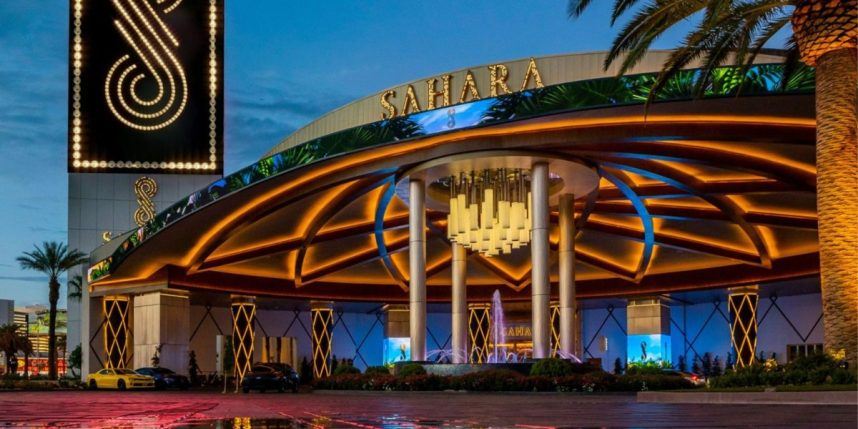
Like Resorts World, which ditched the annoying add-on last month, the Sahara’s offer is only good for about three months — until Oct. 31. To qualify for the “All-In Rate Experience” promotion, rooms must be booked by Aug. 10.
“Vegas visitors are savvier than ever and they value convenience, quality and transparency,” Sahara general manager Paul Hobson said in a news release. “Sahara focuses on delivering memorable experiences without the hidden costs because real hospitality should feel effortless, not transactional.”
And room prices haven’t gone up by $55 to compensate. They currently start at $69 a night.
And the Rat Pack-era resort didn’t need to match Resorts World’s “free parking all summer” offer, because the Sahara has never charged for its parking.
Most Las Vegas casino resorts are currently discounting room prices as Las Vegas enters not only its regularly slow summer season, but also a tourism downtown.
Total visitor volume is down 6.5% for the year (1.1 million fewer visitors) through May. The cause has been a combination punch of fewer foreign visitors due to politics, steeper Vegas prices and tighter domestic purse strings due to inflation.
The Venetian and participating MGM Resorts properties are offering 25% off their regular room rates, for example, while Resorts World is also offering up to 40% off at the Conrad or Crockfords — plus a $75 nightly credit for dining, bars, pool daybeds, or cabanas though Aug. 28.
Virgin Hotels also just announced 35% off rooms.
More hotels are expected to drop their resort fees if the downturn continues as expected.
Home of the Fee
Resort fees, which now average $50 a night with a range of $7 or $8 on either side, are mandatory charges that resorts once claimed cover amenities such as Wi-Fi, gym and pool access and local phone calls. Many laughingly referred to them on their websites as a “convenience fee” that was “requested by our guests.”
The real purpose of resort fees was to fool online travel agencies (OTAs) such as Travelocity and Booking.com into listing a resort’s properties first when customers searched for “lowest price” or “best value,” which is how most online travelers shop for hotel reservations.
Station Casinos was the first Las Vegas resort company to add resort fees to hotel bills in 2004. These fees went unnoticed at first because they were less than $10 per night.
But competitors noticed. In 2008, MGM Resorts joined the bandwagon, followed by Caesars Entertainment in 2013 — after a 2010 ad campaign during which they boasted of “no resort fees” and even had Holly Madison posing in a “No Resort Fees Zone” T-shirt.
In May, he Federal Trade Commission finally put an end to this chicanery. Its “junk fees’ rule now requires hotels and other lodging operators to display a total price — including tax and resort fees — before the “Book Now” button is shown, thus screwing up their OTA rankings.

 Most Read

Another Shooting Near Las Vegas Strip Casino Injures Man
 972,552 views

Vintners Oppose Napa Valley Casino
556,171 views


Conversation (0)
Be the first to comment on this article.