 Main menu

Commercial Gaming
Mayor Johnson Pushes Split Chicago City Council Toward Video Gaming Repeal
Posted on: June 15, 2026, 07:40h.
Last updated on: June 16, 2026, 07:30h.


- Chicago is considering a dramatic U-turn on its recent decision to permit video poker and slot machines inside city limits
- A divided City Council is split over whether neighborhood terminals help small businesses or threaten the city’s major gaming interests
- Mayor Johnson’s administration claims the decentralized machines will strip critical revenue away from the city’s landmark casino deal
The Chicago City Council is unified in not having a single Republican serving as an alderperson from one of the 50 wards, but the legislative branch of the Windy City government is split on video gaming machines.
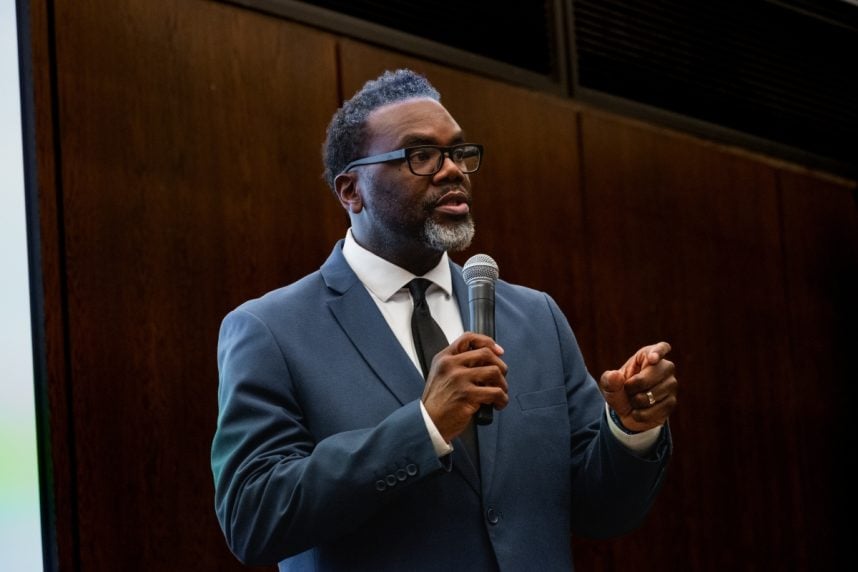
Last December, a majority of 30 alderpersons overrode Chicago Mayor Brandon Johnson’s (D) opposition to allowing video gaming machines in the city.
Johnson and others who are resistant to allowing slots in restaurants, bars, truck stops, and fraternal organizations argued the machines would hurt the city’s forthcoming $1.7 billion Bally’s Chicago.
The majority of the City Council countered by claiming that the slot and poker machines would boost city tax revenue and help small businesses in challenging economic times.
Last Thursday, the Illinois Gaming Board approved its first batch of video gaming applicants in Chicago. Six businesses were given the green light from the state gaming regulator, though they need the city’s final approval before they can power on their machines.
Today, the Chicago City Council’s Committee on Workforce Development will consider an ordinance that seeks to revoke the city’s authorization of video gaming machines. The statute comes at the request of Johnson, who is appealing to the legislature that the gambling machines will only hurt the city as a whole.
Mayor Flip-Flops
Illinois passed the Video Gaming Act in 2009, allowing businesses to house up to six games and truck stops as many as 10.
The state law allows municipalities to opt out of video gaming, and Chicago, until December 2025, did just that.
During the City Council’s consideration of video gaming machines last year, Johnson first claimed to be neutral.
I’m open. I’ll just say it like that, because the work that we have to do to continue to build a safe and affordable city requires us to make critical investments. As long as people are willing to participate in that form of entertainment, it’s an opportunity for us to secure the revenue,” Johnson said.
After hearing from Bally’s lobbying team, arguing that video gaming violates its development terms and will lead to the company renegotiating its host community agreements, Johnson changed his stance. The mayor’s opposition further strengthened after his staff concluded that video gaming would be a net loss for the city.
A consultant hired by the mayor’s office reported that video gaming would cost the city $3 million annually because of the strain the machines would put on law enforcement. The city’s budget passed last year assumed $6.8 million in new revenue from the authorization of video gaming.
The differences in the financial projections show that the majority of the City Council and the mayor are at stark odds over video gaming.
Along with the poaching of play from Bally’s, video gaming revenue would provide Chicago with a considerably smaller take of the proceeds. While the city receives 10.5% to 34.7% of the Bally’s slot revenue, with the graduated rate dependent on revenue, the city’s video gaming cut is only 5%.
No Vote Today
The Chicago City Council Committee on Workforce Development will only review Johnson’s appeal to retract the video gaming allowance. The committee will not vote on moving the ordinance to the full legislature.

 Most Read
Another Shooting Near Las Vegas Strip Casino Injures Man
 972,739 views

Vintners Oppose Napa Valley Casino
556,342 views


Conversation (0)
Be the first to comment on this article.