 Main menu

Vegas Myths Busted
VEGAS MYTHS BUSTED: Mom Spotted Her Son’s Body in Horseshoe Las Vegas Exhibit
Posted on: August 17, 2026, 07:21h.
Last updated on: August 17, 2026, 08:38h.


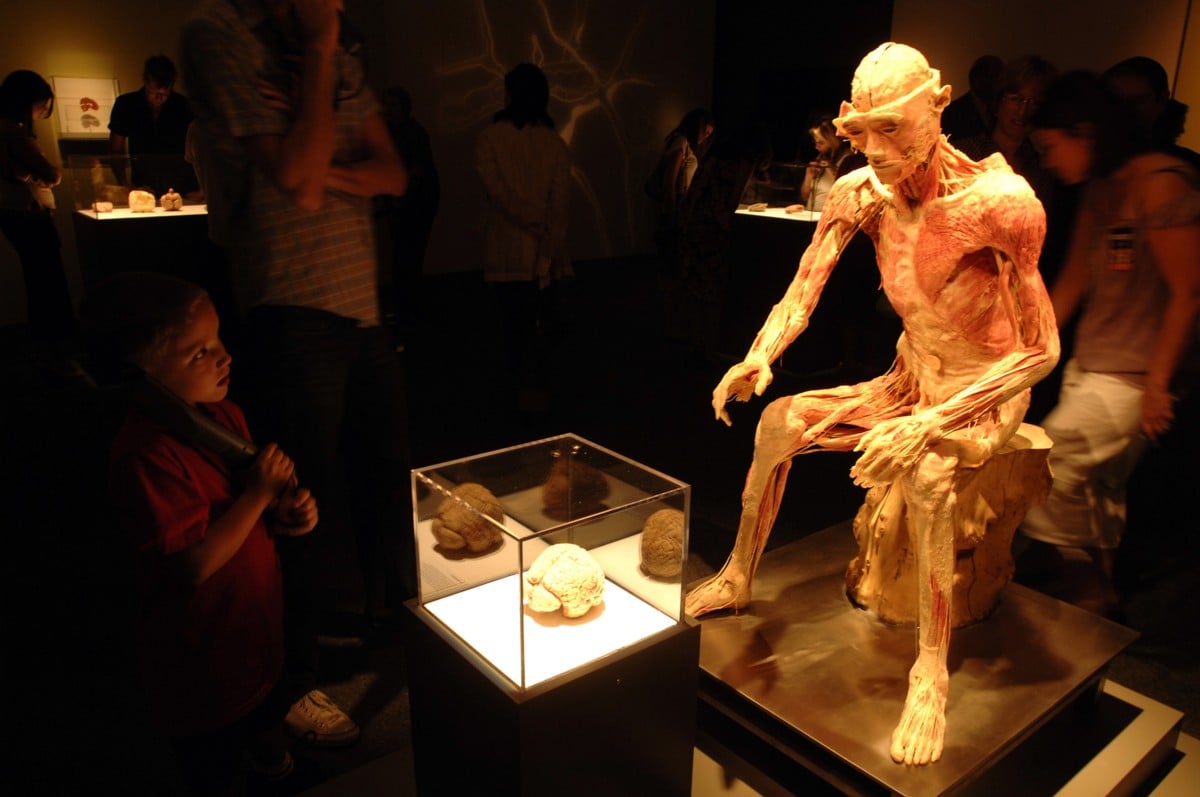
In March 2025, a grieving mother resurfaced a 2018 Australian news article about a controversy surrounding the origin of plastinated human corpses at the “Real Bodies” exhibit at Horseshoe Las Vegas.
Above her Facebook post, she wrote: “This is where I saw Chris’ body for the first time. The article also mentions torture…”
Kim Erick Smith has spent years publicly seeking justice for her son, Christopher Todd Erick, whom she believes was murdered in 2012.
The Dallas County Medical Examiner ruled that the 23‑year‑old died from cyanide toxicity, with underlying cardiac defects. Whether the cyanide was self‑administered or not was undetermined.
Myth Understood — But Still a Myth
Grief, especially a parent’s, can make the impossible feel plausible.
The body that Smith believes was her son’s — which she first saw in the video accompanying the article she shared — has been on display since 2004, eight years before Erick died. There is photographic evidence.
Even more damaging to her claim, public records document that her son’s body was cremated in 2012 at the Chism‑Smith Funeral Home in Irving, Texas. Smith acknowledged this in earlier statements, though she later questioned whether the cremation occurred.
Anything for Clicks
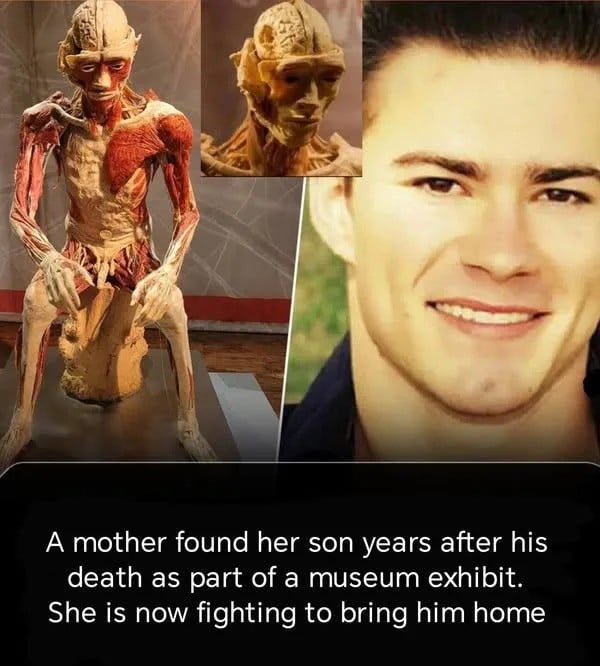
Social media did what it does best with Smith’s claim, however. It passed it along without fact-checking, adding even more fictionalization for clickability.
A November 2025 post from Taylor McMahon, the moderator of a Facebook group called ‘Weird, Strange and Interesting Things,” claimed that Erick’s body was “recorded as unclaimed … because of a paperwork mistake,” then shipped to China and turned into an exhibit piece.
“That single error changed everything,” the post claimed. “Kim was never told. She never had the chance to bury her son or say goodbye. Years later, while watching a news story about the ‘Real Bodies’ exhibition in Las Vegas, she saw a face that froze her in disbelief.
“Now Kim is fighting in court to bring her son home, to restore his dignity in death, and to change how unclaimed bodies are treated so that no family ever faces the same heartbreak.”
We hope you got all the clicks you were hoping for, Taylor.
Not as Easily Disproven
The 2018 article Smith shared examined a separate controversy that has yet to be resolved.
Both “Real Bodies” and the competing exhibit at the Luxor, “Bodies: The Exhibition,” source their specimens from Dalian Hoffen Bio‑Technique and related entities in China. These bodies are described as “unclaimed,” legally donated to medical universities.
“Real Bodies” adds that theirs were “never prisoners of any kind” and “died of natural causes.” But these claims rely entirely on representations provided by Dalian Hoffen Bio-Technique.

In China, “unclaimed” bodies have historically included people who died in custody, including executed prisoners.
Human‑rights organizations have repeatedly documented that the bodies of executed prisoners were treated as state property and used for medical and commercial purposes.
In 2008, after investigations by the New York Attorney General and the New York Times, the company behind the Luxor exhibit admitted it could not independently verify that its specimens weren’t prisoners.
To this day, no bodies exhibit has produced independent documentation proving identity, cause of death, or consent for any individual body. Chinese authorities have never allowed transparent third‑party audits of the chain of custody.
So while the allegation about Christopher Erick is flat‑out false, the broader sourcing controversy remains very much alive.
Look for “Vegas Myths Busted” every Monday on Casino.org. To read previously busted Vegas myths, visit VegasMythsBusted.com. Got a suggestion for a Vegas myth that needs busting? Email corey@casino.org.

 Most Read
Another Shooting Near Las Vegas Strip Casino Injures Man
 972,703 views

Vintners Oppose Napa Valley Casino
556,310 views


Conversation (0)
Be the first to comment on this article.