 Main menu

Legal
Lake Ozark Casino Developer Sued for $1.6M After Scrapping Signature Drive
Posted on: July 16, 2026, 08:22h.
Last updated on: July 16, 2026, 09:33h.


Key Points
- Backers of the failed Lake Ozark casino campaign have been sued over allegations they failed to pay more than $1.5 million for signature-gathering services
- The lawsuit claims campaign leaders used false promises and fabricated wire transfer screenshots to keep the signature drive going before abruptly canceling it
- With the 2026 referendum abandoned, the Osage Nation's new Lake Ozarks casino will face no local commercial casino competition


The investors behind the push for a Lake of the Ozarks casino are facing a federal lawsuit in Missouri, accused of abandoning their 2026 ballot campaign and leaving their signature-gathering firm with $1.6 million in unpaid bills.
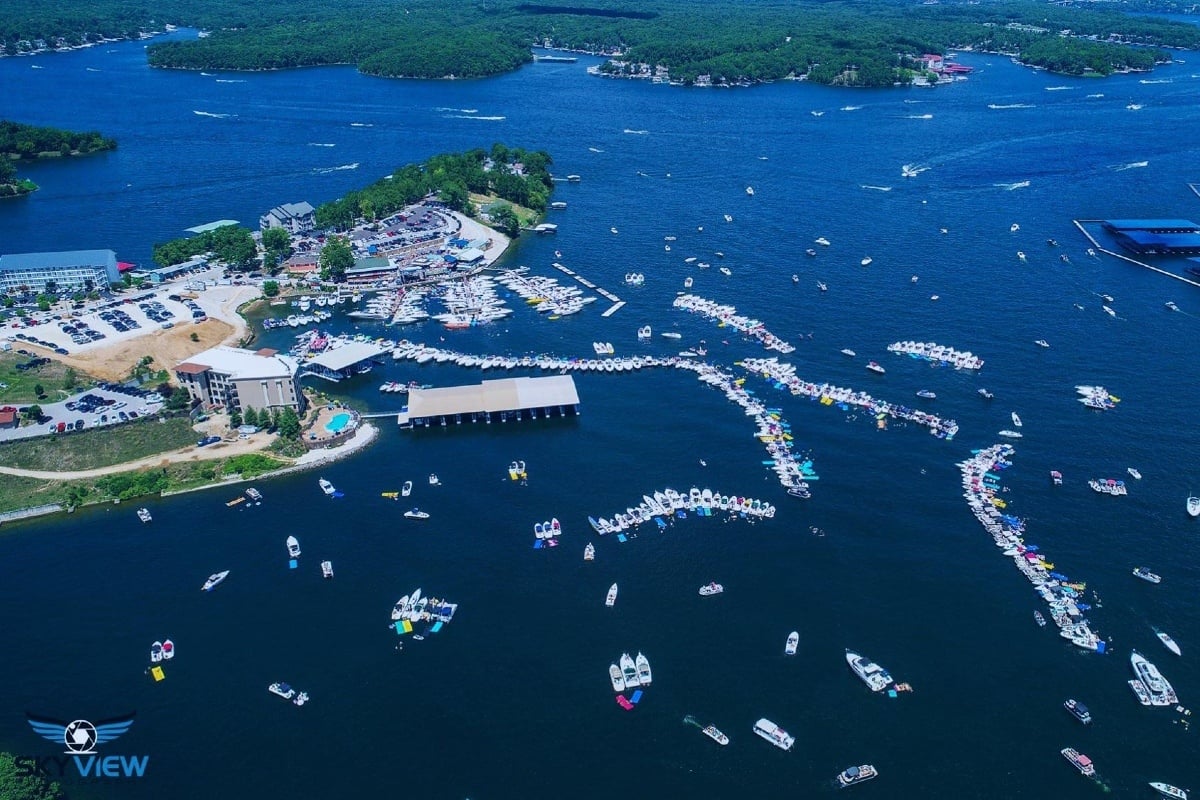
Groundgame Political Solutions, Inc. has named Lake of the Ozarks Community Gaming and the company’s lead investors and executives, Andrew Prewitt, Jeffrey Tegethoff, Anna Tegethoff, and Ramis Gheith, as defendants.
The litigation claims Lake of the Ozarks Community Gaming failed to pay the canvassing service provider after deciding to halt the 2026 casino referendum campaign in April.
Groundgame details in its complaint that it was hired in March 2026 as a subcontractor after the casino investors determined that its primary canvassing service provider wouldn’t meet a May 15 deadline. The campaign was required to gather 200,247 signatures from Missouri voters by the deadline to qualify a November ballot measure asking whether the state constitution should be amended to permit riverboat gaming on or near the Osage River.
Groundgame claims it was later promoted as the casino campaign’s main signature gatherer.
Campaign Claims
Groundgame says it was lured to help the Lake Ozark casino push on promises that adequate funding for its services was in place.
Lake of the Ozarks Community Gaming noted that it ran and paid for a similar campaign in 2024, though the organization at the time was known as Osage River Gaming & Convention Committee and was partnered with Bally’s Corp. to authorize a casino resort on a former quarry east of Highway 54 near the Lake of the Ozarks sign.
To convince Plaintiff to provide its signature collection services, Defendants employed promises of timely payment, successful campaign bonuses, and millions of dollars in investor funding. Defendants also boasted of their prior experience, as this was their second attempt at a constitutional amendment,” Groundgame’s complaint begins.
“The only problem is that Defendants had no intention of paying Plaintiff. Defendants did not have millions in funding on the way and there would be no successful campaign bonuses. And [the] Defendants knew it. Yet, with repeated promises that the money was coming—complete with fabricated screenshots of wire transactions that never occurred—Defendants convinced Plaintiff to take over a massive signature collection effort, then left Plaintiff in the lurch,” the lawsuit alleges.
Groundgame claims Lake of the Ozarks Community Gaming abruptly cancelled the campaign and failed to pay for $1.5 million in services it had already completed.
Groundgame details that it’s owed $1,511,550.24 for services and expenses. The company is seeking a judgment of $1,611,550.24 plus interest, or that amount plus $30,000 in liquidated damages and $3,500 in late fees, plus attorney and court costs. A jury trial is demanded.
Lake Ozarks Tribal Casino
There will be no 2026 Lake Ozarks casino referendum, meaning the Osage Nation will have a local gaming monopoly when its Osage Casino opens on the grounds of a former Quality Inn Hotel at the junction of Bagnell Dam Boulevard and Osage Beach Parkway.
The Osage Casino at Lake Ozarks is a $100 million development featuring a 40K-square-foot casino with 750 slot-like electronic bingo machines, a 150-room hotel, 6,000 square feet of meeting space, and several restaurants and bars.
The project is a tribal initiative as permitted by the federal Indian Gaming Regulatory Act, meaning it won’t offer traditional slot machines, live-dealer table games, or sports betting, as found inside Missouri’s riverboat casinos.


 Most Read
Another Shooting Near Las Vegas Strip Casino Injures Man
 972,800 views

Vintners Oppose Napa Valley Casino
556,403 views


Conversation (1 comment)