 Main menu

Las Vegas
Judge Upholds Vegas Strip Ban on Stopping Along Pedestrian Bridges
Posted on: October 9, 2026, 01:03h.
Last updated on: October 9, 2026, 01:03h.

Key Points
- A U.S. District Judge upheld Clark County's ban on stopping or standing on Las Vegas Strip pedestrian bridges, ruling that it does not violate constitutional rights
- Passed in January 2024, the ordinance classifies pausing on elevated walkways as a misdemeanor punishable by up to six months in jail or a $1,000 fine
- The ACLU of Nevada appealed the decision to the Ninth U.S. Circuit Court of Appeals on behalf of a street performer and a disabled resident


A federal judge has upheld Clark County’s controversial ban on stopping or standing on pedestrian bridges along or around the Las Vegas Strip, rejecting an American Civil Liberties Union (ACLU) challenge that argued the rule violates constitutional protections.
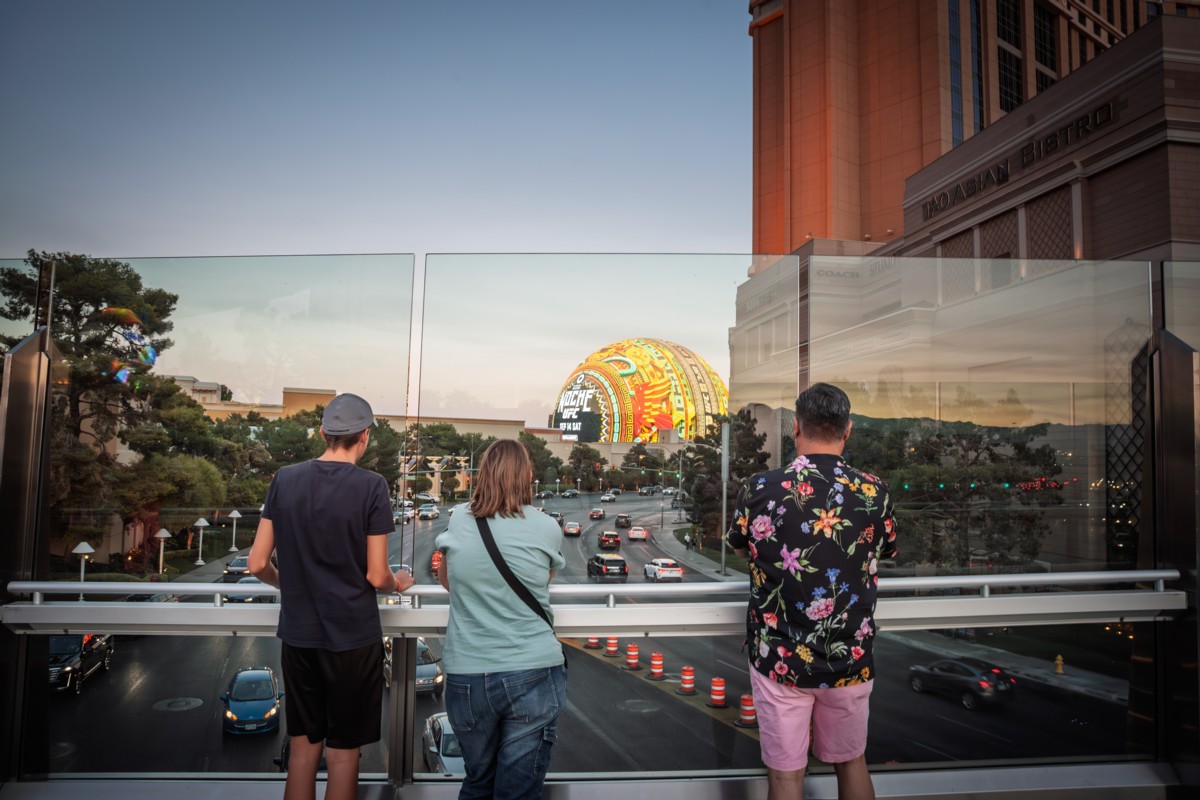
U.S. District Judge Jennifer Dorsey issued the ruling on Sept. 25, concluding that the ordinance does not interfere with protected speech or prevent people from exercising their civil rights. The decision was first reported by the Nevada Independent this week.
Stop Stopping
The ordinance—passed by the Clark County Commission in January 2024—made it a misdemeanor to “stop, stand, or do something to cause someone to stop or stand” on any of the elevated pedestrian bridges crossing over or near Las Vegas Boulevard. Violations carry penalties of up to six months in jail and/or $1,000 in fines.
“The bridges were not designed for pedestrians to stop, stand or congregate,” Clark County Counsel Lisa Logsdon explained at the time. “The pedestrian flow zone is similar to pedestrian zones located in other large cities, such as New York City.”
The law quickly earned the nickname “Strip Selfie Ban,” reflecting widespread confusion over whether tourists could stop to take photos.
Both the county, which has full jurisdiction over the Strip, and the Las Vegas Metropolitan Police Department have stated that selfie-takers would not be targeted. However, they are not excluded by the ordinance’s language.
In her ruling, Dorsey acknowledged that the ordinance is restrictive but said it remains within constitutional bounds. She pointed to the unpredictable nature of foot traffic on the Strip, where concerts, sporting events, and conventions can rapidly swell crowds.
“It is difficult to predict when large crowds may be on the pedestrian bridges,” she wrote, adding that the county has a legitimate interest in preventing bottlenecks in areas designed to move thousands of people safely.
Statute of Liberty
The ACLU of Nevada challenged the ordinance in February 2024 on behalf of two plaintiffs: Brandon Summers, a violinist who has performed for tips on the Strip since 2009, and Lisa McAllister, a wheelchair user who said the ordinance could criminalize her need to pause on bridges whenever her arms grow tired.
Because the ordinance invites selective and discriminatory enforcement, the ACLU argued, it violates the 14th Amendment. The organization also argued that the law is “unconstitutionally vague” and fails to accommodate protected First Amendment activities, including political sign‑holding, street performance, or simply stopping to take a photograph.
The ACLU described the ordinance as “the most extreme regulation brought forward in years,” contending that it criminalizes everyday pedestrian behavior and gives law enforcement excessive discretion.
Despite those concerns, Dorsey found that the ordinance is narrowly tailored enough to withstand constitutional scrutiny. She noted that the county could have chosen less restrictive measures—such as limiting the ban to certain times of day or specific bridges—but said the existing rule “does not substantially burden speech and is not broader than necessary to achieve the government’s interest.”
The ACLU filed a notice of appeal on Sunday (Oct. 4), seeking review from the Ninth U.S. Circuit Court of Appeals. The case will now move to a higher court.

 Most Read
Another Shooting Near Las Vegas Strip Casino Injures Man
 972,523 views
Vintners Oppose Napa Valley Casino
556,144 views


Conversation (0)
Be the first to comment on this article.