 Main menu


Sports Betting
FTC Eyes Online Sports Betting Over Alleged Deceptive Marketing Practices
Posted on: October 14, 2026, 07:37h.
Last updated on: October 14, 2026, 10:03h.


Key Points
- The FTC is reportedly investigating whether online sportsbooks use deceptive advertising
- Legal sportsbooks accepted nearly $167 billion in wagers in 2025, generating almost $17 billion in gross revenue
- The early-stage review could bring federal scrutiny to sportsbook marketing


The Federal Trade Commission (FTC) is reportedly launching an investigation into online sports betting and how sportsbooks market to consumers.
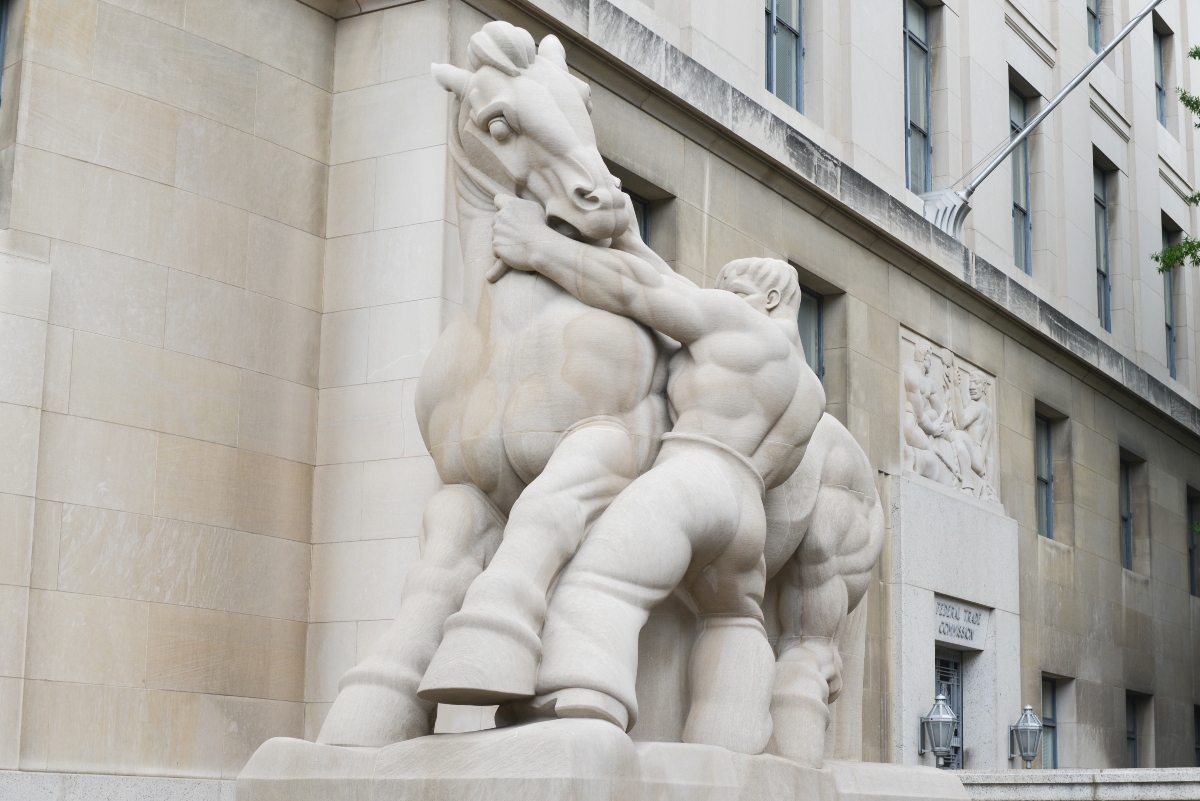
The newly established Washington Sun, a media publication consisting of former Washington Post journalists, reports that the Federal Trade Commission (FTC) is probing claims that online sportsbooks like DraftKings and FanDuel deceive and mislead consumers in their advertising.
“Both political and career staffers at the agency have been involved in reviewing online sportsbooks, the sources said, though the evaluation is in its early stages,” Jeff Stein wrote for the Washington Sun.
Legal single-game sports gambling was limited to Nevada before the US Supreme Court in May 2018 overturned PASPA (Professional and Amateur Sports Protection Act). Today, 32 states and Washington, DC, have legal online sports betting.
Sports Betting Boom
In 2025, legal sportsbooks took almost $167 billion in bets from consumers, generating gross revenue (bettor losses) of nearly $17 billion.
The vast majority of handle flows through digital channels, with top-tier sports betting states—including New York, New Jersey, Illinois, Nevada and Pennsylvania—all supporting mobile betting ecosystems.
Critics argue that online sportsbooks prey on problem gamblers, encouraging sustained losses through promotional credits, odds boosts and VIP rewards. It is also well-documented that consistent winning bettors face stake limits or account restrictions from digital operators, with DraftKings co-founder Matt Kalish previously acknowledging that account limiting is necessary for financial sustainability.
In April 2025, the City of Baltimore sued DraftKings and FanDuel on allegations that the online sportsbooks violated local consumer protection laws by exploiting vulnerable consumers, many of them young men.
DraftKings and FanDuel put corporate greed ahead of the well-being of Baltimoreans, getting users hooked to their gambling platforms and then leveraging troves of data to identify, target, and exploit the most vulnerable among them,” the complaint alleged.
City attorneys say the online sportsbooks have caused “significant harm” to the community.
What Does the FTC Do?
The FTC operates under two primary mandates: safeguarding consumers and enforcing market competition.
The agency regularly reviews claims of unfair and deceptive business practices, including false advertising. The agency regularly investigates allegations of unfair or deceptive practices, encompassing false advertising, fraudulent schemes, identity theft and predatory pricing.
Its regulatory oversight spans virtually every commercial sector, including gaming. scams, identity theft, and deceptive pricing. The FTC is involved in most industries, including gaming.
Tilman Fertitta’s proposed $17.6 billion takeover of Caesars Entertainment is subject to FTC review. The agency will determine if the combined company, which would include Fertitta’s Golden Nugget casinos, would raise antitrust concerns, most critically in Las Vegas and Atlantic City.
Another recent FTC action relevant to the gaming industry came in December 2024, when the agency ordered casino-hotels to include resort fees in upfront room rates.
In another recent action, the FTC scrutinized deceptive marketing practices involving microtransactions and loot boxes in video games.
The resulting transparency standards established a regulatory blueprint that industry analysts expect the commission to apply when evaluating promotional credits and bonus bets in sports wagering.


 Most Read

Another Shooting Near Las Vegas Strip Casino Injures Man
 972,973 views

Vintners Oppose Napa Valley Casino
556,566 views


Conversation (0)
Be the first to comment on this article.