 Main menu

Slots
Crooks Steal Eight-Liner Slot Machines by Impersonating Non-Existent Texas Gaming Commission
Posted on: November 20, 2020, 01:30h.
Last updated on: November 20, 2020, 02:47h.


Investigators from the Texas Gaming Commission seized gambling machines known as eight-liners from Houston-area businesses last month. They said the machines were involved in illegal gambling.
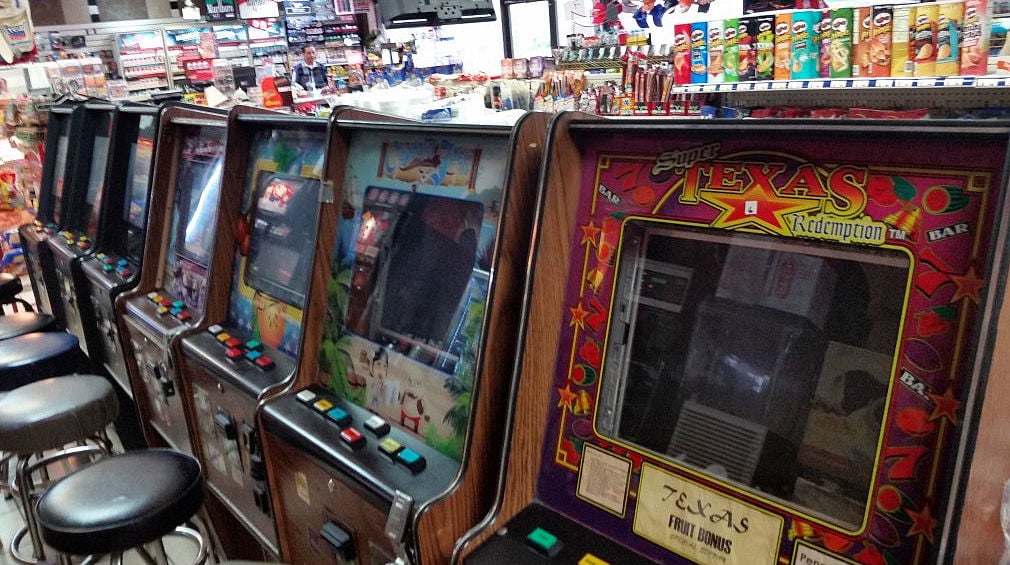
The only problem is that the Texas Gaming Commission does not exist. Meanwhile, impersonating a public servant is a third-degree felony punishable up to ten years in prison.
Houston police said Thursday they are looking for two men suspected of that very felony, and of stealing the machines from a Valero gas station in late October. Police believe the bogus regulators may have struck before, and that victims have been too embarrassed to come forward.
Phony Seizure Order
The two men entered the Valero shortly after 8 pm on October 27 and identified themselves as investigators with the gaming commission.
They had badges and handguns and showed the clerk a phony seizure order which appeared to have an official stamp and a judge’s signature on it – both fake, authorities said. They also brought dollies to lift the machines onto the back of a large white Chevrolet 2500 pickup.
Each of the stolen machines is valued at $2,500, plus the cash inside.
The bogus gaming regulators are described as between 40 and 45 years old. One wore jeans, a white polo shirt, a mask, and a camouflage cap. The other wore jeans, a brown sports coat, and a mask.
The ‘Fuzzy Animal Exception’
The reason Texas does not have a gaming commission is that there’s precious little gambling to regulate. There is only the lottery, some charitable bingo, and three Native American gaming halls offering electronic bingo, two of which are being threatened with closure by the state.
Even the lottery is controversial. Its abolition has been debated in the legislature ever since its 1991 launch.
The machines targeted by the crooks usually dole out tickets that can be redeemed for small prizes, since Texas law forbids gaming devices from paying out cash. The machines are also known as eight-liners because of their eight pay lines.
Therefore, prizes must be cashless and worth no more than $5, or 10 times the cost to play the game, to be legal under state law. This is known as the “fuzzy animal exception,” a 1993 Texas Supreme Court ruling that clarifies that amusement games that award low-value prizes or tickets are legal.
Some operators break the law by offering illegal cash prizes, which is why raids of the type conducted by the two imposters are not unheard of — although these would normally be carried out by a local police department.

 Most Read

Another Shooting Near Las Vegas Strip Casino Injures Man
 972,491 views

Vintners Oppose Napa Valley Casino
556,118 views


Conversation (0)
Be the first to comment on this article.