 Main menu

Legislation
Trump’s ‘Big, Beautiful Bill’ Would Decimate Professional Gamblers – Literally
Posted on: July 2, 2025, 01:14h.
Last updated on: July 2, 2025, 02:03h.


- New amendment limits deductible gambling losses to 90%.
- Professionals could owe taxes on nonexistent income.
- House-Senate showdown will determine final tax outcome.
US President Donald Trump’s so-called “big, beautiful bill” would have a devasting impact on the lives of professional gamblers if it were to pass in its current form.
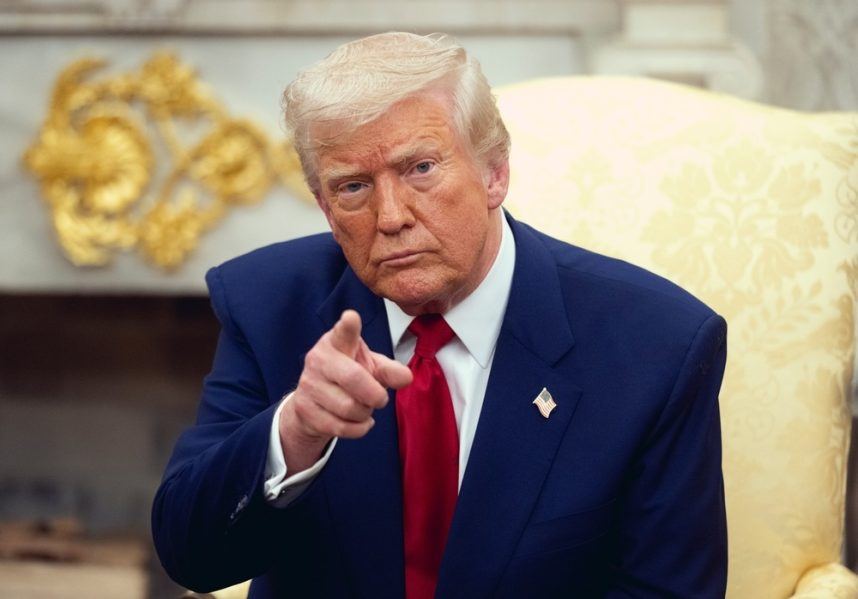
The sprawling federal spending bill, which was approved by the Senate this week, includes a late-stage amendment that would significantly raise taxes for professional gamblers by limiting how much of their losses they can deduct.
Currently, US gamblers can deduct losses from their winnings provided those losses don’t exceed their total gambling income. But under the new amendment, only 90% of those losses will be deductible, meaning even gamblers who break even on paper could end up with a sizable tax bill.
How Does Big, Beautiful Bill Hurt Gamblers?
Let’s break it down more simply. Under current law, a hypothetical gambler who breaks even in a year by winning $100K and losing $100K currently pays nothing. Under the new rules, they would be required to pay tax on $10K, as only $90K of their losses could be deducted.
The bottom line is that it makes it harder to turn a profit, placing a huge burden on an already volatile profession.
The proposed tax change isn’t just harmful, it’s a literal decimation of professional gamblers’ livelihoods. The term “decimate” originates from the Latin decimatus, meaning “to destroy one-tenth,” a brutal punishment once inflicted on Roman legions to make an example of soldiers who had shown cowardice, desertion, or mutiny.
In this case, the government would effectively remove 10% of gamblers’ deductible losses, taxing income that doesn’t actually exist.
The bill squeaked through the Senate on Tuesday in a 51-50 vote, with Vice President JD Vance casting the decider. It now returns to the House, which passed its version of the legislation in May. Notably, the House version doesn’t include the gambling amendment, setting the stage for a showdown over the final language of the bill.
Phantom Income
In a video posted to X, poker pro Phil Galfond warned that the change could result in taxes being owed on “phantom” income, disproportionately hurting high-volume and professional players.
Let’s say that over the course of all the sessions that we played throughout the year, we won $5.2 million and we lost $5 million dollars for a net of $200,000,” Galfond said.
“Now, we would pay as if we won $5.2 million, minus 90 percent of $5 million, which is $4.5 million for a fake net of $700,000… So you would make $200,000 during the year and pay tax as if you made $700,000.”
Gambling Misunderstood
Critics of the amendment say it misunderstands how professional gambling works and risks pushing skilled players out of the regulated US market. Galfond and others argue that the new tax burden could encourage gamblers to use offshore platforms that don’t provide the same consumer protections or generate tax revenue for the US government.
The American Gaming Association (AGA), which reported $114.6 billion in US gambling revenue for 2024, hasn’t yet released a formal statement, although lobbying efforts are likely already in motion to block the measure in the House.
If signed into law, the change would take effect in tax year 2026. Until then, the House must either accept the Senate’s version or push back. For now, the gambling world is watching closely — and bracing itself.

 Most Read

Another Shooting Near Las Vegas Strip Casino Injures Man
 972,624 views

Vintners Oppose Napa Valley Casino
556,232 views


Conversation (1 comment)