 Main menu

Prediction Markets
Supreme Court Will Field Case About Whether States Can Regulate Prediction Markets
Posted on: May 22, 2026, 09:12h.
Last updated on: May 26, 2026, 07:43h.


- The US Supreme Court is being asked to consider whether a state can ban sports event trading on federally regulated prediction markets
- SCOTUS gave states the right to determine their sports betting laws through a May 2018 landmark ruling
- New Jersey says Kalshi is operating an unlicensed sportsbook
Does a state have regulatory authority to ban certain event contracts on federally regulated prediction markets? The United States Supreme Court might answer that question.
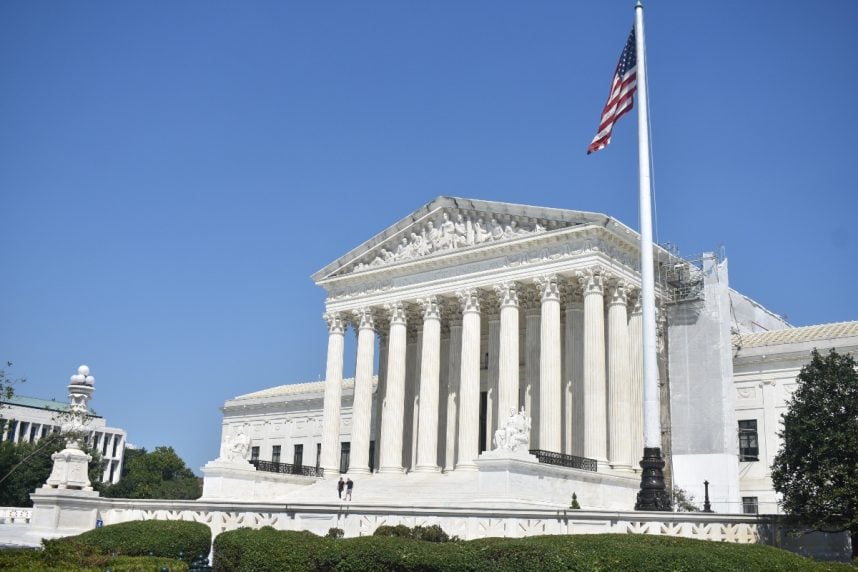
In April, the US Court of Appeals for the Third Circuit ruled in a 2-1 decision that prediction market Kalshi would likely succeed in its defense that New Jersey cannot dictate what’s traded on its platform.
New Jersey sought to expel trading contracts involving sports, arguing that such activity constitutes sports betting and that Kalshi is therefore operating unlawfully as an unlicensed sportsbook.
In a court filing this week, Kalshi and New Jersey asked the Third Circuit to “stay all proceedings.” The notice comes after New Jersey informed Kalshi that it would appeal the case to the US Supreme Court.
Defendants have indicated that they intend to seek further review of the Third Circuit’s decision in the US Supreme Court. The parties therefore respectfully request that this Court continue to stay proceedings pending any decision by the US Supreme Court to grant or deny certiorari and, should certiorari be granted, pending the Supreme Court’s final disposition of the case,” the joint status report explained.
“A continued stay would conserve the parties’ and this Court’s resources and advance the interests of judicial economy and efficiency,” the petition added.
Will SCOTUS Hear the Case?
The Supreme Court fields thousands of cases each year. It only accepts about 1% to 2% of the petitions.
In the gaming industry, the high court famously agreed to review New Jersey’s appeal that PASPA, the Professional and Amateur Sports Protection Act, violated anti-commandeering interpretations of the US Constitution.
In May 2018, SCOTUS agreed that the federal law wrongly allowed Nevada to offer sports betting on single-game outcomes while commanding the 49 other states to prohibit such gambling.
Prediction markets are highly controversial and garnering much attention in state capitals and on Capitol Hill. Just this week, a Senate subcommittee heard testimony from the American Gaming Association that the gaming industry believes sports event contract trading to be unregulated sports gambling.
Constitutional Challenge
Like New Jersey’s PASPA challenge, its prediction market case deals with interpretations of the US Constitution.
Since prediction markets are federally regulated by the Commodity Futures Trading Commission (CTFC), the CFTC’s rule takes precedence over state laws. The CFTC is tasked with governing and regulating conditions of the Commodity Exchange Act, a federal statute passed in 1936.
Article VI, Clause 2, known as the Supremacy Clause, says the US Constitution shall be the “supreme Law of the Land.”
“Judges in every State shall be bound thereby, any Thing in the Constitution or Laws of any State to the Contrary notwithstanding,” the founding framework reads.

 Most Read

Another Shooting Near Las Vegas Strip Casino Injures Man
 972,581 views

Vintners Oppose Napa Valley Casino
556,202 views


Conversation (0)
Be the first to comment on this article.