 Main menu

Financial
Stifel: Diller Likely Has to Bid Higher for MGM to Get Deal Done
Posted on: June 15, 2026, 08:49h.
Last updated on: June 16, 2026, 06:05h.


- Analyst says there’s “less internal support” for MGM takeover offer than the bid to acquire Caesars
- MGM shares trade above Diller’s offer price, implying investors expect a revised bid
- There’s downside risk should offer be rejected
It’s been two weeks since Barry Diller’s People Inc. (NASDAQ: PPLI) offered to acquire MGM Resorts International for $18 billion, valuing the casino operator at $48.30 a share, but there are no guarantees that this proposal will reach the finish line. Indeed, MGM’s price action suggests an upward revision is needed.
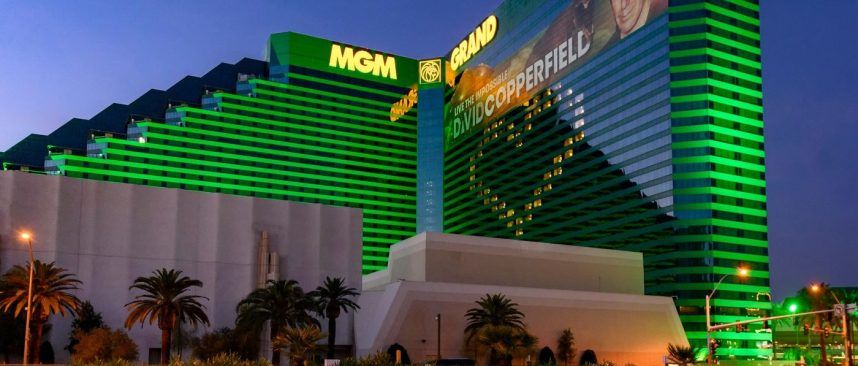
In a new report to clients, Stifel analyst Steven Wieczynski said “there appears to be less internal support for this transaction” compared to Tilman Fertitta’s $17.6 billion offer to take Caesars Entertainment (NASDAQ: CZR) private.
Investors clearly believe the initial bid undervalues the company as the shares now trade above the offer price,” observes the analyst. “While many questions remain, the most important for us centers around the opportunity for higher bids to come in and what the MGM Board would be willing to accept.”
Last Friday (June 12), MGM shares closed at almost $49, above Diller’s offer price, and pre-market trading indicates the stock could make a run at $50 today, potentially signaling that MGM shareholders view Diller’s proposal as too low.
Thus far, the Bellagio operator has confirmed receipt of the takeover offer, but it hasn’t publicly commented on the quality of the bid. Wieczynski says there’s “meaningful risk that the current offer is terminated and shares re-rate lower.”
Comparing MGM, Caesars Bids
MGM and Caesars are the two largest operators on the Las Vegas Strip, meaning analysts and investors are looking for similarities and stark differences in the two takeover pitches.
On the surface, Diller’s bid for MGM carries higher earnings before interest, taxes, depreciation, amortization, and restructuring or rent costs (EBITDAR) multiple of 7.7x the 2027 estimate compared to Fertitta’s 7.2x for Caesars, but there are various reasons why Diller’s offer may be viewed as inferior.
Those include the point that the implied price premium of 24% for MGM is barely more than half the 46% premium Fertitta is assigning to Caesars.
“Second, we believe the higher quality of MGM’s assets, favorable demographic positioning (Macau exposure, Las Vegas Strip high-end), and attractive long-term growth pipeline (Japan casino, digital exposure) warrant a greater relative valuation premium than a half-turn on the EBITDAR multiple,” adds Wieczynski.
Regarding MGM Osaka, some analysts believe that venue could be worth $31 to the operator’s share price when it opens in 2030, but others think it’s possible that if Diller is successful in acquiring the Cosmopolitan operator, he could divest the company’s stakes in MGM China and the Japan casino resort.
It Might Be Hard for MGM to Find Another Buyer
While MGM hasn’t publicly accepted or rejected Diller’s proposal, management consistently makes the case the stock is undervalued – something it backs up with dedicated share repurchases. It’s cut its shares outstanding tally by nearly 50% over the past five years.
Wieczynski acknowledges Diller may very well have to boost his offer to get the deal across the finish line. From that it can be inferred that MGM is in a position where its only options are to accept or reject it — the latter risking a significant sell-off — because another suitor may not come calling.
“We would note, however, that the structure of Diller’s bid allows for private equity (PE) involvement without taking over control of the enterprise, which we think mitigates the probability of a competing bid from PE, and we struggle to identify a rational strategic bidder for a company this large and diversified,” concludes the analyst.

 Most Read

Another Shooting Near Las Vegas Strip Casino Injures Man
 972,700 views

Vintners Oppose Napa Valley Casino
556,306 views


Conversation (0)
Be the first to comment on this article.