 Main menu

Crime & Scandals
RFID Cards Used in Houston Poker Cheating Scandal
Posted on: June 24, 2025, 04:31h.
Last updated on: June 24, 2025, 04:31h.


- Trio caught cheating using RFID-enabled cards at poker room
- Former employee “Carlito” confessed, accomplices fled scene
- JokerStars reimbursed players, vows stricter future security
A high-stakes poker game at a Houston area cardroom was upended Sunday night after a trio of players were found to have cheated by introducing a deck of RFID-enabled playing cards into the mix.
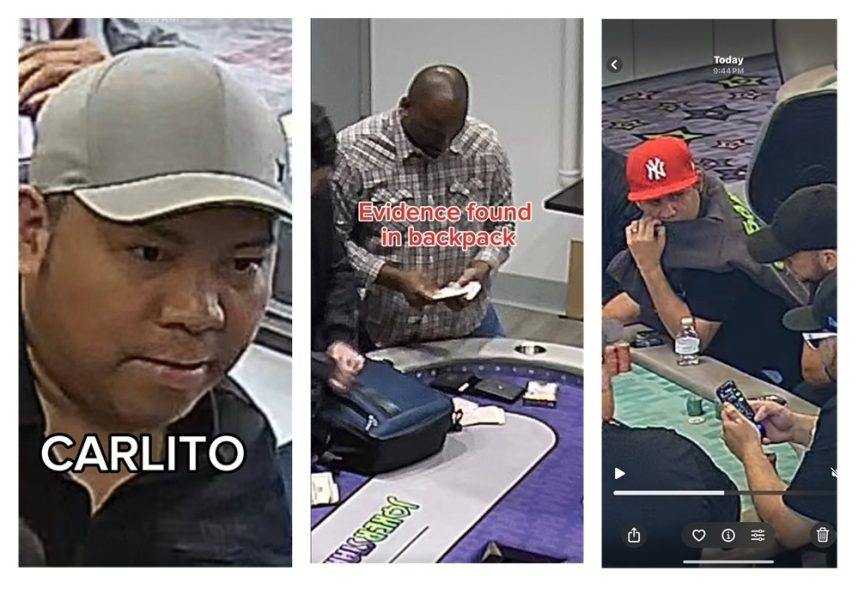
The incident occurred at JokerStars Poker Room in southwest Houston and involved a former employee identified by club management only as “Carlito.” While management has not publicly confirmed his full identity, social media users have linked this individual to a Houston-area poker player named Carlito Almirol.
According to a statement released by JokerStars, security footage revealed that “Carlito” worked with two players he had invited to the club, identified only as “Marcelo” and “Ivan”.
The review revealed that the three players allegedly worked together to manipulate the game using the RFID deck and an electronic card-reading device.
What’s RFID Cheating?
RFID stands for radio frequency identification. RFID-enabled playing cards contain tiny, embedded microchips, each programmed to transmit information about the card’s value and suit when scanned.
These cards are commonly used in legitimate settings to facilitate live broadcasts and tournament tracking, allowing cameras and staff to instantly know players’ hole cards. But when used for nefarious purposes, they can give dishonest players an unfair advantage.
Paired with concealed reading devices, such as scanners hidden in clothing or bags, the card data can be captured during play. This information can then be relayed in real-time to an accomplice through a smartwatch, earpiece, or vibration alerts, effectively revealing opponents’ cards without physically touching or marking the deck.
Carlito’s Way
General Manager Jason Marshall conducted a behind-closed-doors investigation before confronting “Carlito” directly, according to the JokerStars statement. Marcelo and Ivan fled the scene during the confrontation and were not detained, the statement said.
“Carlito” initially denied the accusations, but later confessed to players at the table, including some of his close friends. When staff discovered the concealed device in his backpack, he was immediately ejected from the club and banned for life.
JokerStars emphasized its zero-tolerance policy for cheating and stated that all players affected by cheating had been reimbursed.
“We are deeply saddened by Carlito’s actions as he is a former employee that represented the JokerStars name. This is a huge disappointment not just to us but the entire poker community,” the statement read.
The club assured members that it remains committed to providing a fair gaming environment. To prevent future incidents, JokerStars is developing custom playing cards designed to resist tampering or unauthorized electronic reading.

 Most Read
Another Shooting Near Las Vegas Strip Casino Injures Man
 972,608 views

Vintners Oppose Napa Valley Casino
556,221 views


Conversation (1 comment)