 Main menu

Commercial Gaming
Prediction Market Murder Trial Betting Sparks Fears of Jury Tampering in US Courts
Posted on: October 12, 2026, 04:19h.
Last updated on: October 12, 2026, 04:19h.


Key Points
- Polymarket attracted more than $600,000 in trading volume on Lindsay Clancy's murder case, including bets placed after a mistrial
- Tyler Robinson's alleged murder of Charlie Kirk has attracted more than $300,000 in trading, prompting concerns from his defense attorneys
- Legal experts warn that jurors could potentially bet on verdicts themselves, creating financial incentives to influence criminal trial outcomes


Hundreds of thousands of dollars are being traded on the outcomes of high-profile murder cases, raising fears that prediction-market gamblers could attempt to influence jurors or interfere with verdicts.
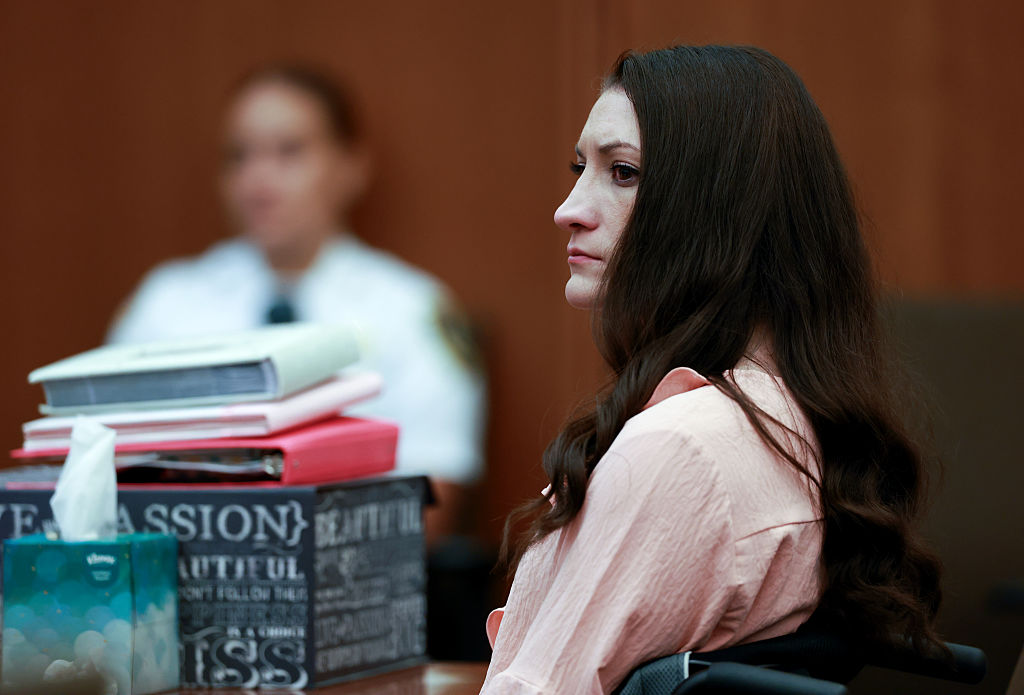
Polymarket has hosted betting markets on several criminal cases, including the murder trials of Massachusetts mother Lindsay Clancy and Tyler Robinson, the Utah man accused of assassinating conservative activist Charlie Kirk.
Legal experts and court officials are concerned that those with inside knowledge of jury deliberations could profit from confidential information, while gamblers might even have financial incentives to interfere with verdicts, according to The Wall Street Journal.
Betting on Murder
During Clancy’s trial this summer, more than $100,000 was wagered on whether she would be convicted of murdering her three young children in 2023.
Clancy’s defense argued that she was not criminally responsible because she had been suffering from postpartum psychosis.
The trial ended in a mistrial on September 4, with the jury deadlocked 11–1 in favor of finding her not guilty by reason of insanity.
But trading didn’t stop there, with more than $500,000 in additional volume following the mistrial, as gamblers speculated on whether Clancy would eventually be convicted.
Meanwhile, more than $300,000 was wagered on Robinson’s case before he formally pleaded not guilty last month.
Robinson is accused of fatally shooting Kirk during an appearance at Utah Valley University in September 2025. Prosecutors are seeking the death penalty, although no trial date has been set.
His attorneys have raised concerns about prediction-market betting, arguing that allowing cameras in the courtroom could encourage further speculation and jeopardize his right to a fair trial.
Could Gambling Influence a Verdict?
While there is no evidence that prediction markets have influenced a verdict in either case, courts in Chicago and Manhattan are among those examining how to address the potential risks, according to the Journal.
Jurors could be influenced by betting odds that suggest a defendant is likely to be convicted, potentially affecting their interpretation of the evidence, for example. Even more troublingly, they could place bets themselves and then vote for the outcome that would earn them a payout.
The issue has also attracted attention on Capitol Hill. In July, Democratic Reps. Jamie Raskin of Maryland and Hank Johnson of Georgia urged federal judicial authorities to prohibit judges, law clerks, and court employees from participating in prediction markets.
Prediction-market operators maintain that their platforms provide forecasts of future events rather than conventional gambling.
But as betting markets move into criminal courtrooms, the question facing the justice system is whether the business of predicting verdicts could eventually become the business of influencing them.

 Most Read
Another Shooting Near Las Vegas Strip Casino Injures Man
 972,577 views

Vintners Oppose Napa Valley Casino
556,196 views


Conversation (0)
Be the first to comment on this article.