 Main menu

Legal
Judge Grants Injunction, Clearing Texas Tech QB Brendan Sorsby to Play This Fall
Posted on: June 8, 2026, 11:07h.
Last updated on: June 9, 2026, 10:41h.


- U.S. District Court judge grants temporary injunction against NCAA in Sorsby case
- Decision restores college eligibility, allowing quarterback to suit up for the 2026 college football season after investigation into a gambling addiction
- In court documents, Sorsby admitted to placing thousands of sports bets, including wagers on the Indiana Hoosiers football team when he was a back-up QB there from 2022 to 2023
A U.S. District court judge has granted a temporary injunction against the NCAA opening the door for Texas Tech quarterback Brendan Sorsby to resume his college football career amid gambling allegations.
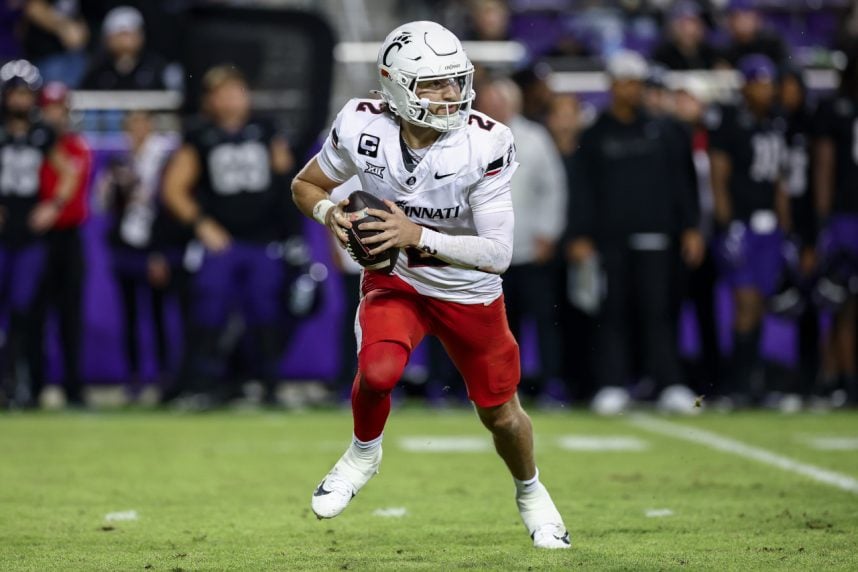
Sorsby and his lawyers had sued the NCAA, seeking the court injunction in Lubbock County District Court so he could re-start preparations with Texas Tech for Fall college football season. The NCAA had previously ruled him ineligible and denied his request for reinstatement.
According to reporting by ESPN, District Court Judge Ken Curry ruled that the NCAA (National Collegiate Athletic Association) cannot prevent Sorsby from “practicing, playing or otherwise participating on Texas Tech’s football team for the 2026 season.”
The judge said Sorsby convinced the court he would suffer “irreparable” injury if the temporary injunction was not granted.
Sorsby will now be eligible to play for the Texas Tech Red Raiders in 2026.
Thousands of Bets
The extent of Sorsby’s gambling addiction had been detailed in court documents over the past several weeks.
Sorsby wagered $90,000 during his college career at Indiana, Cincinnati and Texas Tech, according to documents obtained by ESPN. He wagered over several different sportsbooks, with accounts registered in his name, a family members’ name and friends’ names. He sent thousands of dollars to friends to make bets on his behalf.
When attending Indiana, as a backup quarterback, he was said to have placed bets on Hoosiers games, but not on games in which he played or where there was a chance he would play, according to those documents.
Broken Rules
On May 30, ESPN reported that the NCAA had submitted a legal brief to the district court declaring that Sorsby’s college football career was effectively over.
Under current rules, student-athletes are forbidden to bet on any NCAA-sanctioned sport, college or professional, and face permanent loss of eligibility if found to have bet on their own team, or on teams in different sports from the same school.
NCAA membership had previously voted down a potential change to the rules last November that would have allowed student-athletes to bet on pro sports.
The NCAA wrote in court documents that granting Sorsby’s injunction would have wide-ranging, destabilizing impacts, that it would sanction sports gambling, leaving student-athletes more vulnerable, knowing they could go to court and fight a loss of college eligibility if caught.
Texas Tech Supported Sorsby
Sorsby’s lawyer claimed that his excessive gambling was the result of a mental health disorder, specifically an anxiety condition, and that the NCAA is required to support individuals rather than punish them.
“As a generation of college athletes face the legalization and rapid proliferation of sports betting in our country, gambling addiction is rising to the point of epidemic among college aged men in particular,” wrote Texas Tech President Lawrence Schovanec, in response to the NCAA’s decision, reported in CBS Sports.
“The NCAA’s stated mission includes ‘fostering [student-athletes’] lifelong well-being,’ and they have claimed their goal is to promote a ‘culture of care’ for student athletes’ mental health. Gambling addiction is a clinically recognized behavioral disorder.”
Sorsby had just completed a 35-day inpatient gambling rehabilitation program, in the hopes of re-starting his NCAA career.
Top-Level Quarterback
Texas Tech had a lot riding on Sorsby playing for the team this year. Sorsby wasn’t just another transfer quarterback last fall. He was a top target in the offseason transfer portal, one of the most expensive transfer acquisitions in the NIL era.
His statistics from last season while at Cincinnati backed that up – throwing for roughly 2,800 yards and 27 touchdowns, with only five interceptions. Plus, he can run, with over 1,300 career rushing yards in college, making him a legitimate dual-threat quarterback.
Sorsby was reportedly being paid $5 million to play quarterback for Texas Tech this season and was expected to lead the college’s charge towards a national championship.
NCAA Response
The NCAA issued a statement via X after the judge’s decision, voicing its disapproval.
“The NCAA strongly disagrees with the court’s ruling in Sorsby’s case and is deeply concerned about the damaging, far-reaching and broadly destabilizing ramifications of this outcome – which undermines and corrupts the integrity of sports.” the NCAA statement read.
“The NCAA is committed to supporting student-athlete mental health but must continue to aggressively defend against actions that defraud college athletics and threaten competitive integrity, such as betting on one’s own sport,” the governing body added.

 Most Read

Another Shooting Near Las Vegas Strip Casino Injures Man
 972,726 views

Vintners Oppose Napa Valley Casino
556,330 views


Conversation (1 comment)