 Main menu

Prediction Markets
Prediction Markets Face NYC Council Probe Over Deceptive Marketing Claims
Posted on: August 12, 2026, 11:19h.
Last updated on: August 13, 2026, 05:55h.


Key Points
- NYC Council launched a probe into prediction markets' marketing practices, weighing new consumer protections, especially for youth
- It follows NY AG Letitia James's lawsuits against several prediction markets for allegedly offering unlicensed gambling
- CFTC Chair Michael Selig defends the platforms as legitimate financial innovation, pushing back against state and international regulators who call them gambling


Prediction markets are currently the subject of more than two dozen lawsuits challenging whether the online trading platforms are offering unregulated forms of sports gambling, with several cases filed in New York.
The New York City Council is now launching an investigation into how prediction markets advertise their platforms within the five boroughs.
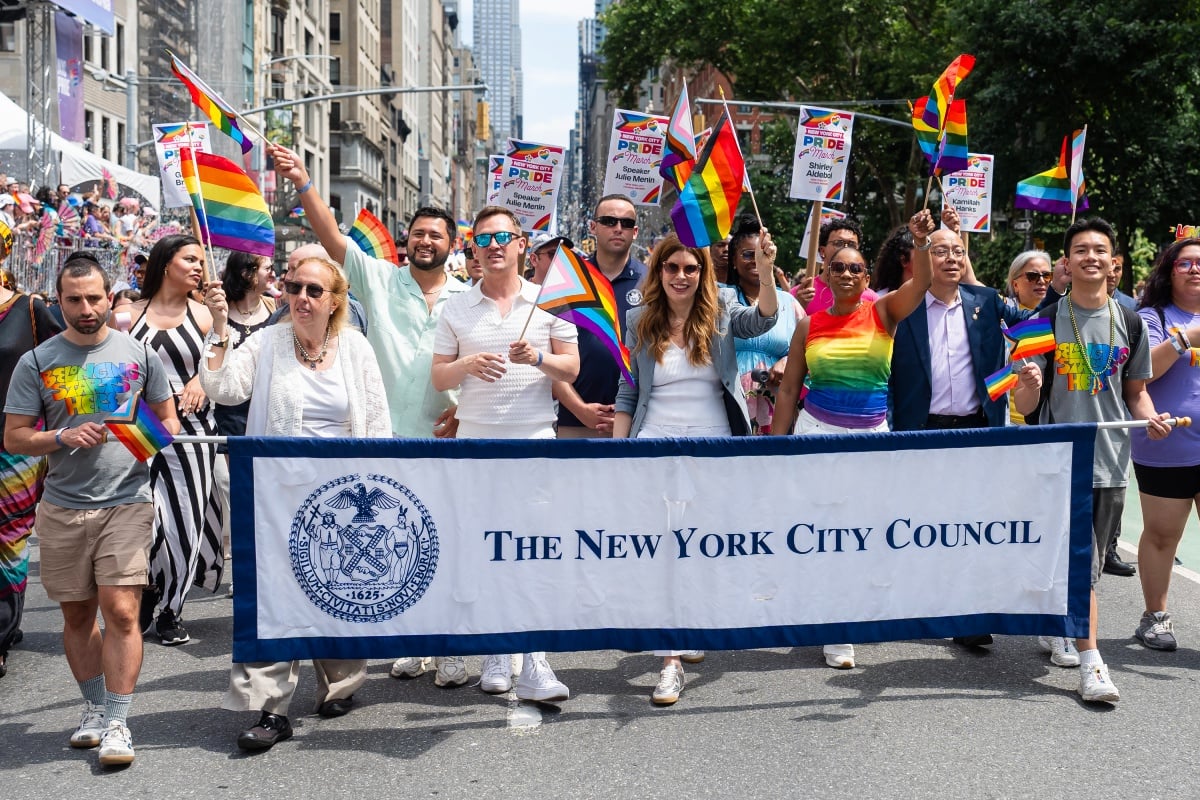
The NYC Council’s probe is related to allegations of predatory marketing practices, with the goal being to determine whether additional consumer protection regulations, enforcement initiatives, health measures, and related funding are needed to better shield the public from prediction markets.
“As a mother of four, I know firsthand the fears that come with raising kids in a world where predatory industries are constantly finding new ways to target them. Prediction markets aggressively entice consumers to bet and wager on sports, politics, culture, weather, and pretty much anything. We refuse to let New Yorkers, especially our young people, become collateral damage,” said NYC Council Speaker Julie Menin.
“As a regulatory attorney and the former Commissioner of Consumer Affairs, I take consumer protection extremely seriously. I intend to harness the full power of the Council to protect New Yorkers from deceptive and predatory marketing practices by prediction market platforms,” Menin added.
New York Crackdown
In April, New York State Attorney General Letitia James filed complaints against several prediction markets on claims that they offer unlicensed gambling services.
“Gambling by another name is still gambling,” said James.
James’ lawsuits followed prediction markets bringing legal action against the state after the New York State Gaming Commission sent the platforms cease-and-desist orders regarding contracts involving sports. The complaints from the prediction markets, along with James’ lawsuits, have since moved to federal court.
Regulatory Battle
Prediction markets are federally regulated by the Commodity Futures Trading Commission (CFTC). Under the second Trump administration, the CFTC has embraced what the regulatory agency calls “lawful innovation” of derivative markets.
In February, CFTC Chair Michael Selig said the independent government agency will not “sit idly by while overzealous state governments undermine the agency’s exclusive jurisdiction over these markets.”
In an op-ed published last week in The Economist, Selig said the CFTC and the U.S. are leading “a new era” in the global derivatives market.
“While the U.S. is embracing responsible innovation, many of our international counterparts are moving in the opposite direction. Recently, nine European financial regulators argued that the event contracts traded on prediction markets should be treated as gambling rather than financial instruments,” Selig wrote.
That view misunderstands how these contracts are structured and underappreciates the fact that they are traded on marketplaces and not wagers placed with a ‘house,'” The CFTC chair continued.
“It also ignores the role these markets play in aggregating information, improving forecasting, and enhancing price discovery. Prediction markets often outperform traditional polls and experts—they alone correctly forecast Mr. Trump’s electoral victory against Kamala Harris in 2024,” Selig added.
NYC Prediction Markets Hub
New York City is a hub for the prediction market industry, with numerous platforms headquartered in Manhattan.
The financial capital of the world, New York is home to the New York Stock Exchange and Nasdaq, the world’s two largest stock exchanges by market capitalization.
Manhattan is also home to the Federal Reserve Bank of New York, which holds the world’s largest known monetary-gold reserve, with nearly 7,000 tons of the precious metal.

 Most Read

Another Shooting Near Las Vegas Strip Casino Injures Man
 972,652 views

Vintners Oppose Napa Valley Casino
556,261 views


Conversation (0)
Be the first to comment on this article.