 Main menu

Politics
Japanese Lawmaker Claims Pachinko Industry Morally Unsuitable for Casino Market Role
Posted on: May 20, 2018, 03:00h.
Last updated on: May 20, 2018, 06:24h.


A Japanese lawmaker has questioned whether the pachinko industry can be trusted to participate in a future Japanese casino market.
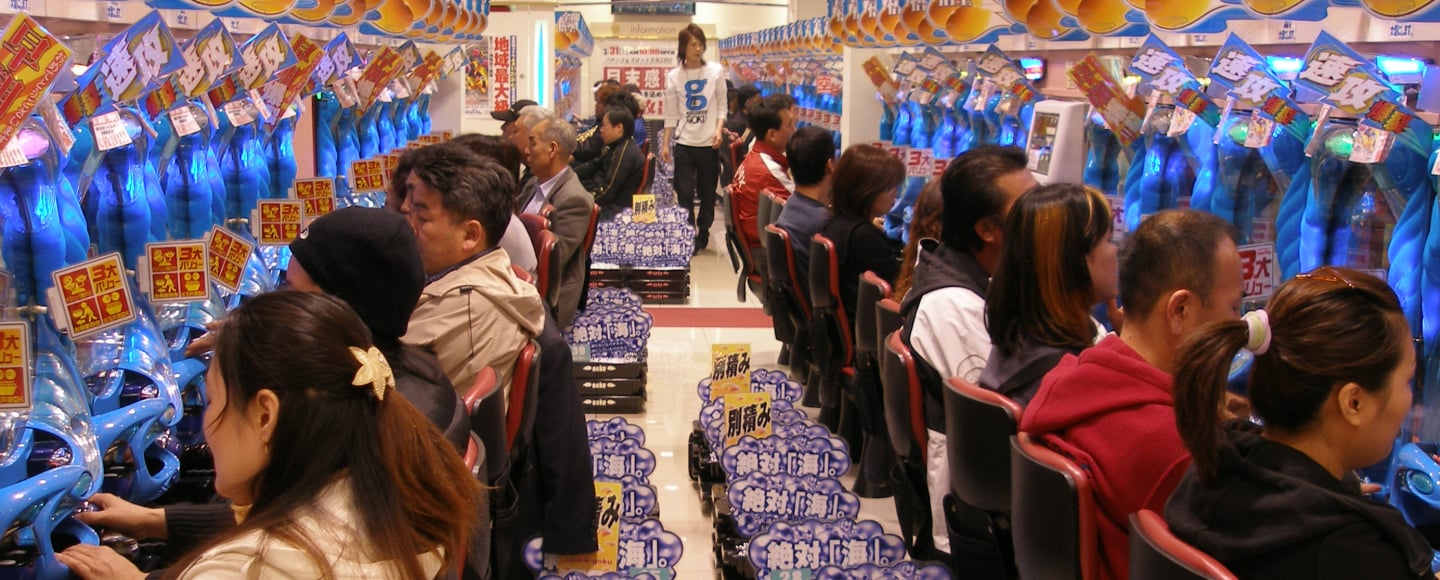
As reported by Asian Gaming Brief this week, Takashi Takai, a member of the Lower House, who represents the Constitutional Democratic Party of Japan, has submitted a series of questions to the government querying the industry’s moral fitness for inclusion.
Several major pachinko operators have expressed interest in developing Japanese casinos, including Sega Sammy, Heiwa and Universal Entertainment, which recently opened its first integrated resort, the Okada Manila, in Entertainment City in the Philippines.
But as lawmakers debate a robust framework of regulation designed to protect Japanese consumers and minimize gambling harm, Takai notes that the pachinko industry is the main source of addiction in Japan and does little to protect its customers.
Regulatory Crackdown
Pachinko machines are colorful, noisy hybrids of slot and pinball machines and their arcades line the streets of almost every town in the country. Traditionally they have been classed not as gambling games but as “amusements,” like fairgrounds attractions, which has helped them escape the harsh light of regulatory scrutiny in the past.
To maintain the fantasy they aren’t gambling, the machines don’t distribute cash prizes directly. Instead, players trade captured balls for tickets that can be exchanged for money elsewhere.
But the advent of casinos has forced lawmakers to confront problem gambling in Japanese society and take a harder look at pachinko machines. Last February, the government reduced the maximum payouts on the machines, a measure that is likely to punish weaker operators.
Machine-Tampering Scandal
Takai points to a 2015 machine-tampering scandal that sparked a government investigation as evidence that the industry may not be suitably trustworthy for the new casino market.
Considering that there was a major tampering case by pachinko makers from a mere three years ago, I believe we must take a strict view towards their participation in the casino industry,” he wrote.
“Also, the National Public Safety Commission, as well as the prefectural public safety commissions, have proven themselves unable to prevent large-scale tampering by the pachinko makers and therefore it is inappropriate to have them supervise the casino business.
“I think that a different agency must be given oversight authority over the casino industry, but I ask the government’s view.”
A recent study by the Tokyo-based Yano Research Institute (YRI) found that that 420 pachinko parlors — or one in 25 — had closed in in 2017, while an extraordinary 177 pachinko companies went bust last year, or over five percent of all operators.
Pachinko has long been in decline and, like traditional casino games elsewhere, appears to be suffering from millennial disinterest. Meanwhile, tighter regulatory controls and its possible exclusion from the forthcoming casino market will do nothing to arrest the pachinko industry’s slump.

 Most Read

Another Shooting Near Las Vegas Strip Casino Injures Man
 972,627 views

Vintners Oppose Napa Valley Casino
556,233 views


Conversation (0)
Be the first to comment on this article.