 Main menu

Crime & Scandals
Illegal Gambling Syndicate Hacked 20 African Government Sites to Game Google Search
Posted on: July 24, 2026, 02:34h.
Last updated on: July 27, 2026, 05:37h.


Key Points
- Researchers say casino pages were hidden inside about 20 government websites across 16 African countries to exploit Google's trust in official domains
- The operation allegedly used Indonesian payment systems, support numbers and other technical clues linking the campaign to an Indonesian gambling network
- Cybersecurity researcher Chris Nwobi said outdated software and exposed administration panels allowed the attackers to compromise government websites without sophisticated hacking


An online gambling network believed to be operating from Indonesia allegedly hid casino pages inside government websites across Africa to boost its visibility in Google search results.
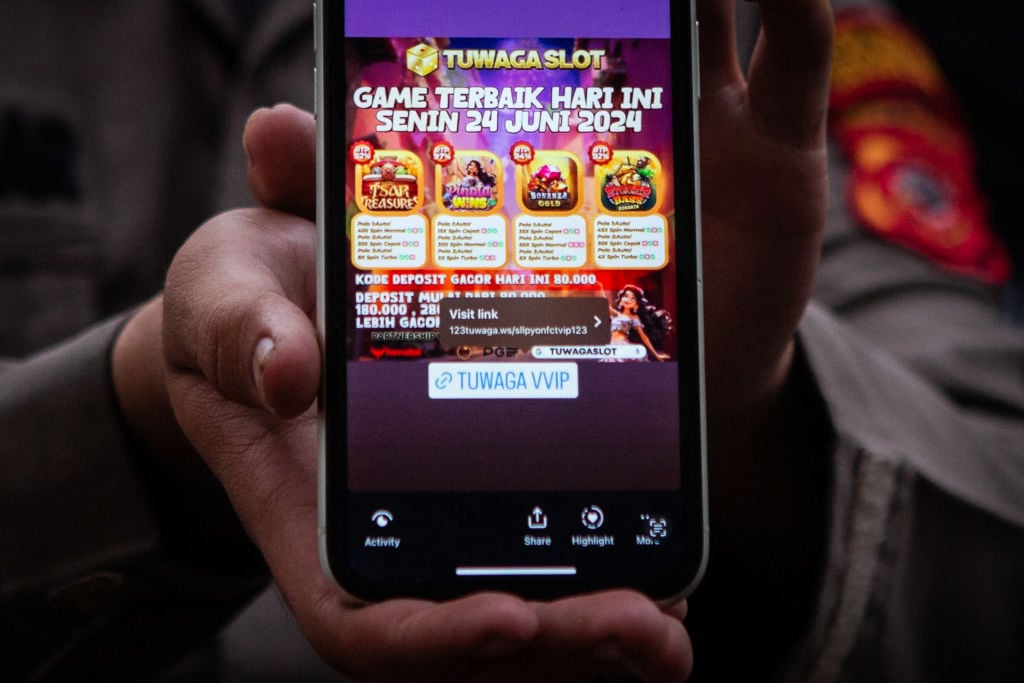
According to an investigation by Techpoint Africa, an illicit digital operation has breached roughly 20 government websites across 16 African nations, including Nigeria, Egypt, Kenya, Uganda, Ghana, and South Africa.
The strategy relies on fundamental search engine mechanics: Google assigns higher domain authority to established government websites than to newly created commercial domains. Chris Nwobi, founder of Zend Cybersecurity Threat Labs, explained that the syndicate quietly embedded gambling pages within these trusted domains so their casino brands could inherit that institutional credibility.
“It’s like putting your ad on a government billboard,” Nwobi told Techpoint, emphasizing that the hackers leveraged the reputation of official portals rather than targeting them for direct financial theft.
Invisible Exploits
The intrusion was largely invisible to the naked eye. Nwobi noted that while Nigeria’s Federal High Court website functioned normally for everyday visitors, users arriving via gambling-related Google searches were redirected to hidden casino pages.
Digital records indicate a gambling-focused subdomain may have lurked on the court’s site as early as November 2024.
The scheme surfaced publicly in May when three Nigerian government sites were caught hosting Indonesian gambling content, including one page displaying a “SLOT88” copyright notice. By June, the operation had expanded to additional Nigerian agencies, as well as official portals in Egypt, Ghana, and Kenya.
Nwobi linked the syndicate directly to Indonesia through GitHub source code committed during local working hours, customer support lines tied to Indonesian networks, and payment infrastructure utilizing QRIS, Indonesia’s national QR code system.
Beyond gambling, the same underlying network hosted phishing pages impersonating brands like PayPal, Amazon, and AT&T, pointing to a broader financially motivated operation.
The breaches required minimal technical sophistication. Affected servers consistently suffered from outdated software, unpatched vulnerabilities, and internet-exposed admin panels.
Offshore Machinery
The exact revenue generated by the network remains unknown. Because funds were routed through QRIS into nominee accounts, total earnings cannot be calculated from public records alone.
With online gambling illegal in Indonesia, operators frequently run cross-border schemes using offshore infrastructure, shell entities, and intermediary networks to bypass domestic enforcement.
While the payment channels and support infrastructure were explicitly tailored for Indonesian players, the compromised African government sites served a singular purpose: hijacking government domain authority to game Google search rankings.

 Most Read

Another Shooting Near Las Vegas Strip Casino Injures Man
 972,732 views

Vintners Oppose Napa Valley Casino
556,334 views


Conversation (0)
Be the first to comment on this article.