 Main menu

Tribal Gaming
Federal Judge Rules Texas Tribe’s Embattled Gaming Hall is Legit
Posted on: September 3, 2021, 06:40h.
Last updated on: September 3, 2021, 03:52h.


A US magistrate judge in Beaumont, Texas has ruled that the Alabama-Coushatta tribe’s electronic bingo operations are not subject to state laws unless Texas prohibits bingo outright.
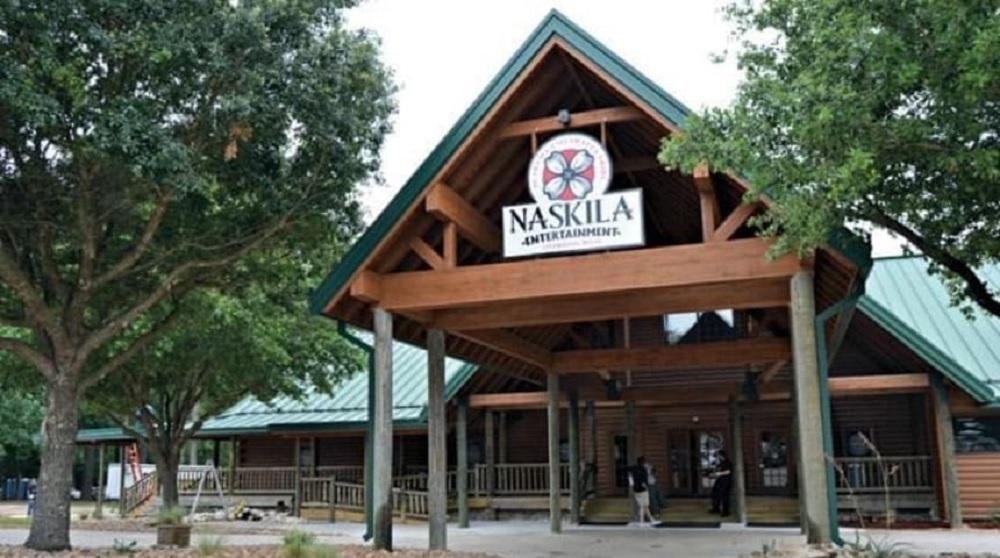
The ruling effectively gives the tribe the right to continue running its beleaguered Naskila Gaming facility near Livingston and represents a tidal turn in its decades-long battle with the state government.
It’s good news, too, for the Ysleta Del Sur Pueblo (Tigua) tribe in El Paso, which is in the same legal predicament. The tribes were recognized in 1987 by the federal Yselta del Sur Pueblo and Alabama and Coushatta Indian Tribes of Texas Restoration Act (TRA). But lawmakers inserted a non-gaming clause into the act.
Catch-22
The timing was bad for the tribes. A year later, Congress passed the Indian Gaming Regulation Act (IGRA), which codified the right of federally recognized tribes to offer Class II gaming, such as bingo, on their sovereign land, whether states liked it or not.
The Kickapoo tribe had been recognized just two years earlier and was not bound by a non-gaming clause. As such, the tribe has run the Lucky Eagle Casino in Eagle Pass for decades, free from state interference.
For the Alabama and Coushatta and Tigua, the question of which Act supersedes which, TRA or IGRA, has been the nub of legal contention for years.
In 1994, in a verdict known as “Ysleta I,” the Fifth Circuit Court of Appeals ruled that the two tribes’ gaming rights, or lack thereof, were not covered by IGRA but by TRA and its non-gaming clause.
Motion for Contempt
This week’s decision was a response to a motion for contempt filed against the Alabama-Coushatta by the State of Texas. The state wanted the court to find the tribe in contempt of a 2002 injunction that ordered it to cease offering gaming activities on its reservation that “violate state law.”
Both the Alabama Coushatta and Tigua have attempted to continue their operations since the 1990s, but have, at times, been forced to close by the state.
But the court ruled the TRA only banned the tribe from offering gaming that was prohibited by Texas law. Bingo wasn’t, and crucially, nor was the Alabama Coushatta’s version of electronic bingo, it said.
The motion was dismissed.
SCOTUS Could Settle Case
It’s been quite a week for both tribes. El Paso Matters reported on Wednesday that the US Justice Department is urging the US Supreme Court to take the case, lift the gaming ban for the two tribes, and settle the matter once and for all.
In an August 25 brief to the Supreme Court, Acting Solicitor General Brian Fletcher and other Justice Department lawyers said they believed historical verdicts against the tribes, such as Ysleta 1, were wrong.
“That error has impaired the uniformity of a federal regulatory scheme, has uniquely disadvantaged two Indian tribes, and has generated repeated litigation and substantial confusion for nearly three decades,” they wrote.

 Most Read
Another Shooting Near Las Vegas Strip Casino Injures Man
 972,700 views

Vintners Oppose Napa Valley Casino
556,304 views


Conversation (0)
Be the first to comment on this article.