 Main menu

Las Vegas
Downtown Vegas’ Former Gold Spike Casino Sells (for 42% of What Tony Hsieh Paid)
Posted on: June 19, 2026, 01:10h.
Last updated on: June 22, 2026, 10:12h.


- Las Vegas real-estate investors have purchased the former Gold Spike Hotel & Casino from Tony Hsieh’s estate for $11.38 million
- That’s nearly 58% off Hsieh’s original 2013 purchase price
- While currently operating as a community nightlife venue, the property retains its intact Nevada gaming license
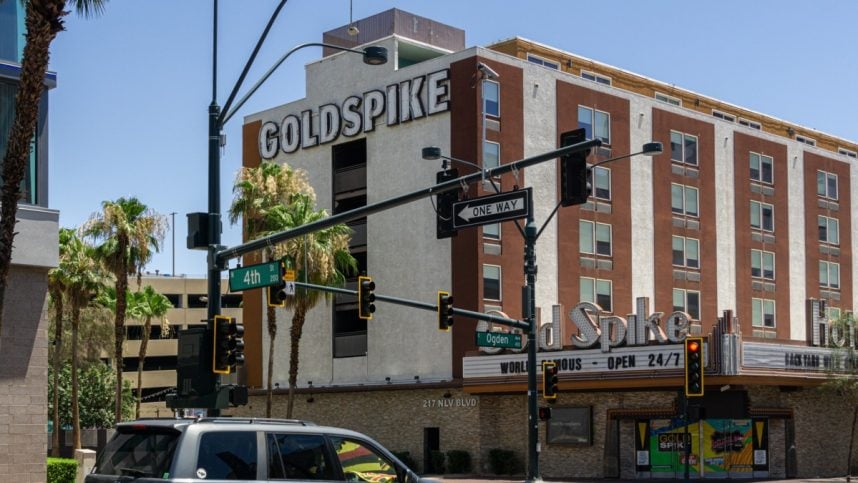
The former Gold Spike Hotel & Casino has reportedly been offloaded by the estate of Tony Hsieh for less than half what the late Zappos CEO paid in 2013.
On June 10, 2026, the property at 217 Las Vegas Blvd. North (including the connected former Oasis at Gold Spike Hotel and an adjacent parking lot) was sold by the estate to investors Huan “Jeff” Mai and Qing Zhong for $11.38 million.
That’s almost 58% below the nearly $27 million reportedly paid by Hsieh’s Downtown Project.
According to the Las Vegas Review-Journal, the new owners are a local husband-and-wife real estate team who own shopping centers around Las Vegas and recently acquired the former Macy’s building in Las Vegas’ Chinatown.
Hsieh’s estate — managed through probate in Clark County District Court by the late internet entrepreneur’s father — has been selling off his nearly 100-property real estate portfolio in waves since Hsieh died in a Connecticut house fire in November 2020. The Gold Spike is one of many iconic properties that have sold for steep discounts.
Once Hsieh took ownership, the Gold Spike stopped operating as both a casino and a hotel. Hsieh permanently closed the casino and reopened its ground floor as what it remains today: a 20,000-square-foot, 24/7 bar and nightlife venue featuring social games and an outdoor hangout called the Backyard.
Hsieh also had the main hotel building converted into workforce housing for Downtown Project staff, though the Oasis at Gold Spike continued operating as a boutique hotel.
However, the property’s non-restricted gaming license remains intact. Following Nevada law, it was temporarily activated for two days in September 2024 to preserve it.
Golden Ages
The Gold Spike opened in 1976 as the Rendezvous, a seven-story, 112-room hotel built and owned by the 76 Corporation. At the time, downtown Las Vegas was an economically depressed neighborhood dominated by similar no-frills casino-hotels catering to locals and budget travelers.
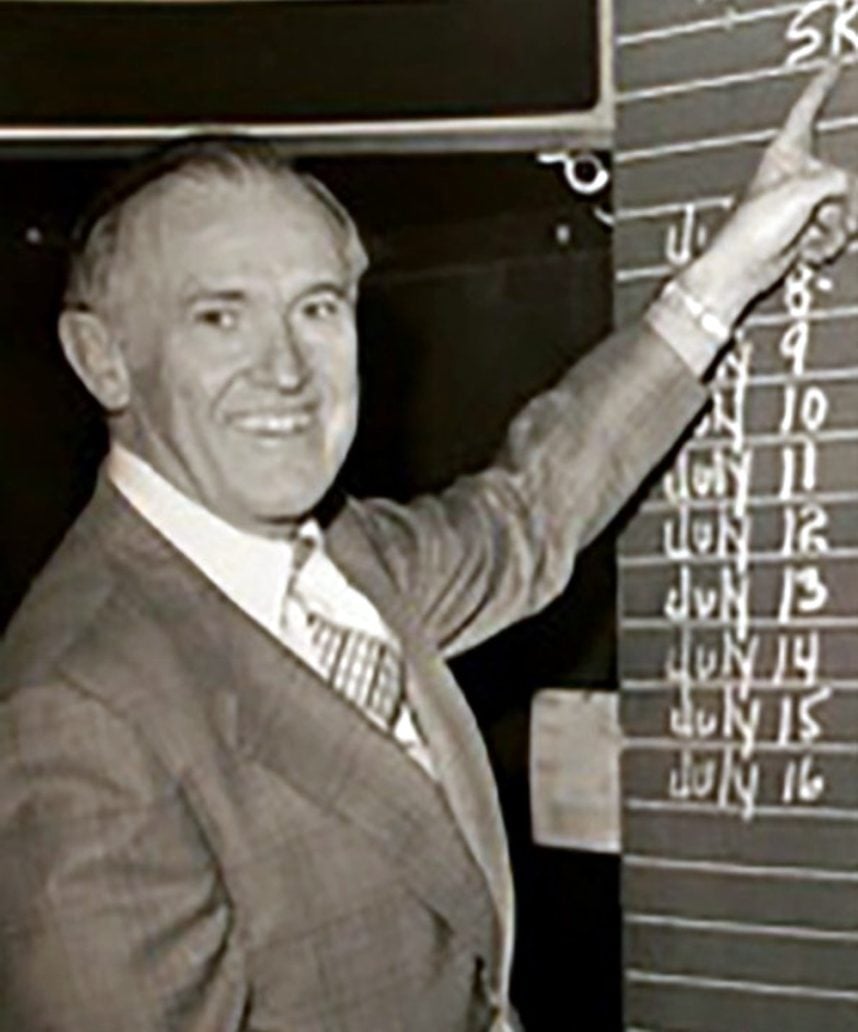
The Rendezvous had been shuttered for several months when it was purchased in 1983 by legendary downtown casino operator Jackie Gaughan, who rebranded and transformed the property into the Gold Spike Hotel & Casino, with the name change solidifying around 1985.
For nearly two decades, the Gold Spike embodied classic old-school downtown Vegas: an inexpensive hotel with decent (but basic) rooms, a decent-sized casino floor focused on slots (table games were eventually discontinued), cheap drinks, and a no-frills vibe aimed at value-oriented gamblers.
Changing hands (Repeatedly)
By late 2002, Gaughan — who was already semi-retired and increasingly focused on the El Cortez — agreed to sell the Gold Spike (along with the Plaza, Las Vegas Club, and the Western) to Barrick Gaming in partnership with the Tamares Group. The deal closed in 2004 as part of an $82 million downtown package.
In 2005, Barrick sold its minority stake to Tamares, which assumed greater operational control. Tamares brought in the Navegante Group to manage the casino operations across its downtown properties, including the Gold Spike’s casino floor.
Barrick sold the Gold Spike in July 2007 for $15.6 million to local developer Greg Covin, who announced plans to convert it into a boutique hotel.
Instead, Covin flipped the property in February 2008 for a tidy $5 million profit to the Siegel Group, a Las Vegas real-estate company known for renovating and repositioning older properties such as the Artisan. Siegel launched a two‑year upgrade of the property to the tune of $4.5-$5 million.
But the biggest transformation came in early 2013, when Hsieh’s Downtown Project — a $350 million initiative focused on real estate, startups, and community-building — bought the Gold Spike from the Siegel Group. The casino closed on April 14, 2013, for a three-week remodel and never reopened.
Hsieh’s vision was to revitalize downtown into a vibrant, creative, live-work-play destination that attracted young professionals, entrepreneurs, and a hipper crowd than typical downtown casino-goers.
In 2013, when asked by the Las Vegas Sun what kind of person buys a casino only to close it, Hsieh replied: “people who are trying to help build a community.”

 Most Read
Another Shooting Near Las Vegas Strip Casino Injures Man
 972,624 views
Vintners Oppose Napa Valley Casino
556,232 views


Conversation (3 comments)