 Main menu

Prediction Markets
Crypto.com, Robinhood Push SCOTUS to Rule on Federal Control Over Prediction Markets
Posted on: September 15, 2026, 12:17h.
Last updated on: September 16, 2026, 06:42h.


Key Points
- Crypto.com and Robinhood separately petitioned the Supreme Court to rule that federal law preempts state regulation of sports event contracts
- The filings follow conflicting appeals court decisions over whether federal commodities law or state gaming boards govern prediction markets
- Both firms argue event contracts are financial swaps, granting the CFTC exclusive regulatory authority over state regulators


Crypto.com is pressing the U.S. Supreme Court (SCOTUS) to declare that federal law preempts state gaming rules on sports contracts—even as partner Robinhood (NASDAQ: HOOD) urges the justices to pause the case.
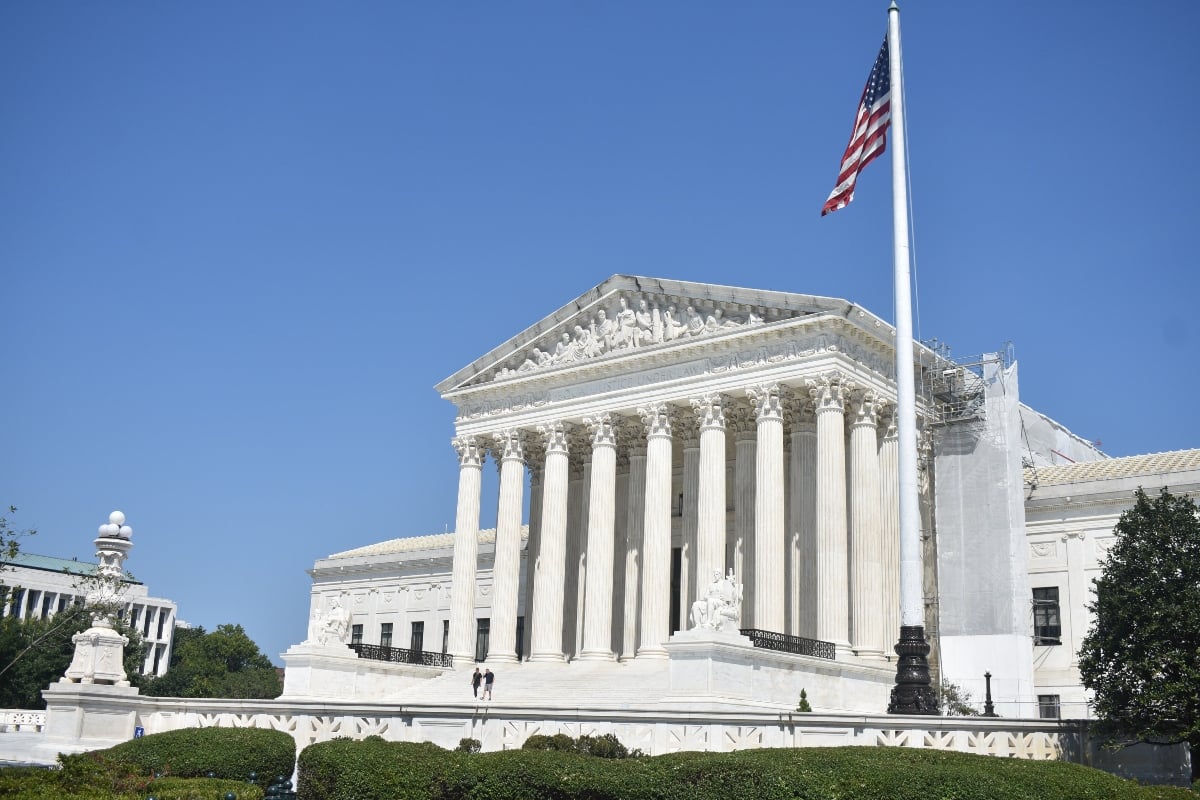
Following conflicting prediction market rulings in the Third and Ninth Circuits, Crypto.com and Robinhood petitioned the Supreme Court to step in. The platforms are seeking a definitive ruling on whether the Commodity Exchange Act (CEA) prevents states from regulating sports derivatives.
The platforms are seeking to centralize regulatory oversight under the Commodity Futures Trading Commission (CFTC), the federal agency governing prediction markets.
In short, Crypto.com and Robinhood are leaning into federal preemption in their SCOTUS petitions. That effort is likely rooted in the notion that the CFTC’s jurisdiction over prediction market operators supersedes any authority the states claim to have.
Seeking Elusive Legal Clarity
Crypto.com and Robinhood—which recently partnered after the latter took an equity stake in Crypto.com’s derivatives unit—are pointing to the Commodity Exchange Act (CEA) as the definitive solution to the industry’s regulatory ambiguity.
Signed into law by President Franklin D. Roosevelt in June 1936, the CEA serves as the statutory backbone for both the CFTC and U.S. commodities markets.
The Commodity Exchange Act (CEA) regulates the trading of commodity futures in the United States. Passed in 1936, it has been amended several times since then,” according to official CFTC guidance. “The CEA establishes the statutory framework under which the CFTC operates. Under this Act, the CFTC has authority to establish regulations that are published in title 17 of the Code of Federal Regulations.”
Prediction market operators argue the CEA applies to sports event contracts because the statute defines a “swap” as any contract dependent on the “occurrence, nonoccurrence, or the extent of the occurrence of an event or contingency associated with a potential financial, economic, or commercial consequence.”
Legal experts and state regulators counter that interpretation, arguing Congress never intended the CEA to strip states of their traditional police powers over sports gambling.
Forecasting the High Court’s Next Move
The Supreme Court has yet to decide whether it will take up the petitions. While Crypto.com is pressing for an immediate ruling on preemption, Robinhood has urged the justices to wait until the CFTC completes its ongoing rulemaking process for sports contracts.
If SCOTUS agrees to hear a consolidated case, legal analysts suggest arguments could take place by late 2026 or early 2027. Regardless of timing, a high court ruling remains the only mechanism capable of delivering binding national clarity for operators, investors, and state regulators alike.

 Most Read

Another Shooting Near Las Vegas Strip Casino Injures Man
 972,417 views

Vintners Oppose Napa Valley Casino
556,044 views


Conversation (0)
Be the first to comment on this article.