 Main menu

Sports Betting
China Spent $11.6 Billion Betting on the World Cup While Its National Team Stayed Home
Posted on: July 22, 2026, 10:59h.
Last updated on: July 23, 2026, 07:47h.


Key Points
- Chinese bettors spent the equivalent of US$11.6 billion through the state-run Sports Lottery during the six-week World Cup despite the national team missing the tournament
- Official viewing figures topped 70 billion cumulative cross-platform views as the World Cup became one of China's biggest television and digital events
- China's football ambitions remain stalled despite huge investment with corruption scandals leading to prison terms for senior officials and lifetime bans across the sport


Chinese sports bettors wagered nearly $2 billion per week through legal channels during the FIFA World Cup, despite their national team failing to qualify.
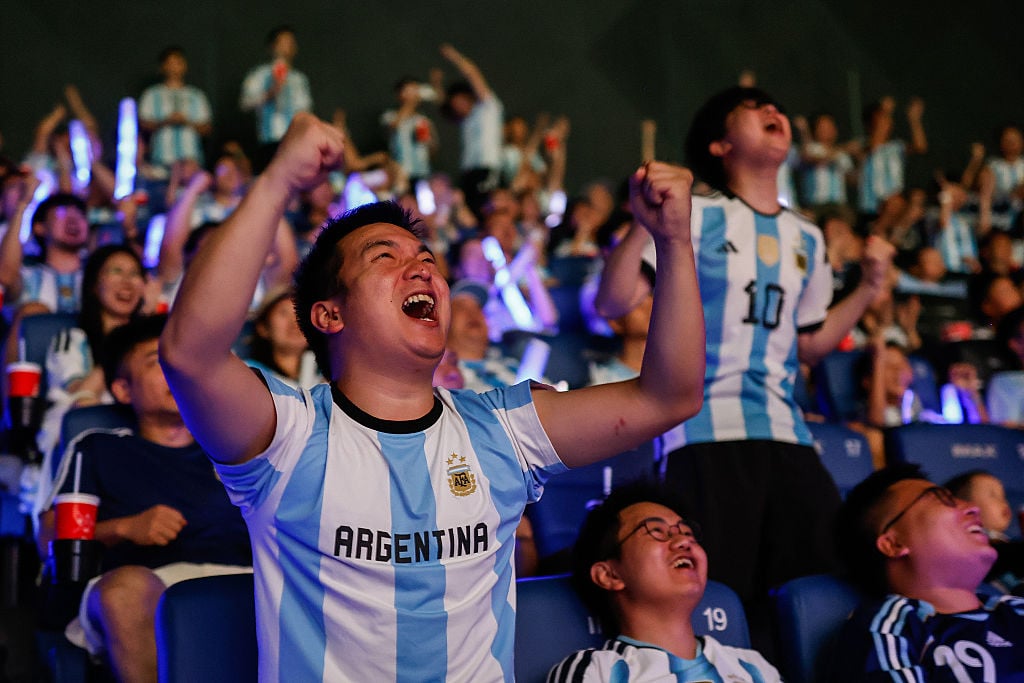
According to state broadcaster CCTV, the total amount spent on the state-sanctioned China Sports Lottery across the six weeks of the tournament was 83.3 billion yuan or about US$11.6 billion.
Along with the China Welfare Lottery, the Sports Lottery is the only legal form of gambling in the country, although it has a vast illegal gambling ecosystem, including offshore sportsbooks, underground bookmakers, and online betting agents that specifically target Chinese customers.
Numerous studies have concluded that illegal gambling in China dwarfs the legal market.
With the UN Office on Drugs and Crime estimating China’s illicit gambling market at over $145 billion annually, the true amount wagered on the World Cup was likely far higher than official state tallies suggest.
Ratings Juggernaut
The World Cup was also a ratings juggernaut. CCTV said its tournament broadcasts, special programming, and news coverage generated more than 70 billion cumulative cross-media views by the eve of the final.
During the final between Argentina and Spain, its live broadcasts reached a cumulative audience of 282 million, with peak real-time viewership hitting 41.23 million. The figures represent cumulative views across television and digital platforms rather than unique viewers.
China’s sports lottery consists of both pari-mutuel and fixed-odds-style products, although the latter isn’t quite the same as a commercial sportsbook like FanDuel or Bet365.
The overwhelming majority of World Cup betting today comes through the lottery’s Jingcai Football, where players can bet on match winners, handicaps, correct scores, and other outcomes.
Unlike commercial sportsbooks, the market is operated exclusively by the state, which determines the matches offered and payout structure, with an overall return-to-player of about 73%.
National Team Woes
Unfortunately, China’s enthusiasm for soccer doesn’t translate into results on the pitch. The national team finished fifth out of six in its World Cup qualifying group, a campaign that included one of the most humiliating defeats in its history: a 7-0 loss to Japan, one of its biggest sporting and geopolitical rivals.
The country has only qualified for the World Cup once, in 2002. In 2015, Chinese President and soccer fan Xi Jinping pledged to turn China into a superpower of the game that would one day host and lift the World Cup. But the national team has arguably regressed since then, despite billions being poured into the sport.
Chinese President Xi Jinping has long blamed endemic corruption for holding back the nation’s soccer ambitions. In recent years, a sweeping anti-graft campaign has jailed top federation executives, imprisoned former national team coach Li Tie, and issued lifetime bans to dozens of players for match-fixing and bribery.

 Most Read

Another Shooting Near Las Vegas Strip Casino Injures Man
 972,742 views

Vintners Oppose Napa Valley Casino
556,346 views


Conversation (0)
Be the first to comment on this article.