 Main menu

Canadian Gaming
Alberta’s New iGaming Chief Targets Interprovincial Liquidity
Posted on: May 22, 2026, 03:26h.
Last updated on: May 29, 2026, 10:18h.


- Dan Keene appointed new CEO of Alberta iGaming Corporation
- Keene spoke about his new role at this week’s gaming summit in Toronto
- Keene confirms that Alberta is working on an MOU with Ontario over interprovincial liquidity
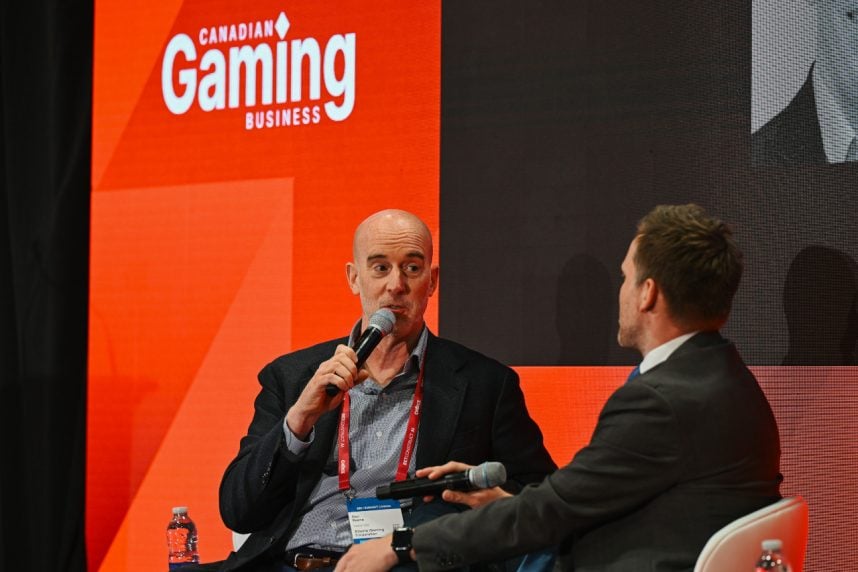
Fresh off his permanent appointment as CEO of the Alberta iGaming Corporation (AiGC), Dan Keene dropped a major policy update at SBC Summit Canada yesterday. Keene revealed that Alberta is actively working on a memorandum of understanding with Ontario regarding interprovincial liquidity.
MOU With Ontario
Keene was taking part in a fireside chat with gambling industry expert Martin Lycka at the Toronto industry conference when he made the announcement.
“We’ll try and get [liquidity] done as quickly as possible with our friends in Ontario,” said Keene. “We are in favor of that.”
Keene’s appointment comes as Alberta nears the launch of its regulated iGaming market on July 13.
Alberta’s Minister of Service Alberta and Red Tape Reduction, Dale Nally, said earlier this week that 37 operators have paid their registration fees to take on the government-owned Play Alberta platform, and that 70 operators have kicked the tires on joining the regulated market.
Co-Operation With Ontario
Under the Alberta igaming regulatory structure, Alberta Gaming, Liquor & Cannabis is the regulator responsible for registrations and regulatory oversight, while AiGC is in a conduct and manage role, overseeing commercial agreements with operators, anti-money laundering, public complaints and financial and income reporting.
Operators will no doubt be pleased to hear the news about the MOU between the AiGC and the Alcohol and Gaming Commission of Ontario (AGCO), and iGaming Ontario.
The opening up of the player pool for operators in both provinces to access means bigger tournaments, larger player pools, and a healthier ecosystem, and that means a stronger regulated market to compete with international grey market sites.
After the Ontario regulated market went live in April 2022, operators serving players in the province had to move them to fenced-in, Ontario-specific environments, creating challenges for operators like PokerStars and BetMGM.
International Liquidity in Front of the Courts
Poker is especially dependent on liquidity.
In a pivotal 4-1 decision last November, the Ontario Court of Appeal ruled that the province’s regulated iGaming market can legally participate in international pooled liquidity. This landmark opinion opens the door for Ontario residents to compete in peer-to-peer games—such as online poker and daily fantasy sports (DFS)—against players outside of Canada.
Several provincial lottery corporations challenged the ruling, arguing that it could undermine the geographical limits traditionally attached to provincially managed gaming schemes, and the matter is heading to the Supreme Court of Canada.
Alberta is an intervenor in the international liquidity court case as well.
“I think you’ll find our position is one which we’re supportive of international liquidity,” he said. “From a business and commercial perspective, it makes a lot of sense.”
During the chat with Lycka, Keene talked about the differences between the Alberta and Ontario igaming regulatory regimes.
“We don’t have to re-invent where we don’t have to re-invent,” he said. “Ontario set the template. It’s about using information that’s been successful. We would not be hitting that July 13 date without the information that has been shared with Ontario.”
80/20 Revenue Split With Government
One area of commonality with Ontario is a partnership with the Responsible Gambling Council, whose RG Check accreditation program that operators applying for a license in Ontario must complete will be fundamental to what Alberta is doing as well.
An area of difference will be around operator/government tax split. The Ontario government takes a clean 20% cut of revenue. In Alberta, the split will also be 80/20, but only after 3% is taken off the top for responsible gambling initiatives and First Nations.
A centralized self-exclusion platform will be part of the market launch July 13. Ontario, as a comparison, went live with centralized self-exclusion earlier this month, over four years after the regulated market launched.
Responsible Gambling
Responsible gambling is a top priority for Alberta, Keene revealed.
“There’s a number of things happening on the responsible gaming front,” said Keene. “Not only is it morally important, but it’s critical for operations. It’s critical for how we deal with our businesses, and it’s not just lip service. Gambling is a form of entertainment. It’s not a way to make money.
“It’s something that we need to take to heart, and working with Responsible Gambling Council and our friends at AGLC, we’re going to continue to focus on that. We need to be with players before problems start,” he added.

 Most Read

Another Shooting Near Las Vegas Strip Casino Injures Man
 972,615 views

Vintners Oppose Napa Valley Casino
556,228 views


Conversation (0)
Be the first to comment on this article.