 Main menu

Sports Betting
Retail Traders Lose Out to ‘Sharks’ on Prediction Markets, Says Analyst
Posted on: March 23, 2026, 01:12h.
Last updated on: March 24, 2026, 05:01h.


- Fresh data confirm that retail traders on prediction markets are losing more than sports bettors
- Sharp bettors are utilizing prediction markets to their advantage
- Crossover players aren’t valuable sportsbook clients, says analyst
New data confirm that retail prediction markets traders fare worse than they would if they were betting on sports and often serve as chum to sharks – sharp bettors with big bankrolls.
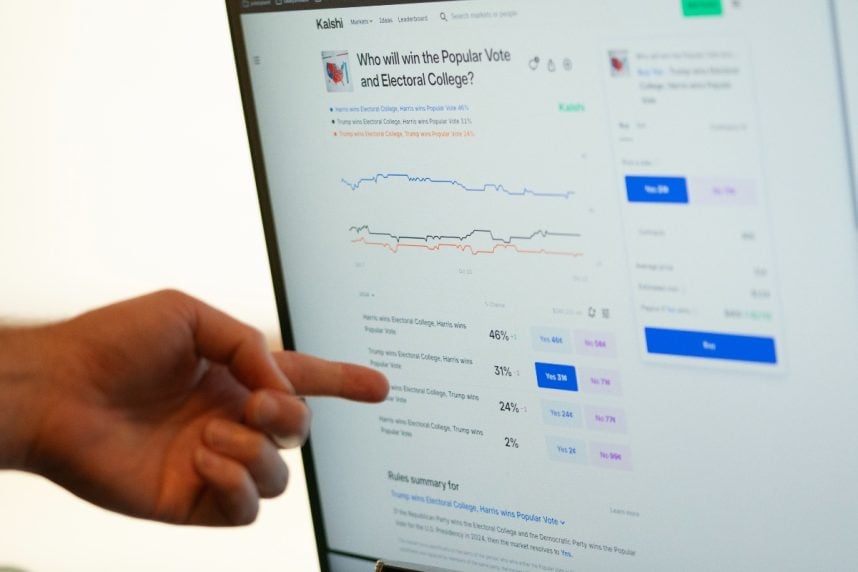
In a follow-up to a January report, Citizens Equity Research analyst Jordan Bender, citing Juice Reel data, notes the “median return on investment (ROI) for a prediction market user was -8%” from last July through the time of the new report. That’s worse than -7% ROI found in the analyst’s January report and far worse than the -5% median ROI experienced by bettors on regulated sports betting apps.
We further segmented the data by total trading volume and handle,” says Bender. “Individuals trading (prediction markets) more than $500K since July generated a median ROI of +2.6%, consistent with the expected returns of sharp bettors, based on validation with professional players. ROI declines as wallet size decreases, a pattern similar to legal online sports betting.”
Translation: retail traders with small accounts often meet the same ominous fate that they do when sports betting. They’re constrained by a lack of capital and simply can’t compete with the “big boys.”
Retail Is Swimming with the Sharks on Prediction Markets
Well-heeled, sharp bettors have been drawn to prediction markets for multiple reasons, including the penchant of regulated sportsbooks to limit or outright ban large winning players. Additionally, some yes/no exchanges offer these bettors discounts or elimination of trading fees in exchange for the liquidity they provide.
There are other factors at play. As Bender points out, some professional bettors know they can essentially play market maker on prediction market platforms, gaining consistent paths to positive ROI because they know the other side of their trades is comprised of unwitting retail market participants.
“We all want to be on the other side of the public; that’s the dream. Being a market maker is highly attractive. We all want to be DraftKings and FanDuel,” said a professional bettor on a recent conference call hosted by Bender and Citizens.
Bottom line: there’s more sharp competition on prediction markets, presenting a headwind to the smaller players.
Some Good News for Sportsbook Operators
Bender’s note features some good news for sportsbook operators, including the point that the bettors using both prediction markets and sportsbooks are likely small players who aren’t valuable sportsbook clients. The analyst says the median sports betting ROI for “crossover” players is +1%, but it tumbles to -6% on prediction markets.
He adds that there’s credibility in recent statements from sports betting companies that they’re not experiencing significant cannibalization at the hands of prediction markets due in part to the fact that many “whale” bettors weren’t engaging with regulated sportsbooks in the first place. In what could ring alarm bells for politicians and regulators, the analyst also points out that prediction markets’ user base skews younger than that of regulated sportsbooks.
“Additionally, the user base of prediction market platforms skews younger compared to that of traditional sports betting operators. According to Sensor Tower, 24% of Kalshi users are under 25 (with a reported median age of 31, according to the company), compared to just 7% for DraftKings and FanDuel,” concludes Bender.

 Most Read

Another Shooting Near Las Vegas Strip Casino Injures Man
 972,708 views

Vintners Oppose Napa Valley Casino
556,315 views


Conversation (0)
Be the first to comment on this article.