 Main menu

Commercial Gaming
Mystery Gambler Who Wagered Half a Billion Sues SkyCity Casino
Posted on: July 30, 2026, 11:44h.
Last updated on: July 31, 2026, 06:29h.


Key Points
- Former SkyCity VIP customer claims the casino failed to intervene despite nearly NZ$500 million in gambling turnover over three years
- The plaintiff says revealing his identity would unfairly harm his family while the entire case can still be reported under limited suppression
- SkyCity argues open justice requires litigants to be identified and says the lawsuit is not ultimately about casino misconduct


A former SkyCity high roller who wagered nearly NZ$500 million (US$294 million) is suing the casino operator for his losses, claiming he suffered from pathological gambling. Now, as the legal battle begins, he is fighting to keep his identity secret.
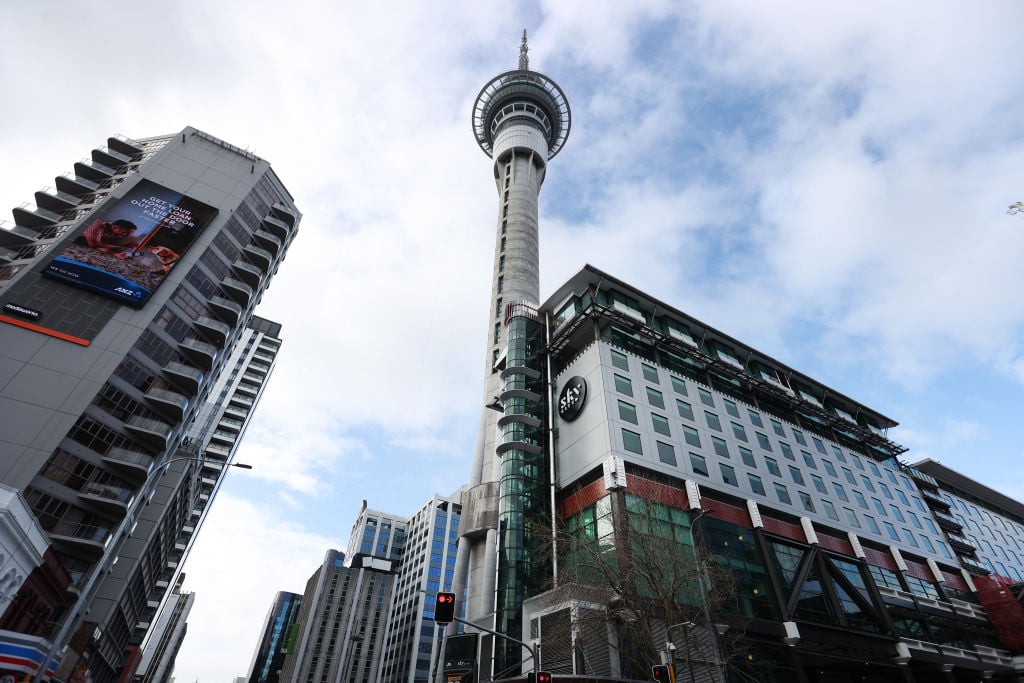
The man, whose name is temporarily suppressed, alleges SkyCity failed to protect him from harmful gambling during a three-year period at its Auckland casino, The New Zealand Herald reports.
The unnamed individual lost NZ$33 million (US$19 million) over the period.
At a High Court hearing in Auckland on Thursday, the man’s lawyer, Peter Spring, argued that revealing the plaintiff’s identity would cause unnecessary harm to him and his family while adding little to the public’s understanding of the case.
Chief High Court Judge Justice Sally Fitzgerald reserved her decision on the application for interim suppression. The man’s identity remains protected until she rules.
‘Average Man in the Street’
Spring acknowledged the case was a matter of public interest, particularly because it concerns SkyCity’s host-responsibility obligations. The company was forced to close its Auckland casino for five days in 2024 for breaching its harm-minimization obligations.
However, he said his client sought only limited suppression.
Every scintilla of the case, every permutation of the evidence, every wrinkle in the story can be published intact,” Spring told the court, as reported by The Herald. “Simply the name is anonymized.”
Spring described his client as “an average man in the street, just a little richer than most,” despite at one stage being SkyCity Auckland’s biggest customer “by a factor of 50.”
The plaintiff, who is of Chinese origin, feared publicity would bring particular shame within his community, where high-stakes casino gambling is viewed as destructive to family life, Spring said.
Although the man had chosen to gamble, Spring argued he should still have received the protections provided by SkyCity’s continuous-play and responsible gambling procedures.
“He was deprived of those protections for a period of three years and SkyCity profited from that to the tune of $33 million,” he said.
‘Irrational Act’
Spring argued it was “not a rational commercial act” to gamble sums of that magnitude and said the plaintiff had since stopped gambling but continued to suffer from the underlying pathology.
SkyCity lawyer Tim Mullins opposed the suppression application, rejecting suggestions the company had an ulterior motive in seeking publication of the man’s identity.
He argued the principle of open justice meant the public was generally entitled to know who was suing whom and that embarrassment alone was insufficient to justify suppression.
“What is the source of the embarrassment here?” Mullins said. “It’s happened at a public casino in the middle of town in Auckland.”

 Most Read
Another Shooting Near Las Vegas Strip Casino Injures Man
 972,740 views

Vintners Oppose Napa Valley Casino
556,343 views


Conversation (0)
Be the first to comment on this article.