 Main menu

Financial
Moody’s: Bally’s Evoke Acquisition ‘Credit Positive’ for Indebted Target
Posted on: June 15, 2026, 11:17h.
Last updated on: June 16, 2026, 05:32h.


- Bally’s finalized a deal to buy London-listed gaming operator Evoke at a premium rate of 50p per share
- The takeover rescues Evoke—owner of William Hill and 888—as it struggles under a crushing £1.8 billion net debt load
- The agency labeled the deal “credit positive,” stating that Bally’s massive scale drastically lowers Evoke’s immediate refinancing risk
Earlier this month, Bally’s-controlled Bally’s Intralot (ATHEX: BYLOT) announced its $328 million acquisition of Evoke (OTC: EIHDF), a deal Moody’s Investors Service says significantly reduces the target’s refinancing risk.
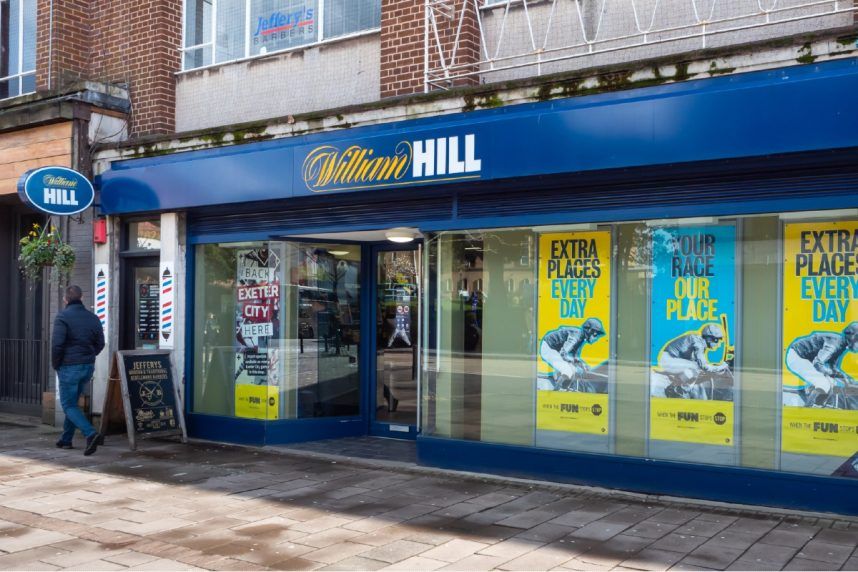
At the end of last year, Evoke was saddled with $2.5 billion in liabilities, implying Bally’s all but saved the company with its takeover offer. With the acquisition, the Mr. Green owner gets $1.19 billion in new financing commitments, making the deal “credit positive,” according to Moody’s.
Bondholders of the company’s outstanding notes due 2030 ($536.22 million) and 2031 (€600 million) have consented to a change of control, meaning the transaction can proceed without Evoke having to redeem these instruments,” notes the research firm. “And lenders to the existing $268.11 million revolving credit facility have also agreed a $26 million upsize in commitments.”
Moody’s rates Evoke B3 with a “stable” outlook, or one notch below its grade on Bally’s Intralot, which also has a “stable” outlook.
In Bally’s, Evoke Found a ‘Savior’
The bulk of Evoke’s debt is attributable to the 2022 purchase of William Hill’s international operations from Caesars Entertainment (NASDAQ: CZR), indicating that Bally’s is a savior of sorts for the cash-strapped target.
That mountain of debt is arguably the primary reason why Evoke hired Goldman Sachs and Morgan Stanley last December to explore strategic alternatives. Such announcements often signal a willingness to engage in sale talks — a road Evoke is clearly traveling.
With the Bally’s deal, Evoke gets breathing room because its debt coming due in 2028 is being refinanced.
Moody’s notes that the takeover, which is scheduled to be completed in the fourth quarter or the first quarter of 2027, doesn’t immediately affect the target’s credit grade, but an upgrade is possible following deal completion.
“Considering the six to nine months to completion, as well as the fact that Evoke’s current capital structure will remain largely unchanged, the transaction has no immediate impact on Evoke’s credit metrics,” Moody’s explained.
“However, we could upgrade the instrument rating of the existing senior secured notes due 2030 and 2031 at closing given the presence of $1.91 billion of newly committed debt ranking behind the notes. The evolution of Evoke’s financial policy under the new ownership will be one of the key considerations in our analysis, although we currently do not expect significant change,” Moody’s added.
A Win-Win?
Obviously, Evoke is benefiting from the deal because Bally’s and financing partners are essentially taking on the target’s debt, but there are potential benefits for all involved parties.
“In the longer term, combining Evoke’s extensive player database with Bally’s Intralot proprietary customer data and analytics platform, alongside cost and capital investment synergies from Evoke’s integration into Bally’s Intralot perimeter of activity, will improve Evoke’s profitability and free cash flow generation,” Moody’s concluded.
In the US, Bally’s is primarily known as a regional casino operator with a knack for extracting value from downtrodden, out-of-favor venues it acquires from other operators.

 Most Read

Another Shooting Near Las Vegas Strip Casino Injures Man
 972,740 views

Vintners Oppose Napa Valley Casino
556,343 views


Conversation (0)
Be the first to comment on this article.