 Main menu

Prediction Markets
Kalshi Using Claude AI to ‘Referee’ Prediction Markets
Posted on: June 15, 2026, 01:24h.
Last updated on: June 16, 2026, 05:01h.


- Internally dubbed “Harrison,” the proprietary AI agent was built to handle backend market compliance as Kalshi’s transaction volumes skyrocket
- Harrison proactively reviews and stress-tests the literal wording of event contracts, catching ambiguities and closing potential loopholes before wagers go live
- Beyond legal precision, the tool aggregates breaking global news and analyzes competitor structures to recommend new market listings and optimization strategies
Kalshi has reportedly integrated Anthropic’s Claude AI into its backend operations, a move designed to bulletproof contract language and automate market resolution during a period of rapid growth for the platform.
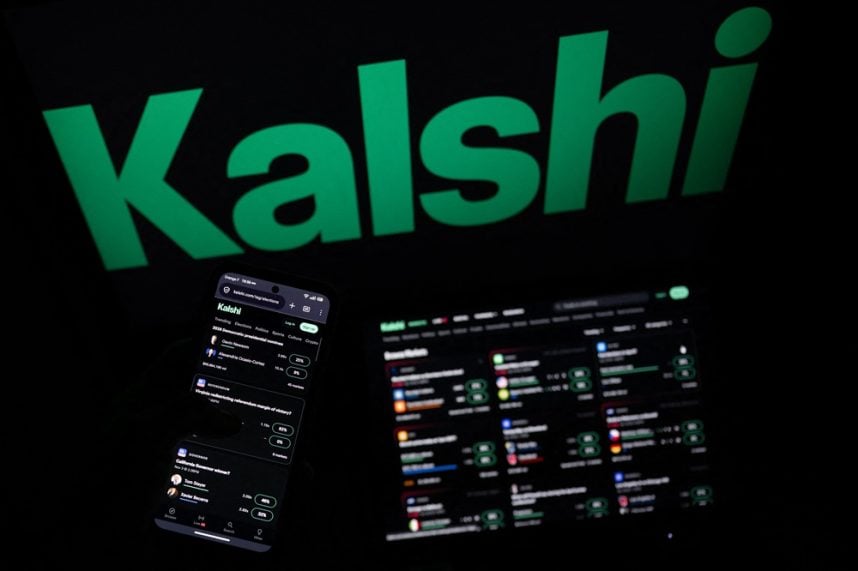
Various media reports out today indicate the largest US prediction market company is using agentic AI from Anthropic’s Claude.
Internally, the product is known as Harrison. One of Harrison’s primary functions is to bullet-proof and stress-test event contracts before those derivatives go live. So while Kalshi traders don’t interact directly with Harrison, they’re likely to feel the agent’s effects in some form.
One way of looking at Harrison’s “big job” is that the AI agent scours event contracts before they’re put to the public in an effort to minimize or eliminate verbiage issues that can later trigger resolution disputes and frustration among customers.
Harrison’s other functions include aggregating news, which is essential when considering many event contracts are tied to economic, financial, political, pop culture and weather headlines, and keeping tabs on the derivatives being offered by Kalshi’s rivals.
Harrison Could Be Trust-Builder for Kalshi
The prediction market industry is young, but it’s already endured its share of controversies stemming from event contract wording.
One of the most infamous examples was the 2025 Polymarket debacle involving a contract on whether or not Ukrainian President Volodymyr Zelensky would wear a suit before July. He apparently did at a NATO meeting, but “no” bettors argued it wasn’t a standard suit.
In January, a Kalshi market on mention of Warner Bros. on a Netflix (NASDAQ: NFLX) conference resolved to “no” because a Netflix executive said, “Warner Brothers,” not the abbreviated version. Those are just two of multiple examples of how contract language has tripped up prediction market traders that thought they were on the winning side.
By using AI as the judge and jury of contract resolution, Kalshi can mitigate the subjective element of human nature in contract decisions while potentially fostering more trust among bettors and traders. As an example, the basic Claude app confirms that Zelensky did in fact wear suit to NATO event in question while acknowledging “it was a big deal.”
Help from Harrison
Harrison isn’t trader-facing, so it may not be a profit-generator for Kalshi in the traditional sense, but if the AI agent proves durable and effective, it will be impactful as prediction market volume expands. It’s estimated that Kalshi processed notional volume of approximately $18 billion in May and $5.1 billion over the first several days of the World Cup.
The company, which was more than 5 million uses, was valued at $22 billion following a March funding round of $1 billion.

 Most Read

Another Shooting Near Las Vegas Strip Casino Injures Man
 972,709 views

Vintners Oppose Napa Valley Casino
556,316 views


Conversation (0)
Be the first to comment on this article.