 Main menu

Sports Betting
Kalshi Cases Likely Heading to SCOTUS, the Question is When
Posted on: December 9, 2025, 11:41h.
Last updated on: December 9, 2025, 12:19h.


- Kalshi and other prediction markets are engaged in legal battles with multiple states
- Lawyer believes resolution via SCOTUS is the likely outcome
- It could be several years before the high court hears the case
Kalshi, Robinhood Markets (NASDAQ: HOOD), and other participants in the burgeoning prediction markets industry are engaged in an array of state-level legal tussles with resolution likely to come by way of the Supreme Court of the United States (SCOTUS).
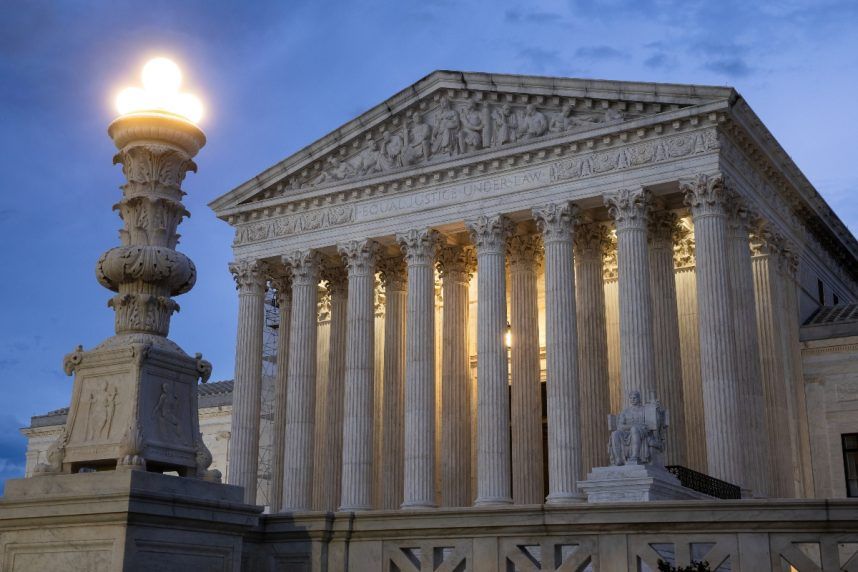
That’s the take of Andrew Kim, partner at Goodwin Proctor LLP, who in a recent conversation with Stifel analyst Jeffrey Stantial, said the matter of the high court resolving the prediction markets legal debate is likely a “when, not if” proposition. This is where things get interesting. As Stantial points out in a report to clients, SCOTUS could take up prediction markets cases as soon as mid-2026, as late as 2029, beyond that point, or at some time in between.
Predicting the outcome remains impossible with probability changing by the day/ruling, though repercussions could partially inform decision should SCOTUS see excessive risk to other institutions from banning/allowing sports events,” observes the analyst.
Stantial adds that Nevada’s recent reversal of Kalshi’s preliminary injunction was a win for states pursuing litigation against prediction market operators offering sports event contracts, but rulings could vary on a state-by-state basis.
SCOTUS Could Wait on More Case Development
Kalshi and other prediction market operators are regulated at the federal level by the Consumer Federal Trade Commission (CFTC). Some critics assert Kalshi is exploiting what amounts to a legal loophole to offer yes/no sports event contracts that are essentially sports wagers in all 50 states. For its part, Kalshi says it’s not a sportsbook and that federal preemption allows it to offer those derivatives across the country.
Citing Kim, Stantial says the timeline of getting prediction markets to SCOTUS is unclear, as it’s possible the high court will wait on more state-level rulings, such as Nevada’s. Politics could be a wildcard, too.
“Given the current pacing, he (Kim) also sees potential for SCOTUS to defer until the new administration takes over in 2029,” notes Stantial. “While refraining from predicting how SCOTUS might rule, Mr. Kim did point to the recent track record of SCOTUS ruling in favor of states in matters concerning preemption – though cautioning each case is unique with credible arguments on both sides of the ongoing prediction markets dispute.”
Likely due in large part to Donald Trump Jr.’s status as an advisor to Kalshi and Polymarket, there’s belief in some circles that prediction markets are a partisan issue, implying a Republican president is good for the industry while a Democrat taking the White House in 2028 would be harmful.
That remains to be seen, but industry observers speculating to that effect ignore the fact that some of the venture capitalists backing prediction markets like Kalshi are major donors to Democrat candidates and committees. Likewise, Cooley LLP — Kalshi’s law firm — directed 92.32% of its political donations in the 2024 cycle to Democrats.
Trio of Possible Outcomes
Kim told Stantial that there are three plausible outcomes for Kalshi and friends versus the states. First, the states win the preemption, which would likely force prediction markets to halt offering sports event contracts until they obtain sports wagering licenses.
Second, Kalshi wins on the grounds of preemption with SCOTUS potentially broadening the definition of swaps to include sports event contracts and potentially those tethered to casino games, though Kim told Stantial this outcome is less likely. Third, Kalshi wins the preemption argument, but SCOTUS narrows the definition of a swap to exclude derivatives that don’t possess “economic consequence.”
“On that final point, he noted Kalshi’s legal counsel, potentially inadvertently, already conceded some player props might not meet the definition of a swap during the New Jersey case,” concludes Stantial.

 Most Read
Another Shooting Near Las Vegas Strip Casino Injures Man
 972,666 views

Vintners Oppose Napa Valley Casino
556,271 views


Conversation (0)
Be the first to comment on this article.