 Main menu

Prediction Markets
DOJ Labels Binary Event Contracts as Illegal Swaps in Green Beret Case
Posted on: October 2, 2026, 10:43h.
Last updated on: October 2, 2026, 11:14h.


Key Points
- The U.S. Department of Justice argues that binary event contracts traded by an Army Special Forces soldier to make $409,000 qualify as swaps under federal commodities law
- Prosecutors say contracts tied to Venezuelan military action and the removal of President Nicolás Maduro qualify because they could be used to hedge financial exposure
- U.S. District Judge Margaret Garnett will hear oral arguments Oct. 7 on whether the indictment should be dismissed


The Department of Justice argues in a new federal court filing that binary event contracts are legally ‘swaps,’ seeking to solidify jurisdiction over a U.S. Army Special Forces soldier who netted $409,000 trading on a prediction market.
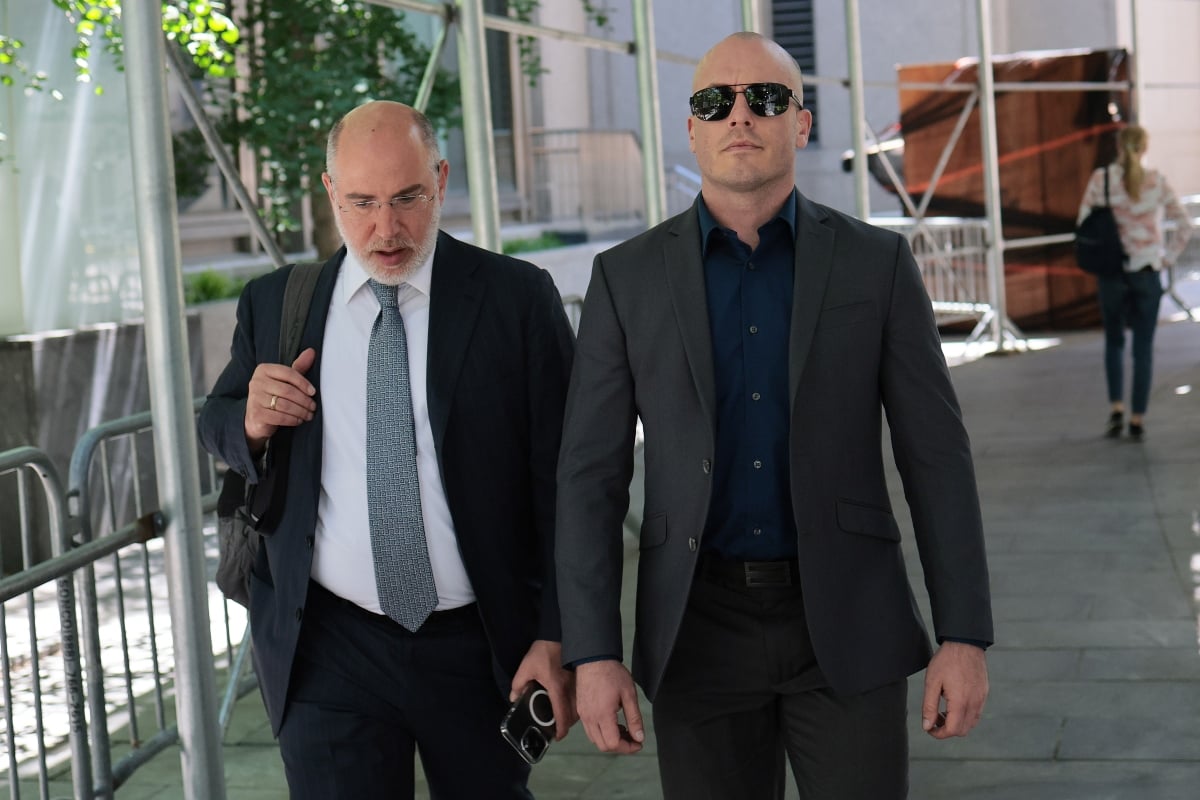
In April, a federal grand jury in the Southern District of New York indicted Master Sgt. Gannon Ken Van Dyke on allegations that he used classified information to trade on Polymarket.
The Justice Department said the indictment arose from an alleged scheme in which Van Dyke used sensitive military secrets to profit $409,000 by buying shares related to when Venezuelan President Nicolás Maduro would be removed from power.
Attorneys for Van Dyke argued in response to the indictment that the markets their client traded were never intended to be included on prediction markets regulated by the Commodity Futures Trading Commission (CFTC). In asking the court for the indictment to be dismissed, the defense said the government had undertaken unprecedented legal action where federal prosecutors were testing “new ideas and hypotheses about whether conduct is criminal.”
The defense argued that the event contracts at issue may not qualify as swaps under federal commodities law, which could undermine the charges. The DOJ has since filed a response, arguing that the defense’s claims are inaccurate.
DOJ Classifies Binary Events as Swaps
Sean Buckley, deputy US attorney, along with Assistant US Attorneys Nicholas Chiuchiolo, Ryan Finkel, and Juliana Murray, wrote to Judge Margaret Garnett in a Sept. 30 letter as to why the case should not be dismissed.
The federal prosecutors said the defendant’s response misrepresents claims that federal courts have ruled that binary event contracts on CFTC-regulated exchanges “are likely not swaps.” The government attorneys said earlier decisions in the Sixth and Ninth Circuit courts were discussing “only sports event contracts.”
Those decisions … involve civil preemption issues that have no application here and involve sports event contracts having nothing to do with the swaps alleged in the Indictment, much less the adequacy of the Indictment’s allegations. But even applying the Sixth and Ninth Circuits’ narrow reading of the definition of swap—and there are compelling reasons not to—the event contracts in this case, which involve major military action against Venezuela and the removal of a foreign head of state, qualify as swaps because they are inherently economic and investors and institutions could have used them to hedge exposure to potential financial consequences,” the prosecutors wrote.
Garnett is scheduled to hear oral arguments from both sides on Oct. 7.
Defendant Charges
Van Dyke, 38, of Fayetteville, North Carolina, is charged with three counts of violating the Commodity Exchange Act, each of which carries a maximum sentence of 10 years in prison.
He’s also charged with one count of wire fraud, which carries a maximum sentence of 20 years in prison, and one count of an unlawful monetary transaction, which carries a maximum penalty of 10 years in prison.

 Most Read

Another Shooting Near Las Vegas Strip Casino Injures Man
 972,739 views

Vintners Oppose Napa Valley Casino
556,342 views


Conversation (0)
Be the first to comment on this article.