 Main menu


Mafia
DEAD MAN’S POCKETS: Bugsy Siegel’s Post-Murder Possessions Coming to Vegas Mob Museum
Posted on: October 27, 2026, 08:03h.
Last updated on: October 27, 2026, 08:06h.

Key Points
- The Mob Museum acquired 22 personal effects recovered from Bugsy Siegel's body following his murder
- Siegel's granddaughter, Wendy Rosen, successfully sued the Beverly Hills Police Department for the items, then sold them to the museum
- The historical mob artifacts will go on public display starting Friday, Nov. 13, 2026, preceded by a sneak-peek event during which Rosen will be interviewed


When mobster Benjamin “Bugsy” Siegel was murdered on June 20, 1947, the Beverly Hills Police Department (BHPD) collected 22 personal effects from his pockets as crime scene evidence. The Mob Museum recently acquired some of these items, and will begin displaying them on Friday, Nov. 13, 2026.
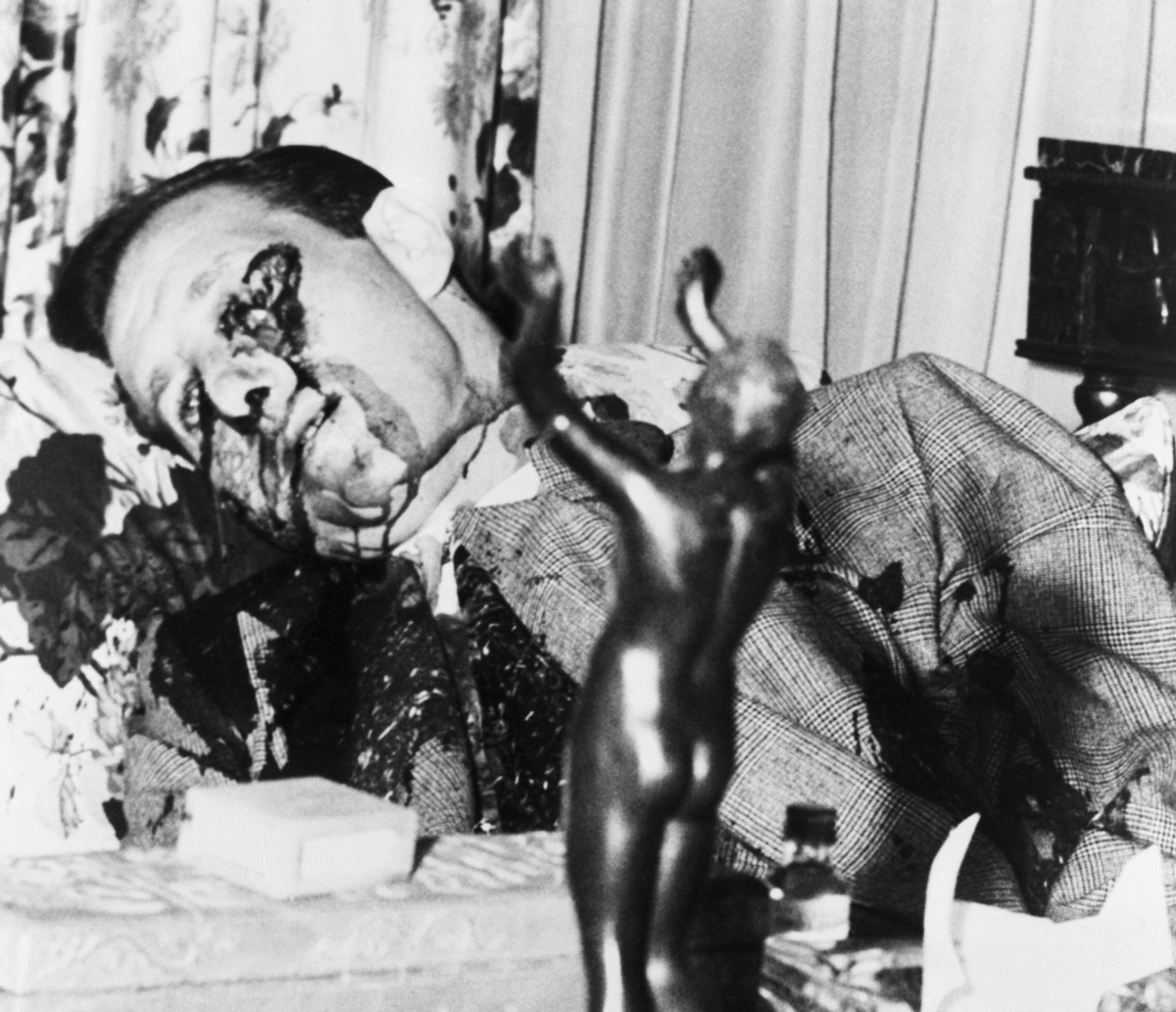
The items include:
- Siegel’s Social Security card
- Meyer Lansky’s business card, which identifies him as a distributor of Wurlitzer jukeboxes in New York
- Photograph of Virginia Hill: The wallet-sized snap bears the handwritten message: “Sweetheart Benny I love you Pup,” on the back
- Nevada certificate of vehicle ownership: Issued less than two months before Siegel’s death, the document identifies him as the owner of a 1946 Chrysler Windsor convertible coupe and lists the Flamingo Hotel as his address
- Photos of Siegel’s daughters Barbara and Millicent Siegel, including a photograph of the sisters as teenagers shortly before their father’s death
- 1947 American Red Cross membership card
- Automobile Club of Southern California membership card
- Handwritten address note: A note reminding him of Virginia’s home address, 810 North Linden Drive, a house she rented from her friend and former Hollywood agent Juan Romero
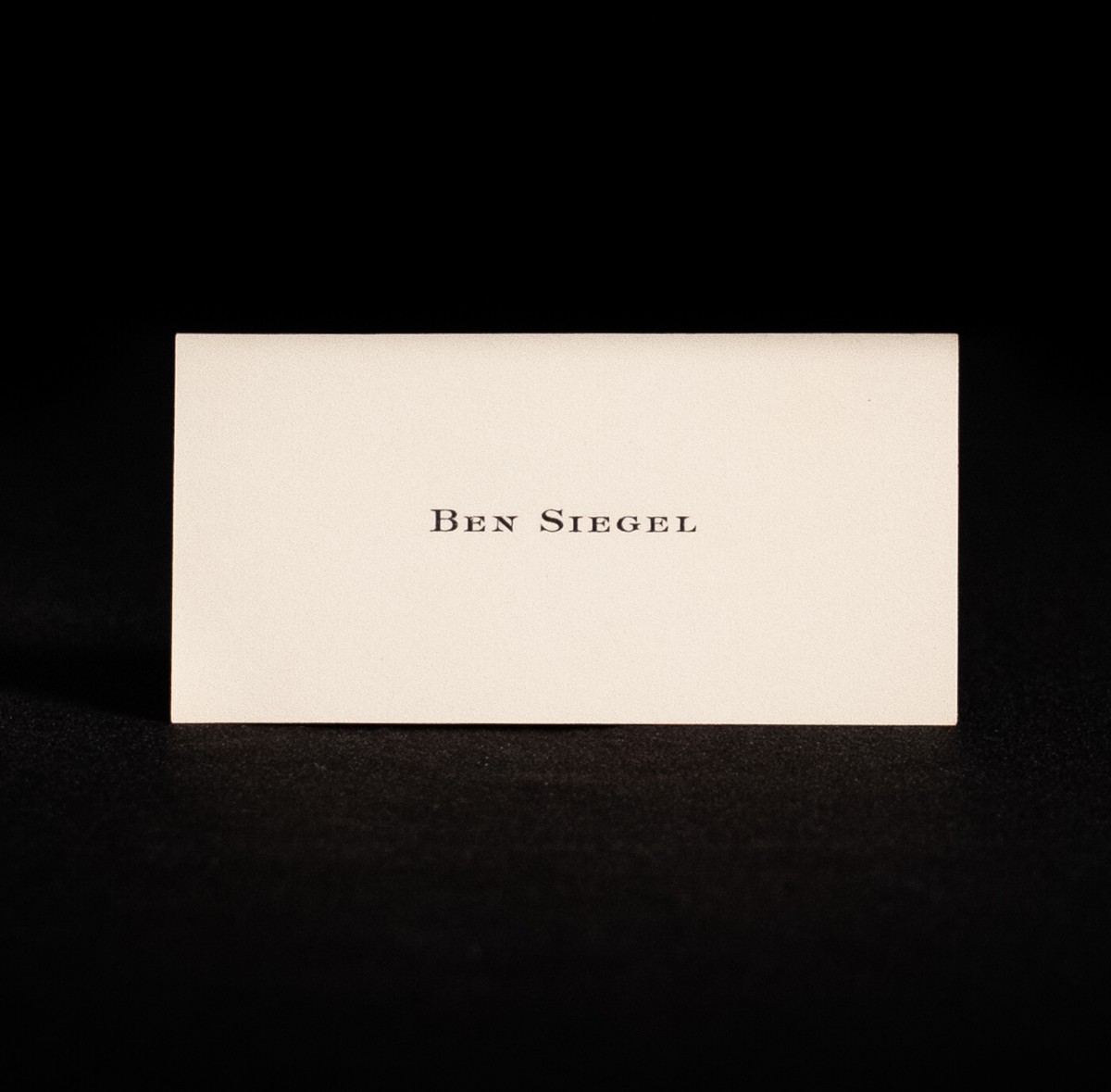
- Personal calling cards: Printed cards bearing the names “Ben Siegel” and “Mr. Benjamin Siegel,” reflecting the social customs of the era
- Yellow Cab Company receipt: A faded receipt for a 50-cent taxi fare in Los Angeles from January 1947, when Siegel frequently traveled between Southern California and Las Vegas.
- The Dixie Shops business card: A business card bearing Siegel’s name, for the national chain of women’s apparel stores. Schumacher said he suspects the Dixie Shops card was phony—to give him the appearance of holding a legitimate occupation.
The items came from Wendy Rosen, Siegel’s granddaughter. She approached the Mob Museum via her attorney, after successfully suing the BHPD to obtain them last year. Police kept them under wraps for almost 80 years, during which time Siegel’s murder was never solved.
“A judge ruled that these items should be returned to the family,” Schumacher said, adding that the museum permanently acquired them for an undisclosed sum.
Schumacher said he does not believe any of these artifacts was ever seen before.
“Certainly, there are people within that department who saw them, but I don’t think the general public knew anything about this material,” he said.
“There’s nothing mysterious about any of these items or anything like that,” Schumacher allowed. But, he added, they “open a window on who Bugsy Siegel was, what kind of stuff he had going on at the time.”
(Last) Day in the Life
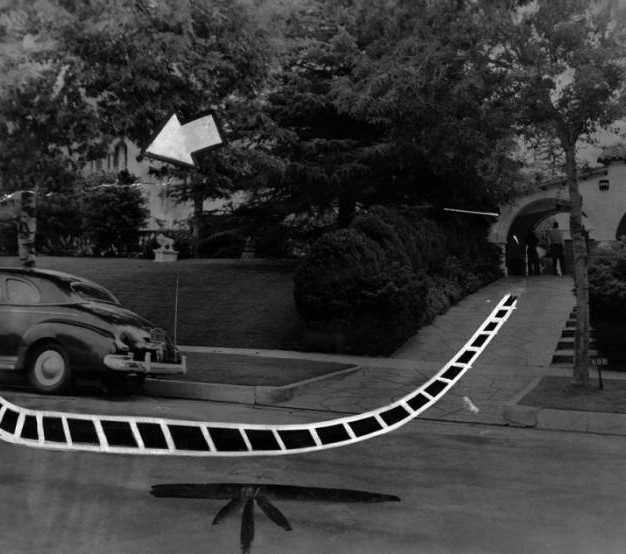
When semiautomatic gunfire shattered the front window of 810 Linden Drive in Beverly Hills at 10:45 p.m. on that fateful night, Siegel sat on the living-room couch in his girlfriend Virginia Hill’s house reading the next day’s L.A. Times.
In a few hours, that edition would be replaced by a newer one splashing his own death across its front page.
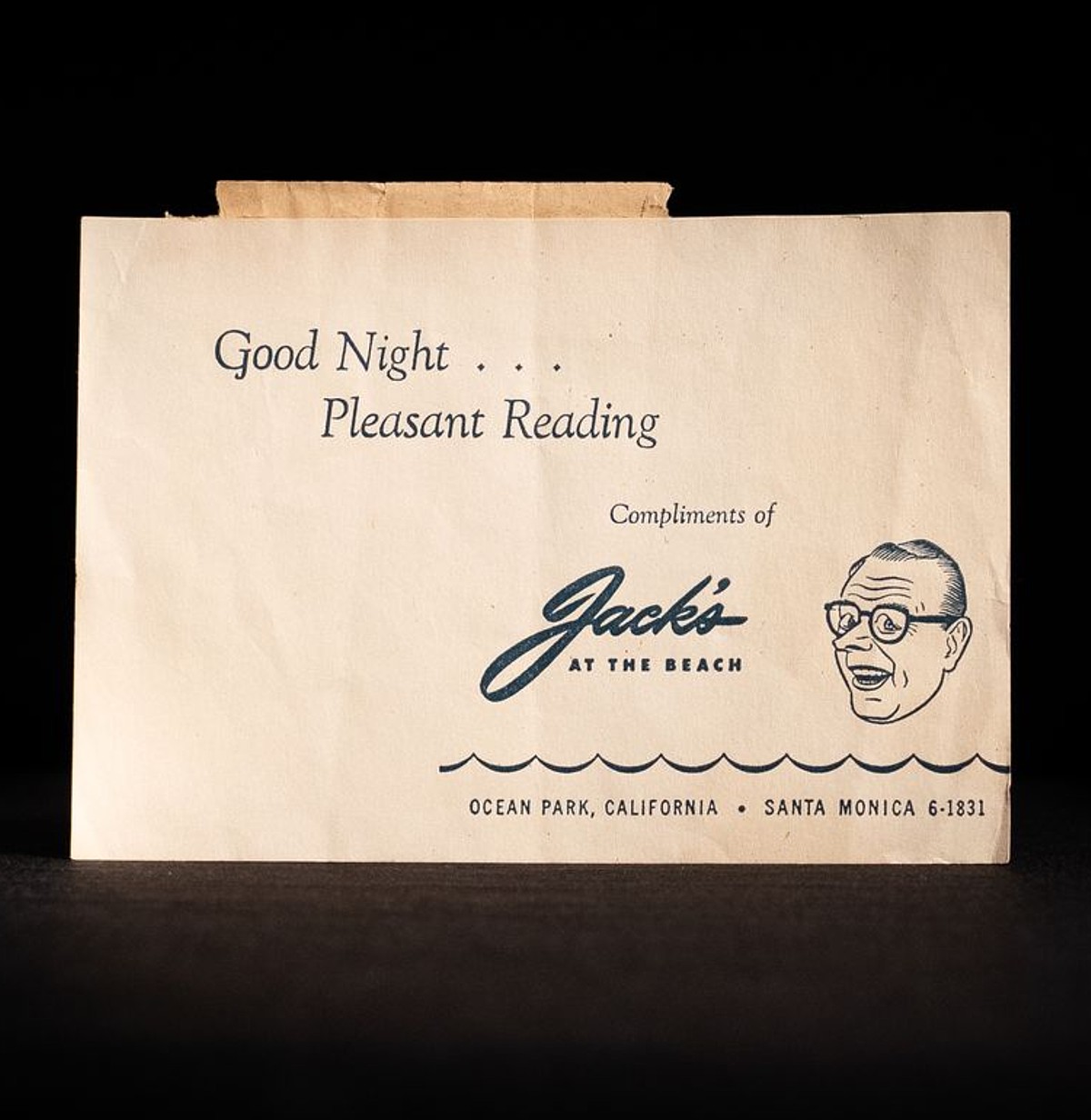
Siegel picked up the newspaper he was reading at the Santa Monica restaurant where he ate his last meal. And the Mob Museum’s new collection also includes the card attached to that paper, which read “Good Night … Pleasant Reading Compliments of Jack’s at the Beach.”
Earlier Effects
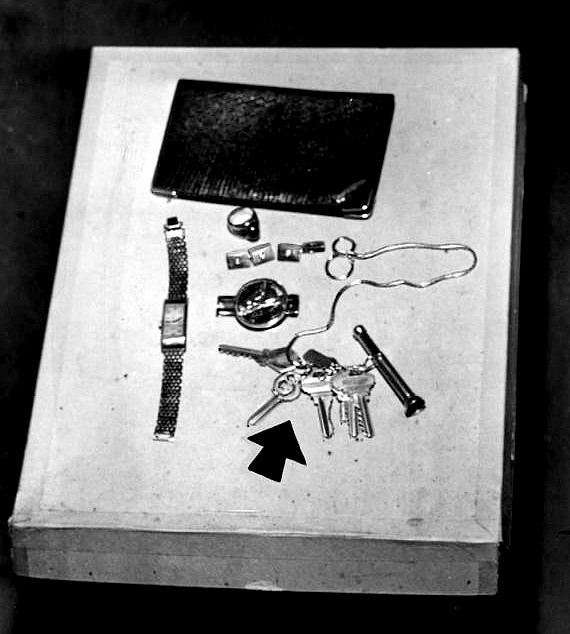
Other personal effects were found on Siegel’s body, but those were claimed shortly after his murder by his brother, Dr. Maurice Siegel, executor of his will. The items, photographed and cataloged by the BHPD, included his watch, wallet, keychain with keys, cufflinks, a money clip, and a gold plunger with a needle—which may have been a medical device, a weapon, or a good luck charm.
Schumacher said he believes those items were subsequently sold to memorabilia collectors.
None of Siegel’s personal effects was ever expected to yield clues as to the murderer, since witnesses say the person never entered the house. Yet the Beverly Hills Police Department held onto them.
“These personal effects perhaps should never have been in evidence in the first place because they don’t necessarily give us great insights on who killed him,” Schumacher said.
Mystery Still Unsolved
According to Schumacher, there are many theories about who killed Siegel. A leading one names Hill’s brother, Charles “Chick” Hill, whose motive was supposedly that Siegel was an abusive boyfriend.
According to another theory, Siegel’s control of the race wire (the technology used by bookies to get horseracing results) in Vegas angered the Chicago mob.
A third claims that Moe Sedway, his wife Bee Sedway, and Bee’s lover, “Moose” Pandza, conspired to kill Siegel for threatening to kill Sedway.
“I’m intrigued by the race wire theory, I’m intrigued by the brother theory,” Schumacher said. “But, in the end, I still think money tends to be the reason for things. And his management of the Flamingo was something that his mob brethren were frustrated by.
“That’s the most likely scenario—that the mob did it.”
If Siegel’s murderer were only 20 at the time, he would now be 99. So it’s nearly ludicrous to think that any breakthrough in what many consider the biggest unsolved murder of all time could result in an arrest.
However, Schumacher says the public should know the truth. He believes that every last investigative report and document associated with the case should be released, so other sleuths can have a crack.
“The Beverly Hills police are not releasing those,” he said. “My understanding is that the case is still open and that in theory anyway, they’re still investigating. But they really ought to release these investigative files. Give historians a chance to take a look.
“What’s the secret at this point?”
A night before the memorabilia goes on public display, from 7-8 p.m. on Nov. 12, Mob Museum members can receive a sneak peek, during which Schumacher will interview Rosen about her grandfather. Though she was born after his murder, Schumacher said, she grew up “hearing stories” from her mother, Millicent Siegel Rosen, who was 16 when her father was murdered.
Annual Mob Museum memberships start at $55. For more information, click here.

 Most Read
Another Shooting Near Las Vegas Strip Casino Injures Man
 972,826 views

Vintners Oppose Napa Valley Casino
556,426 views


Conversation (0)
Be the first to comment on this article.