 Main menu

Canadian Gaming
Alberta Minister Rebukes BCLC Chair Over iGaming Criticism, Calls Comments ‘Disingenuous’
Posted on: August 29, 2026, 12:19h.
Last updated on: September 1, 2026, 07:22h.


Key Points
- Alberta Minister Dale Nally rebuked BCLC chair Greg Moore for criticizing Alberta’s competitive iGaming policy
- Moore warned foreign ownership could send Canadian gambling profits and economic benefits outside Canada
- Former Loto-Québec chair Helene Fortin defended Alberta’s regulatory approach and challenged Moore’s criticism


Alberta Gaming Minister Dale Nally has issued a sharp rebuttal to British Columbia Lottery Corporation (BCLC) Chair Greg Moore over his recent criticism of Alberta’s private iGaming model.
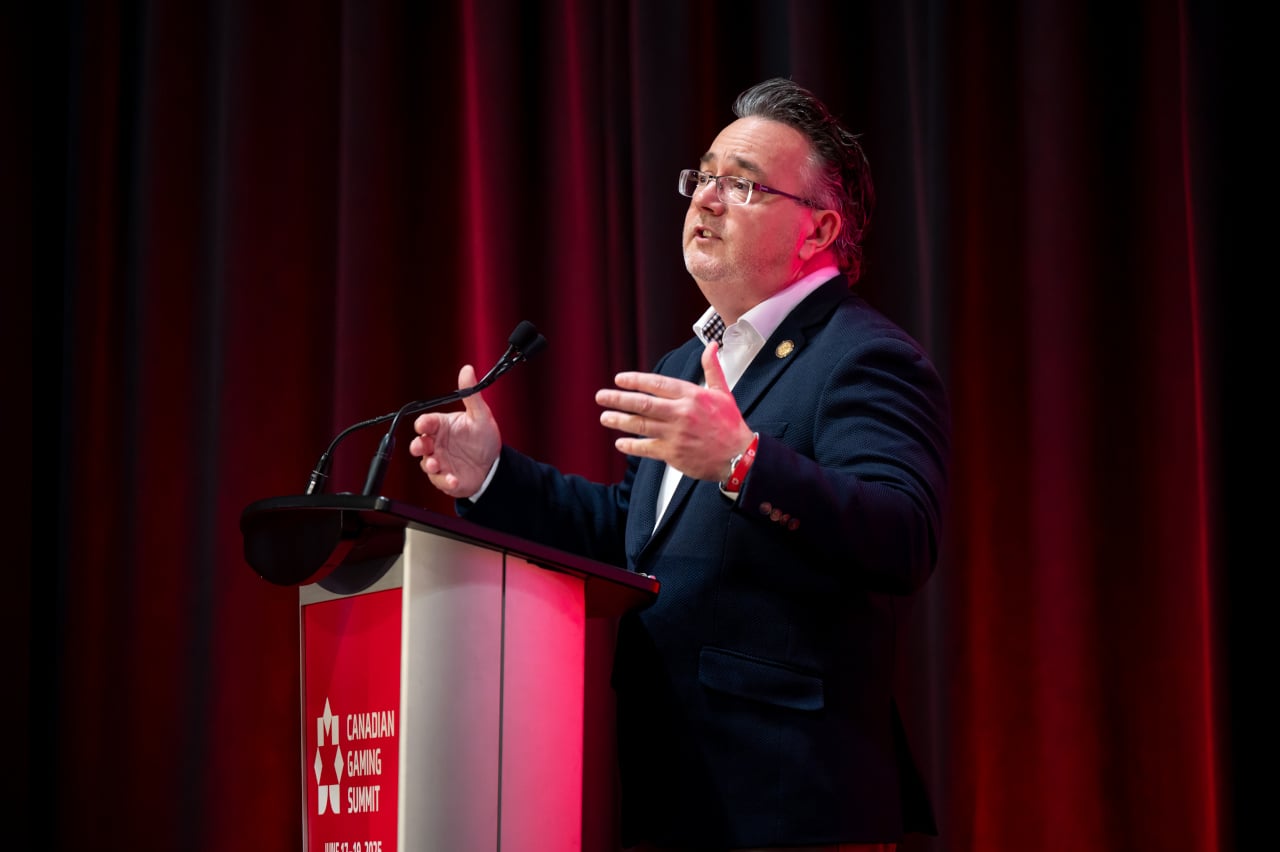
“It is disingenuous for the chair of another province’s Crown gaming corporation to criticize another government’s policy decisions,” Alberta Service Minister Dale Nally told Casino.org.
Nally was responding to a series of social media posts by British Columbia Lottery Corporation (BCLC) Chair Greg Moore attacking Alberta’s new competitive iGaming market.
Moore, appointed BCLC board chair in 2021 after serving as interim CEO, has repeatedly criticized open licensing models that allow private operators to compete against state-owned platforms like PlayNow.
Foreign Ownership Concerns
At the center of Moore’s critique is foreign market dominance. He contends that despite national “Buy Canadian” calls amid ongoing U.S. trade tensions, Alberta’s framework hands market share to American giants and exports local gambling profits.
Since Alberta’s market opened on July 13, Moore claims that of 32 registered operator groups, only 16% are Canadian-owned. More than 80% are foreign or joint-venture entities, including U.S. giants DraftKings, Caesars Entertainment, and PENN Entertainment.
“These are multibillion-dollar global corporations with enormous marketing budgets, sophisticated technology platforms, and significant access to capital,” Moore wrote. “The result is a policy framework that… may ultimately facilitate the transfer of Canadian gambling revenue, profits, data, and economic value to foreign corporations.”
Moore maintains that public models like B.C.’s ensure profits directly fund healthcare, education, and public infrastructure.
Scale of Ontario & Alberta Markets
Alberta currently hosts 29 live wagering sites monitored by the Alberta iGaming Corporation (AiGC).
Moore expanded his critique to Ontario’s commercial market, which launched in April 2022 and now features 48 private operators running 83 active sites alongside the province’s publicly owned PROLINE+ platform.
Despite Moore’s warnings, Ontario’s open model continues to hit record scale. In July, Ontario handle reached CA$9.9 billion (up 4% month-over-month), generating CA$413 million in gross gaming revenue. Operators remit a 20% tax to the province.
Nally defended Alberta’s shift to a similar model, arguing that 70% of local online gambling previously flowed into unregulated offshore sites.
“While B.C. officials criticize our approach, we’ve taken action by creating a regulated system that puts player safety and social responsibility at the forefront, with publicly funded addiction treatment available to any Albertan,” Nally said.
Industry Figures Push Back
Former Loto-Québec Chair Hélène Fortin publicly questioned Moore’s commentary, emphasizing the line between policy decisions and corporate governance.
“Provincial governments establish public policy; lottery corporations execute the mandates they are given,” Fortin wrote on LinkedIn. “Alberta’s framework doesn’t expand online gambling—it brings existing activity into a regulated system with consumer protections.”
Fortin cited a 2024 Deloitte report showing Ontario’s regulated market supported 15,000 jobs, added CA$2.7 billion to provincial GDP, and generated over CA$1.24 billion in government revenues in its first two years.
She also dismissed Moore’s foreign-ownership argument, noting that B.C. casino operator Great Canadian Entertainment is U.S.-owned, while BCLC itself partners with international suppliers like BetMGM, Bally’s, and Kambi.
“That is the reality of today’s gaming industry, not a flaw unique to Alberta,” Fortin noted. “Our responsibility is to govern our organizations… not to publicly criticize the policy decisions of neighbouring provinces.”
An industry source echoed Fortin’s pushback, calling Moore’s public commentary unprecedented: “Mr. Moore should focus on the British Columbia Lottery. No lottery corporation chairman in Canada has ever publicly disparaged another province’s gaming framework.”

 Most Read

Another Shooting Near Las Vegas Strip Casino Injures Man
 972,517 views

Vintners Oppose Napa Valley Casino
556,142 views


Conversation (0)
Be the first to comment on this article.