

State of the iGaming Industry - 2025 in Review

The iGaming industry has always been dynamic, but in 2025, it has been moving at an unprecedented pace. An online casino trend today soon becomes tomorrow’s standard, according to reports by Statista, the global gaming market is expected to reach just under $500 billion by 2025, growing at an annual rate of 3%, and surpassing $522 billion by 2030, when 1.9 billion people are expected to gamble.

Overview of the top developments this year
Our team of iGaming experts took a deep dive into what happened. Below, we will take an in-depth look at the iGaming industry and what trends have shaped 2025 and will continue to impact the market in 2026.How AI and Technology are Reshaping the Industry
Historically driven by regulation, marketing, and gaming content alone, technology now defines the direction of iGaming companies, and operators are investing in a digital revolution. But artificial intelligence is a tectonic shift that is changing the entire paradigm of the gameplay experience.Technology infrastructure as the Central Driver
The iGaming industry has always been quick to adapt to technical innovation. Legacy backends are evolving towards cloud infrastructure, and upgrades allow faster lobby updates, smoother gameplay, improved loading speeds, and greater stability during high-traffic periods. New features driven by innovation allow casinos to provide players with immersive gameplay experiences, personalized in-game features and next-generation content. 2025 was a year where Artificial Intelligence (AI) made a huge debut in iGaming. It started previously, when early adopters first began experimenting with AI in their gambling, such as Dan Gamble, an engineer who started using AI in 2023 to predict the outcomes of sports bets. But 2025 is the year that can be defined as the time when AI launched in the iGaming space.“AI is not just changing the world. It's changing how we conceptualize play in iGaming. Personalized slot recommendations and even tailored bonuses based on your play are just on the horizon.” - Kristian Medina, Casino Editor at Casino.org
AI Integration
Artificial intelligence is transforming all sectors, and the iGaming industry is no different. While technology underpinned the iGaming experience before, it is now shifting into a more proactive role, predicting and responding to individual player preferences. AI and Machine Learning are at the center of this transition. For one, AI analyzes data like player preferences, location, and spending habits to deliver customized bonuses and tailored promotions to users. Machine Learning is also vital in improving casino game discovery and engagement. It can provide game suggestions based on past play and completion of missions and achievements. Think of it like Netflix recommending a new TV show similar to ones you’ve watched previously or Spotify promoting tailored playlists based on your listening activity. AI is also transforming KYC (Know Your Customer) and verification processes in the iGaming industry. Many operators are relying on Machine Learning to detect potential fraud, underage gambling, and bonus abuse before it becomes a problem. It can also streamline player verification by automatically reviewing proof of identity and address documents, allowing for quicker approvals and faster withdrawals through smart automation. It was recently reported that DraftKings and Flutter-owned FanDuel, two of the biggest iGaming operators in North America, are leading the market by implementing AI into their operations. While iGaming customers are becoming more tech-savvy and educated, they expect to have a fast, streamlined process. According to figures from Casino.org, there has been an increase of nearly 20% in users interested in operator withdrawals, a 15% increase in users searching for banking, and 12% increase in iGaming users investigating process and jurisdiction-specific information.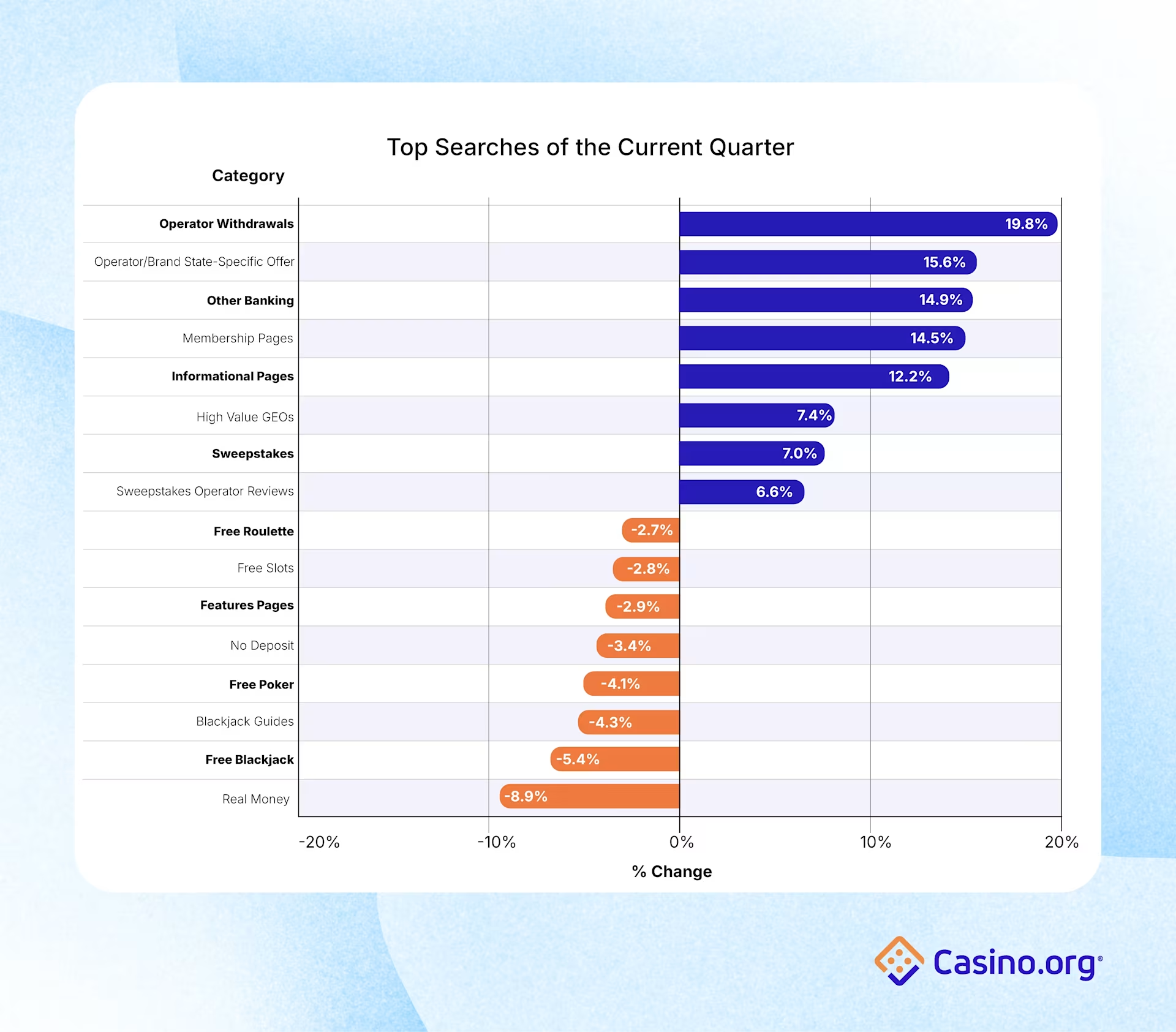
AI & Machine Learning Advancing Responsible Gaming
A study conducted with AI-powered machines found that, like mimicking human behavior, Machine Learning can cause machines to increase their betting patterns to become riskier, and thus serve as a basis for detecting potential problem gambling based on behavior analysis of iGaming players. AI can use player behavior analysis to provide responsible gambling tools and strengthen safety with advanced fraud detection models and automated identity verification systems that help identify bonus abuse, multi-accounting, and suspicious activity. For example, CrossClassify, an AI-powered fraud prevention platform that specializes in the online gaming sector, provides behavior-monitoring, link analysis, and more to detect multi-account fraud, bonus abuse, and payment fraud. While AI is having a profound impact on iGaming, there is still room for growth. Many players are still not using AI, but the numbers are rising. According to the latest information from Pew Research, 34% of adults in the US have used ChatGPT. While AI adoption is expanding, iGaming brands are directly integrating its features into services that help users. Ziv Chen, an iGaming expert and writer for Casino.org, who has been covering technology advancements in the gaming sector for over 20 years, says:“2026 will become a year where iGaming operators will increasingly use behavior analysis and predictive models to understand, anticipate, and address player behavior. This will not only be used to promote more bonuses and encourage more gaming, but also to detect early warning signs of gambling harm, and enable operators to take proactive measures to detect players at risk, approach them, and ensure responsible gaming.”
Algorithmic Betting Platforms & Machine Learning in Betting Systems
Sportsbooks also benefit from technological advancements, especially in the complex algorithmic systems they use. For users, these systems essentially act as betting systems, helping them identify relevant sporting events, compare odds more efficiently, and offer betting options that align with their typical wagering habits. Machine Learning uses real-time data and previous bettor behavior to help users maximize their potential returns. Automated risk management adjusts exposure, and odds engines tap into data to sort through thousands of variables covering players' stats and for in-play events. And this ability to process information in real-time helps power features such as prop bet lines, cashout mechanics, and micro betting markets.Peak Innovation Periods
The industry’s biggest innovation waves consistently cluster around mid-year cycles, when operators push new releases ahead of the busy second half. Statista Digital Market Insights predicts the online gambling markets in the US alone will reach nearly 40 billion US dollars by 2029. While currently only seven US states and one Canadian province have legalized online casino games, iGaming revenues continue to expand. According to research by the American Gaming Association (AGA), iGaming revenues grew by nearly 30% year over year in Q3 2025, generating revenues of $2.7 billion. Every one of the seven iGaming states experienced revenue growth in the third quarter, with Delaware leading the pack with a 89% year-over-year increase. Contrary to iGaming’s growth as described above, land-based gambling tourism to Las Vegas, for example, has been declining 12%, 6.7%, and 8.8% over the same period, according to data from the Las Vegas Convention and Visitors Authority (LVCVA). As iGaming isn’t susceptible to seasonality or indirect price increases, such as those seen in travel and hospitality sectors, 2026 will see iGaming continuing to grow and become a larger proportion of gaming compared to land-based casinos.Mobile Gaming’s Rapid Expansion
Mobile is not only becoming the dominant way players access casino sites, but also their exclusive path to iGaming. The European Gambling Market Key Figures report shows that in Europe, mobile devices generated 58% of online gambling revenue in 2024. In the UK, the Gambling Commission’s (UKGC) Annual Report has shown that up to 60% of online gamblers have used their mobile phone since as far back as 2021. User engagement research shows mobile devices greatly outperform desktops, which is leading iGaming operators towards mobile-first strategies. For example, Casino.org’s internal data revealed that on average throughout 2025, 71.7% of online gambling was conducted on mobile devices compared to 28.3% on desktops.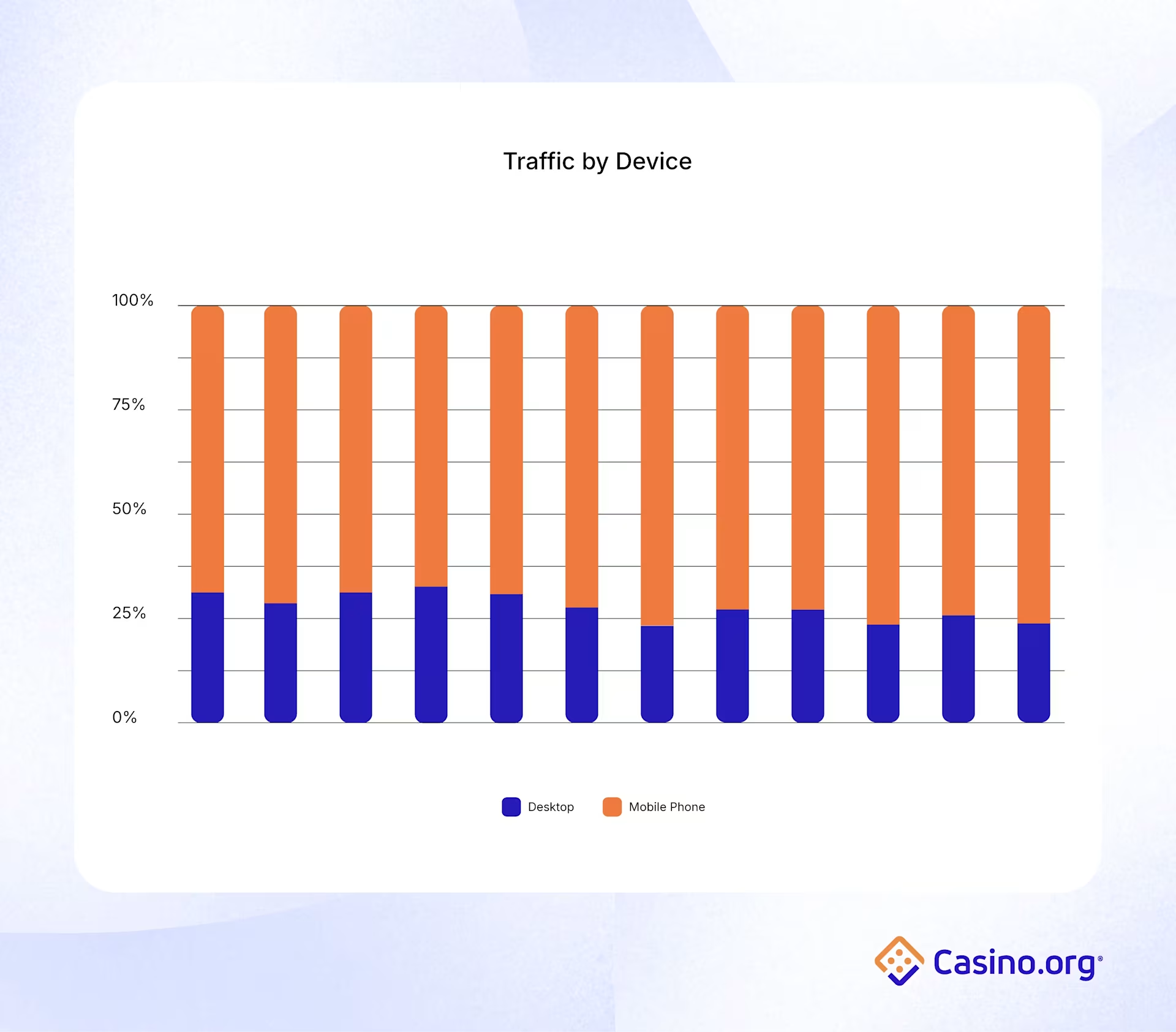
Mobile-First Ecosystems
Mobile usage is widespread in the United States and beyond. Global platform share data from StatCounter shows that mobile platforms like iOS and Android account for a major portion of internet activity over desktop OS’s like Windows and macOS. While this data is not iGaming-specific, it shows a user trend towards device preference. Operators in the iGaming industry are increasingly building websites that have a UI that targets mobile compatibility. Performance and navigation are tuned for phones with touchscreen controls, while some brands develop standalone mobile apps that can be downloaded from the Apple App Store or Google Play Store.Evolving Mobile Interfaces
This mobile-first approach will continue to gain momentum in 2026, with operators integrating more AI-powered features and tools, and focusing on faster load times, more intuitive user interfaces, and deeper mobile payment integrations. Apps have benefits, including notifications and biometric login via fingerprint and facial recognition. Players get a more secure experience and also faster login times. Casino sites now commonly support Google Pay and Apple Pay for one-touch payments, while integrating payment apps, including e-wallets and fast banking services.Mobile Usage Among US Players
American smartphone adoption remains extremely high. According to a study by the Pew Research Center, around 90% of US adults own a smartphone. Also, 16% of US adults stick exclusively to using their smartphone instead of home broadband. While iGaming offers the advantage of being able to place bets anywhere within the regulated jurisdiction, it will grow further in 2026, with people travelling across state lines to place bets and play in licensed iGaming jurisdictions.US States Showing Growing Interest in Mobile Gambling
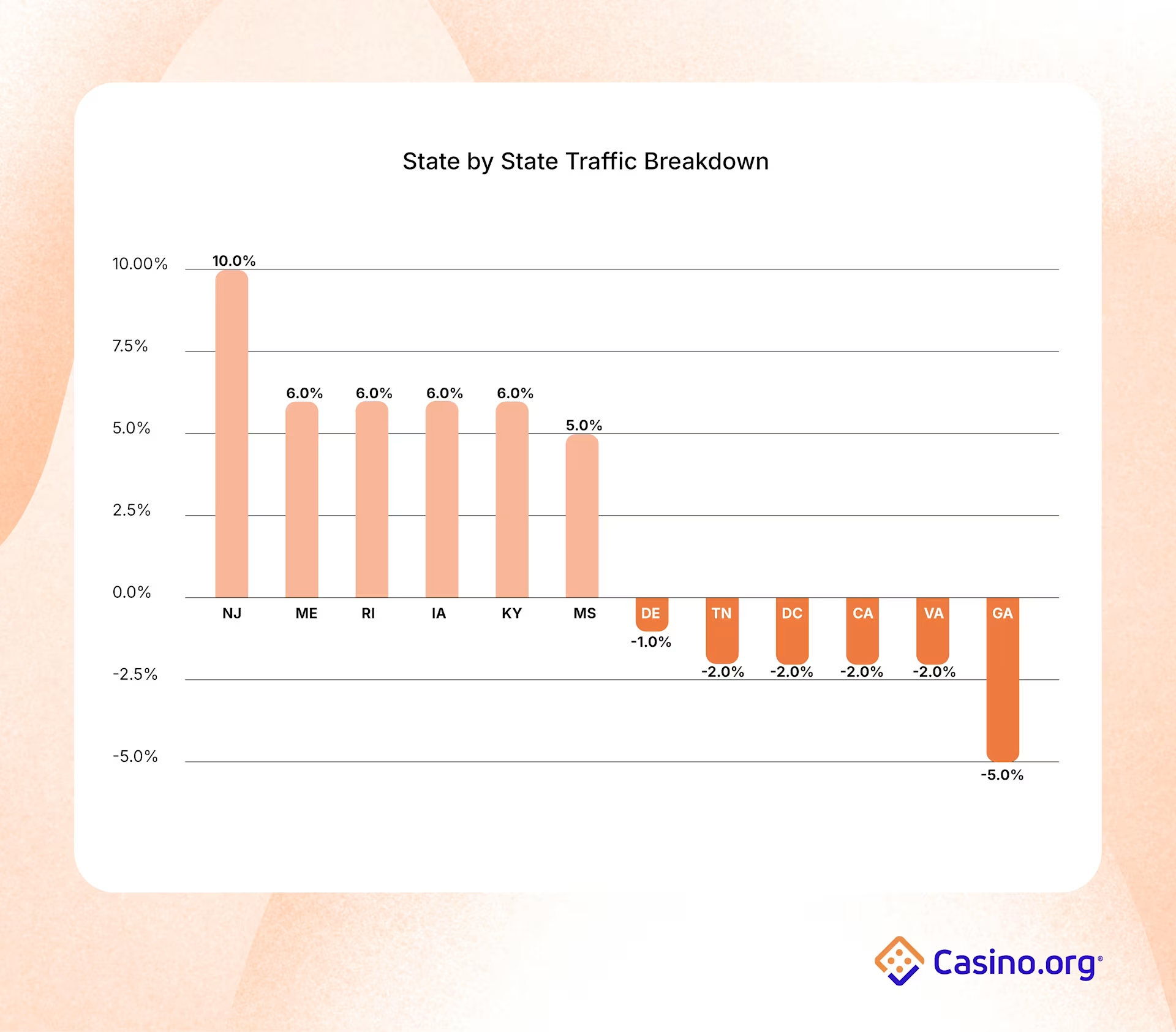
While mobile sports betting has been legalized in many US states, mobile casino gaming remains more limited, as only a handful of US states currently permit online casinos. New Jersey, Pennsylvania, Michigan, West Virginia, Delaware, Connecticut, and Rhode Island support online casinos, but regulatory momentum is growing in other states. There is a growing appetite for full mobile casinos in other markets, driven by public interest and the potential of tax revenue. For example, LD 1164, Maine’s online casino bill, cleared the state legislature earlier this summer, although the governor has not yet signed it into law. Similarly, New York also saw multiple attempts to advance online casino legislation in early 2025.Sustained Interest Throughout the Year
Online casinos do not have a strict “busy” time each year. Revenues are consistent throughout the year, with states that have legal iGaming generating billions of annual dollars, according to Statista. It is different for sports betting, which does see certain peak times during the year. Betting activity increases around the start of the season for major sports, or for major events like the Super Bowl or NBA Finals. Still, despite the growth in traffic, revenues, and interest, 2026 will continue to see restructuring and layoffs in both land-based and digital sectors. A trend that started in 2025, but is expected to continue as gaming companies continue to seek efficiencies in light of new technology, increased regulation, and global economic uncertainties such as tariffs. Vegas Starfish weighs in following the seemingly endless round of Vegas layoffs,“Obviously America is going through it right now, but specifically in Las Vegas and at MGM Resorts it feels like we are gearing up for lower tourism, a possible recession and department closings,” she wrote. “With quiet rounds of layoffs taking place every couple of weeks, is this a restructuring or something bigger?”
Esports Betting: A Growing Digital Frontier
Esports has long been a niche part of the sports betting market that insiders have been watching with interest. But the gamified, immersive nature, and the social element of esports platforms make esports crossover seamlessly to iGaming. That is now growing into a real contribution to the present and future success. According to Statista, the worldwide revenue of Esports in 2025 is expected to be $4.8 billion, growing at an annual rate of 5.5% to $6 billion in 2029. A growth in interest in Esports as a major part of online betting has seen sportsbook operators pay closer attention to market curation and odds competitiveness.Market Growth and Legitimacy
Viewership for Esports events has grown from just over 400 million in 2020 to over 600 million in 2025, showcasing just how popular betting on Esports has become. It can now even be put alongside major sports like American football, basketball, and soccer. Business Research reports that the global Esports betting market already has a value of $16.21 billion in 2025, and will grow to $54 billion by 2034. In the US, Esports betting is predicted to reach $4.35 billion by 2034, according to Worldwide Market Reports. This increase points to the growing popularity of Esports as a legitimate category for wagering.More Sophisticated Betting Markets
Micro-betting is now something online sportsbooks offer on Esports markets, giving bettors in-play lines such as “next kill” or “highest rank on map” during live contests. This ability now comes with statistical API-driven models that show real-time odds that can change during play.Expanding Audience
The growing popularity of Esports highlights the importance of Gen Z and Millennial users, who are the primary consumers of gaming content on mobile and social media. Esports Insider reports that 44% of Esports bettors are aged between 18 and 27, and this age group will become powerful in the betting industry over the next decade.Notable Growth Periods
Like other sports, betting activity increases around Esports during world championships, major seasonal leagues, and important events. The most viewed Esports event in 2024 was League of Legends, drawing over 6.94 million viewers. Figures show that the game consistently maintains the largest player base, with approximately 117-135 million monthly active users. Esports stand out because tournaments are held year-round, making betting markets more widely available. There will still be more activity around popular games and competitions.iGaming Regulatory Landscape: Slow but Evolving
While iGaming regulation remains relatively constant in the US, with seven states allowing regulated online casino gaming, several other states, like Arkansas and Maine, made attempts to legislate iGaming in 2025, but unsuccessfully. Other states, like Indiana, are showing opposition from residents. However, there is some progress, although slow, shown in states like Florida.References
Shifting US Gambling Laws
Legal gambling, whether online or land-based, is handled on a state-by-state basis. Sports betting has enjoyed rapid expansion and is available online in 31 states. Online casinos have faced a tougher expansion, but policy debates continue in numerous states.Sweepstakes Casinos
Sweepstakes casinos, which could have potentially impacted real-money iGaming through competition or complementary products, are an example of regulatory shifting. While regulators in some states, such as Louisiana, have made unsuccessful attempts to legalize sweepstakes, California joins more states that ban sweepstakes gaming. In 2026, we will continue to see sweepstakes operators challenging the regulatory framework, with more operators trying to reason with regulators and trying to find their space to operate legally. Like sweepstakes provider High 5 Games, which agreed to settle with the State of Connecticut and pay a $1.5 million penalty. 2026 will still see a rise in interest in sweepstakes casinos. Casino.org data shows a 7% reader interest in sweepstakes casinos, and a 6.6% rise in interest in sweepstakes operator reviews, showing that customers have a high intention to sign up and purchase coins. We expect this trend to continue in 2026 and beyond, until market demand drives either regulation or prohibition. Adam Ryan, one of the top Casino writers in the industry, shares his thoughts,“2025 has been the year of sweepstakes casinos, no doubt. Its popularity is largely thanks to growing demand for an alternative to traditional online casinos. The social element is the cherry on top for a lot of players seeking a wider iGaming community. We certainly don’t imagine this to slow down anytime in the near future.”
Prediction Markets
2025 will be remembered as the year when prediction markets and event contracts emerged onto the scene. While they have a more direct impact on sports betting, the ongoing climate and explosion of event contract companies also have a significant impact on iGaming. In November, two of the key event contract platforms, Kalshi and Polymarket, broke their records, bringing combined monthly trades of $9.5 billion. In the meantime, large iGaming and sports betting operators, like FanDuel and DraftKings, are introducing their own prediction market products, and in the meantime, are abandoning their traditional gaming licenses, as both companies scrapped their Nevada licenses in November. In 2026, many companies will have to make a choice on whether they will concentrate on state-licensed, iGaming and betting operations, or on event markets, which are federally regulated by the Commodity Futures Trading Commission (CFTC). Large iGaming operators, like Fanatics, FanDuel, and DraftKings, are now launching their event contracts platforms. At the same time, legislators and gaming industry bodies like the American Gaming Association opposed prediction markets while protecting the sovereignty of states and tribes. In the current climate, pursuing both prediction markets and traditional gaming is not an option. In 2026, operators will have to choose sides. The CFTC has been clear about not wanting to regulate iGaming, with one of the agency’s general councils saying, “A federally regulated exchange has turned itself into an online casino for betting on elections. The question…though, is not whether that’s right or wrong, but whether the CFTC can even evaluate that activity.”Cryptocurrency and Blockchain Integration
Cryptocurrency is a perfect example of how technology is transforming iGaming and how pressure is on regulators to keep pace. A good example is that Blockchain technologies have been widely adopted by Curacao-licensed casino sites and sportsbooks. Digital currencies like Bitcoin, Ethereum, and Litecoin offer transparency, speed, and versatility, but also a complex legal infrastructure.The Rise of Digital Currency Gambling
The adoption of cryptocurrencies in online casinos is growing, but it is held back by regulatory constraints. Still, regulators are being forced to change with the times. The latest example is the recent nomination of Michael Selig, President Trump’s nominee to head CFTC. Selig, who was previously in charge of the agency’s crypto task force, is a supporter of crypto regulation. As the CFTC regulates prediction markets, regulation and policy are also likely to have an effect on the iGaming legal landscape in 2026.Blockchain-Based Transparency
Research shows that the global blockchain market in 2025 is estimated at $21.6 billion, and is expected to grow to $1,270 billion by 2033. 54% of US blockchain players own cryptocurrency, and 82% are interested in using it for purchases. While the Asia-Pacific leads regional dominance in blockchain gaming with 47%, North America is a distant second with 31% customers using blockchain in gaming.Digital Currency Payment Methods
Payments made with cryptocurrencies have advantages such as instant deposits and fast withdrawals. Volatility is a big concern for players, but they are turning to stablecoins like USDT and established cryptos like Bitcoin. Smart contracts are available in some cryptocurrencies, allowing for transactions to process instantly.Decentralized Betting Models
Casinos are available that rely completely on crypto and decentralized models. These platforms use Web3 technology that makes gameplay, payments, and bonuses exclusive to a blockchain. While this is still a niche section of the iGaming industry, the model shows that operators are more ingrained with infrastructure. Cryptocurrency bonuses and instant withdrawals are slowly making their way into the iGaming space. At this stage, the nature of blockchain, which is built to facilitate anonymous transactions Crypto bonuses and instant, decentralized, and anonymous withdrawals have already been changing the iGaming and sports betting industry in 2025, and will continue to grow in market share in 2026. Crypto.com and other large operators from the cryptocurrency space are already making their debut in the gambling markets. “Sports Events Trading offers an entirely new platform for U.S. users to engage nationwide at Crypto.com and in the Crypto.com app,” said Kris Marszalek, co-founder and CEO of Crypto.com. As the company is regulated by the CFTC, which is now led by a cryptocurrency driver, the regulatory momentum and demand by customers are expected to push for the regulation of cryptocurrency in the iGaming space as well.Sweepstakes Casinos: A Growing Alternative
Sweepstakes casinos have become a popular alternative to traditional real-money iGaming, especially in the United States. Eilers & Krejcik predict that sweepstakes casino revenue will reach $4 billion in 2025, representing a 16% increase year-on-year. Due to the restrictions standard casinos face, differing regulatory requirements on sweepstakes casinos make them more widely available. They operate as promotional platforms that offer casino games for entertainment while operating under contest regulations. This has allowed these platforms to become popular in states and regions that are underserved by licensed casinos. Their deep integration with mobile platforms has been pivotal in the quick growth of sweepstakes iGaming.Virtual Currency Engagement Loop
Sweepstakes casinos use a dual-currency model where Gold Coins are for free play entertainment and Sweeps Coins are promotional and redeemable for cash. By keeping a strict promotional cycle, these brands can operate outside of gambling regulations. But a 2025 report from the American Gaming Association shows that 69% of sweepstakes casino users believe their activity on these platforms is gambling.Influence on Traditional Casinos
Being able to operate in more states has made sweepstakes casinos an obvious alternative to real-money casinos that face limited availability. This comes as land-based gambling tourism to destinations like Las Vegas has been declining by up to 12%, according to figures released by Las Vegas Convention and Visitors Authority (LVCVA). And this is reflected by operators, with 25 new sweepstakes casinos launching in the US in 2025, taking the total number to 140 (via KPMG). Traditional casinos are taking notice and taking inspiration from sweepstakes platforms by offering lightweight user experiences, more social integrations, and gamification elements.The Evolving US Player: More Educated and Savvy
Players in the US are much more in-tune with the industry than they were during the early-market days between 2018 and 2020. Information is more readily available through reviews and player communities, but also through regulations forcing casinos to be more transparent. Players can now approach a casino with research and shift focus to operators to cater to them. A study by the NCAA shows that out of 3,527 18 to 22-year-olds interviewed on campuses, 58% engage in sports betting and other forms of gambling, showing that the audience is becoming younger and more educated.Smarter Consumer Decision-Making
With more power and knowledge, iGaming players know that they have a broad choice of platforms to choose from. They are more willing to compare brands before choosing, and know they have reviews and community feedback. Players are now much more detail-focused and want to know how casinos work and what the operator can offer them.Increased Demand for Transparency
Global regulators, including those in the US, are increasingly requiring casinos to be more transparent than ever. This extends to clear bonus terms, withdrawal requirements, account verification measures, and responsible gambling tools. For example, US gambling operators are required to have a dual-layer system for Anti-Money Laundering (AML), which complies with both state and federal standards. Casinos are also required to file Currency Transaction Reports (CTRs) for any cash transaction (in or out) exceeding $10,000 in a day, and they must file Suspicious Activity Reports (SARs) for any transaction of $5,000 or more that is suspected to involve illegal activity. Requirements for transparency will become increasingly demanding in 2026, given the increased penetration of crypto and blockchain technologies into the iGaming sphere.Emerging Signals and Weak Trends
There are some trends that are emerging but are not shifting as quickly as others, but they still impact the iGaming industry.Social Gaming and Community Features
There is a movement towards community on many top iGaming platforms. The days of gambling online as a long pursuit are gone, and players often want shared experiences. Driven by hyper-connected GenZs and Millennials, sharing shows early signals of importance for the coming years. Casinos will continue to integrate social features like chatrooms, leaderboards, and gamification through achievements, tasks, and social media sharing. This focus on shared experiences and community features has also fueled the rise of gambling and slot streaming on platforms like Twitch and YouTube, where viewers can watch and interact with creators in real-time. An example is the popular channel LetsGiveItASpin, a gambling and slot streamer, which has over 73,000 followers on Twitch and 143,000 subscribers on YouTube. However, on November 17, 2025, YouTube introduced more advertising restrictions on gambling videos and promotions. As social media channels such as YouTube and Google have been following regulations closely and proactively enforcing stricter advertising standards on gambling-related content, 2026 is expected to be a year of change, with more strict, targeted advertising that complies with regulations and is driven by licensed entities, as opposed to individual influencers and streamers.Rising Responsible Gambling Awareness
According to research by the National Council on Problem Gambling (NCPG), about 8% of US adults (roughly 20 million people) reported at least one indicator of problem gambling behavior several times in the past year. Responsible gambling is one of the most important parts of iGaming, and it is a constantly moving topic. Casino sites currently have tools such as deposit limits, session timers, and self-exclusion. Modern players are more comfortable with ideas around emotional regulation and mental health. Regulators are pushing towards more responsible gambling tools, but also for jurisdiction-driven initiatives that help to shape policy. Initiatives also include iGaming operators and affiliates, who proactively offer customers responsible gambling tools and resources. Alex Korsager, the Chief Gaming Officer at Casino.org, reminds us, as a point of inflection,Outlook for the Coming Year
2026 will be a year of growth rather than revolution. Rather than major jumps, we will see trends continue to transform the industry. Mobile will be the major driver in the US, with casino players and sports bettors increasingly using their phones to engage in iGaming. Operators themselves will continue their push to more user-friendly platforms that are player-focused and mobile-first. Technology adoptions will gain traction, including the expansion of crypto casinos, without quite becoming a mainstream option. On the regulatory side, lawmakers will continue to push a more responsible concept of gambling in states that allow iGaming. Other jurisdictions will continue to revisit their own laws, but progress will continue to be slow. The growth of Esports will help attract younger players to betting platforms, and sweepstakes casinos will keep providing an alternative to traditional gambling.Conclusion
Although changes in iGaming may seem slow, the industry is evolving faster than it has in decades. Technology is pushing new concepts and new ways of experiencing online casinos and betting sites. Adoption across the United States continues to grow, while more global markets are embracing online gambling. Operators must move to meet the changes or risk being left behind, whether in terms of technology or working under changing regulations. And now players have more power than ever, with more information helping them to choose safe and reputable brands.
Chris has been working in iGaming for 15 years, and is now bringing his experience and expertise to Casino.org's exhaustive coverage of online casinos within the US.

Alexander Korsager has been immersed in online casinos and iGaming for over 10 years, making him a dynamic Chief Gaming Officer at Casino.org. He uses his deep industry knowledge to deliver exceptional content that helps players across key global markets. Alexander checks that every real-money casino on our shortlist offers the high-quality experience players deserve.
