 Main menu


Las Vegas
This Year’s Las Vegas F1 Impact Downshifted by $100 Million
Posted on: November 25, 2026, 04:09h.
Last updated on: November 25, 2026, 04:09h.

Key Points
- The 2026 Las Vegas Grand Prix is projected to generate $800 million in economic impact, down roughly $100 million from 2025
- LVCVA President Steve Hill attributed the steady multi-year drop to lower F1 staging costs as race operations grow more efficient
- Bellagio Fountain Club sold out for the first time, while F1 plans permanent infrastructure upgrades to shorten future setup times


The 2026 Las Vegas Grand Prix is expected to generate approximately $800 million in economic impact for Las Vegas and the surrounding region, Las Vegas Convention and Visitors Authority (LVCVA) President Steve Hill told the Las Vegas Review-Journal newspaper. That would be about $100 million less than the more than $900 million attributed to the 2025 race by a July 2026 FOX5 report.
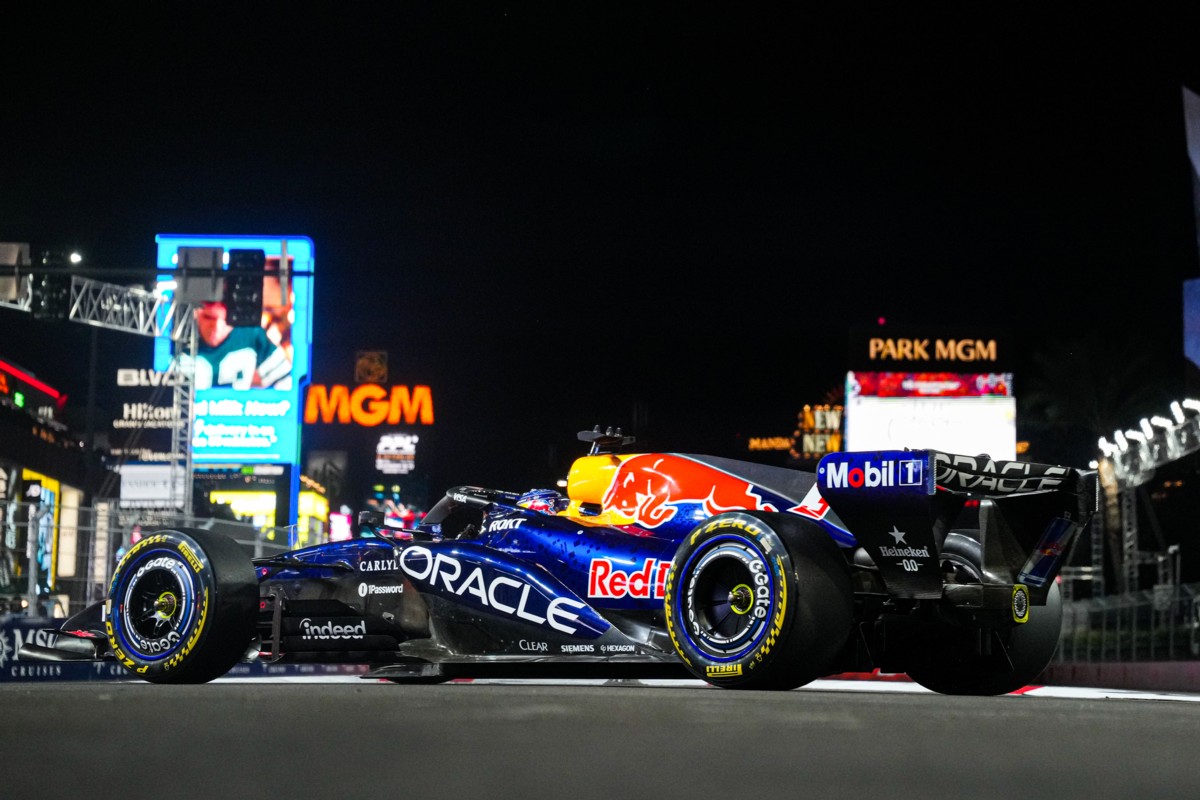
Neither the LVCVA nor Formula 1 has publicly disclosed a standalone 2025 economic-impact figure. The organizations have only reported a combined $3.2 billion in economic impact for the 2023–2025 races, without providing an annual breakdown.
The inaugural race had an estimated economic impact of nearly $1.5 billion, according to the Clark County Manager’s Office, followed by $934 million in 2024, according to a published 2024 Applied Analysis report.
In comments to the R-J, Hill claimed the steady decline reflects only the increasing efficiency of staging the event. He explained that the economic-impact calculation includes Formula 1’s spending to stage the race, which has decreased as the operation has become more efficient.
The first year included major one-time investments, such as the construction of a 300,000-square-foot pit building near Harmon Avenue and Koval Lane along with a full repaving of the race circuit to Formula One specifications.
Impact on Biggest Casino Company
Official tax revenue figures for this year’s race will not be available until 2027. However, Formula 1 reported that the sold-out 2025 event produced $43 million in state and local tax revenue, including nearly $15 million earmarked for education programs.
Also speaking to the R-J, MGM Resorts International CEO Bill Hornbuckle said the event has matured over its four years, with his company benefiting from lessons learned in earlier races. One benefit he cited was the first-ever sellout of the Bellagio Fountain Club, the luxury hospitality venue overlooking the resort’s famous fountains.
MGM is committed to hosting the hospitality experience through at least 2034, and Hornbuckle said his company — which operates nine casino resorts on the Strip — remains enthusiastic about any event that attracts roughly a quarter-million visitors to Las Vegas each year.
The Grand Prix is no longer the only attraction in town during race week. In the event’s inaugural year, tourism and sports leaders intentionally left the calendar relatively clear while they assessed how the race would affect the city. That approach has changed. This year, Mandalay Bay hosted the Players Era men’s college basketball tournament while the Vegas Golden Knights played at T-Mobile Arena during race week.
Hornbuckle said he’d like to see the period evolve into a full-fledged sports festival, with the Raiders again anchoring the weekend with a home game, as they have in 2024 and 2025.
Looking ahead, Las Vegas Grand Prix CEO Emily Prazer told the R-J that F1 plans a series of permanent infrastructure upgrades aimed at further reducing construction-related disruptions. Projects include underground utilities and a permanent podium at Grand Prix Plaza, as well as fixed power connections and lighting infrastructure along the 3.8-mile circuit.
The changes are designed to shorten setup and teardown times, which have already fallen substantially since the inaugural race. Construction that once stretched nine months has been reduced to roughly 11 weeks of installation and five weeks of dismantling.

 Most Read
Another Shooting Near Las Vegas Strip Casino Injures Man
 973,195 views

Vintners Oppose Napa Valley Casino
556,772 views


Conversation (0)
Be the first to comment on this article.