 Main menu

Legal
Pennsylvania Supreme Court Rules Skill Games Are Slot Machines
Posted on: June 15, 2026, 04:56h.
Last updated on: June 16, 2026, 04:26h.


- The Pennsylvania Supreme Court classified cash-paying “skill games” as illegal slot machines under state law
- Justices rejected claims that memory-based mini-games exempt the devices from strict state gambling regulations
- The court delayed enforcement for four months, giving lawmakers a final deadline to tax and regulate the 70,000 machines before a police crackdown begins
Pennsylvania’s Supreme Court has finally ruled on the long-debated legal saga over whether a gaming machine that allows players to alter their payout rate by using skill constitutes gambling. A majority of the state’s highest court ruled that it does.
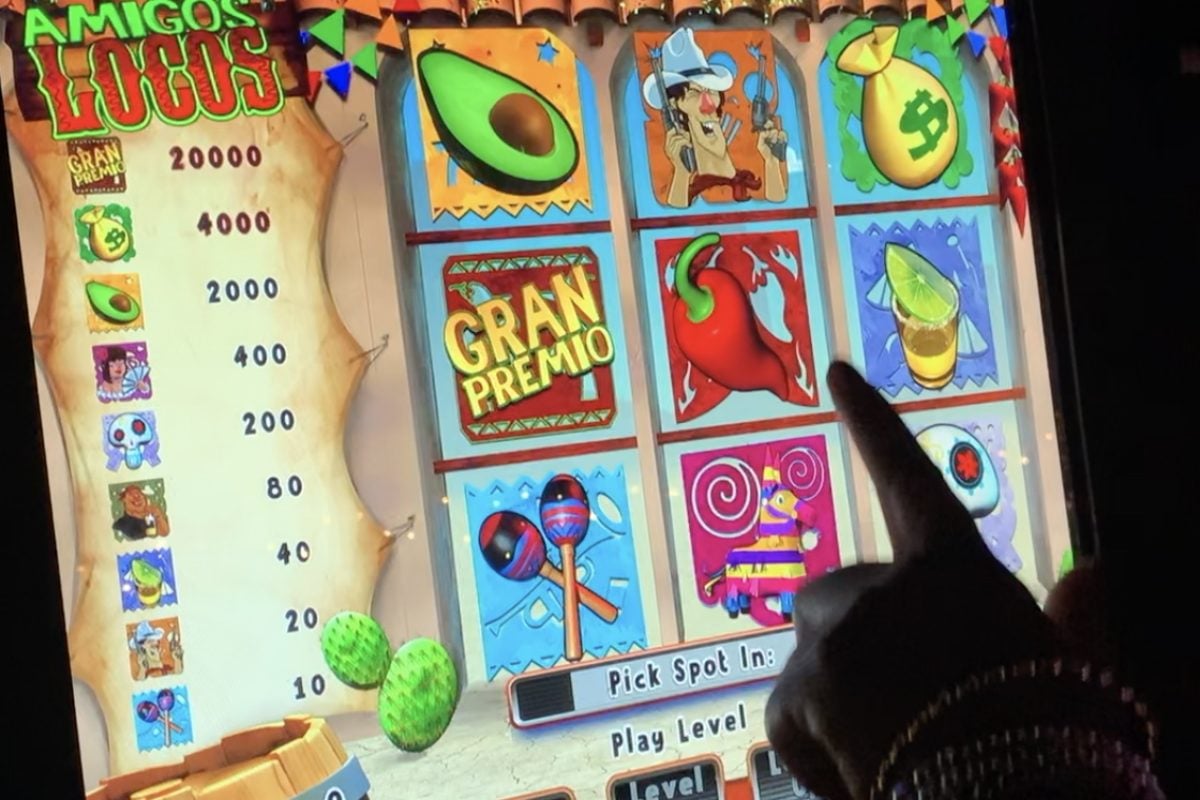
In what’s a major victory for the legal, regulated, and highly taxed gaming industry in the commonwealth, which for years has argued that unregulated and untaxed skill games have poached play from their slot machines, the PA Supreme Court voted nearly unanimously in the opinion that skill games are not immune from the Gaming Act.
In a 66-page opinion, Justice David Wecht said interpretations of the gaming laws passed by the General Assembly require the definition of a skill game to constitute a gambling machine.
Our General Assembly already has spoken clearly on this subject, particularly through a 2017 enactment that added new terms to the Gaming Act’s definition of a ‘slot machine,’ i.e., ‘skill slot machine,’ and ‘hybrid slot machine,’ which make abundantly clear that the ‘skill’ element of the subject devices is not legally significant. That is to say, as it concerns their unregulated operation in unlicensed facilities throughout Pennsylvania, it is not this Court that declares ‘skill games’ to be unlawful. Rather, it is the General Assembly that did so nearly a decade ago,” Wecht wrote.
“If interested parties find the application of the General Assembly’s laws to be undesirable, the proper remedy lies with the same legislative body that wrote those laws. The solution is not for courts to adopt strained and untenable readings of statutes to avoid their application,” the majority opinion continued.
In conclusion, the majority said a machine does not escape the legal scope of a slot machine simply because it incorporates an element of skill.
Legislative Solution
Skill games, commonly branded Pennsylvania Skill, are found in corner stores, restaurants, bars, laundromats, gas stations, social clubs, and elsewhere. Proponents of the games say they’ve helped countless small businesses pay rent and keep people employed amid a most challenging decade, propelled by a pandemic and inflation.
Lower state courts had ruled on the skill games’ side, saying that since the machines are not true games of chance, the state Gaming Act doesn’t apply.
In 2023, a commonwealth court found the games to be “primarily of skill.” The crux of that decision was based on the “Follow Me” feature, a bonus round that tests the player’s memory. Follow Me allows players to improve their payout rates, with an attorney for the industry arguing that skilled memory players can see payout rates above 100%, as high as 105%.
The Pennsylvania Gaming Control Board, Pennsylvania Lottery, PA Department of Revenue, and Pennsylvania State Police have argued that skill games are simply cleverly designed illegal slot machines. Now, the Pennsylvania Supreme Court can be added to that list.
The ruling comes with a 120-day stay, meaning the decision doesn’t take immediate effect, and the games can remain in operation. The stay gives the General Assembly time to consider passing legislation to legalize, regulate, and possibly tax the machines.
Discussing the issue, Gamblers Anonymous tells Casino.org that nearly all of its new members in Pennsylvania cite skill games as part of their gambling-related problems.
Responding to the court decision, Pennsylvania Attorney General Dave Sunday said:
Today’s ruling is a significant victory for consumers, taxpayers and the rule of law in Pennsylvania. The Supreme Court recognized what our office has argued from the beginning – these machines operate as gambling devices and cannot legally exist without the same oversight, regulation, and accountability as other forms of legalized gaming in the Commonwealth. Pennsylvanians deserve protections that ensure games are fair, transparent, and operated within the bounds of the law.”
Industry Response
In a statement to Casino.org, Pace-O-Matic (POM), the leading provider of skill games in Pennsylvania, said it was “disappointed.”
The POM statement in full:
We are disappointed with the decision by the Pennsylvania Supreme Court and strongly believe it does not accurately reflect the facts presented — notably, the same facts that led to a string of lower court rulings affirming the legality of our skill games, including a unanimous Commonwealth Court ruling.
“Sadly, this opinion will have far-reaching consequences, with more than 10,000 Pennsylvania small businesses and fraternal clubs becoming the real victims. They are now potentially left facing an impossible choice: cease operating these games and lose an important source of revenue, or endure a legislative solution that could bring excessive regulation and crippling taxation, which will force them to cease operating these games and lose an important source of revenue. The better option is for the legislature to support a commonsense piece of legislation that will tax and regulate skill games fairly, like the bipartisan bills sponsored by Senator Gene Yaw (R-Bradford) (SB 1079) and Representative Danilo Burgos (D-Philadelphia) (HB 2213).
“We will continue work with lawmakers toward a legislative solution for skill games. Our number one priority continues to be supporting our small business and nonprofit partners across the commonwealth. Pace-O-Matic will always abide by the rule of law.”
PlayPA for Charity, which advocates for the modernization of charitable gaming on behalf of veteran service organizations, fraternal clubs, and other nonprofits, was also frustrated with the Supreme Court’s decision.
PlayPA for Charity’s statement in full:
Today’s decision from the Pennsylvania Supreme Court will have an immediate negative impact on the revenue of Veterans’ organizations and charitable clubs across the Commonwealth. However, there is a simple and immediate path forward to provide financial security and long-term certainty for these organizations: meaningful modernization of Pennsylvania’s Small Games of Chance law.
“Any discussion around the future of skill games must include serious consideration for strengthening the charitable gaming model that directly support nonprofits across the state.
“Unlike skill games, which have revenue-sharing models that divert proceeds away from charities and benefit machine operators first, the small games of chance model is intentionally structured so nonprofits are the primary beneficiary. Small games of chance are regulated, low-dollar games, operated exclusively by eligible nonprofit organizations, with proceeds going to charitable purposes and community reinvestment.
“There is no better time to pass legislation to modernize Pennsylvania’s small games of chance law and provide VFW posts, American Legions, volunteer fire departments, and other charitable organizations with more opportunities to thrive in their communities.”

 Most Read
Another Shooting Near Las Vegas Strip Casino Injures Man
 972,642 views

Vintners Oppose Napa Valley Casino
556,252 views


Conversation (4 comments)