 Main menu

Crime & Scandals
Newly-Formed DOJ National Fraud Division Targets Offshore Sportsbook Service
Posted on: June 22, 2026, 12:19h.
Last updated on: June 22, 2026, 04:39h.


- The Department of Justice’s (DOJ) new National Fraud Enforcement Division secured an early win by prosecuting California resident Jason Feinman, who admitted to operating an illegal offshore sports betting platform from Costa Rica
- Feinman admitted to failing to report $4.2 million in income and using Costa Rican associates to launder gambling proceeds
- Feinman was sentenced to 27 months in prison and ordered to forfeit $3 million
Among the Department of Justice’s National Fraud Enforcement Division’s first legal victories is the takedown of a California resident who helped run illegal sports betting services out of Costa Rica.
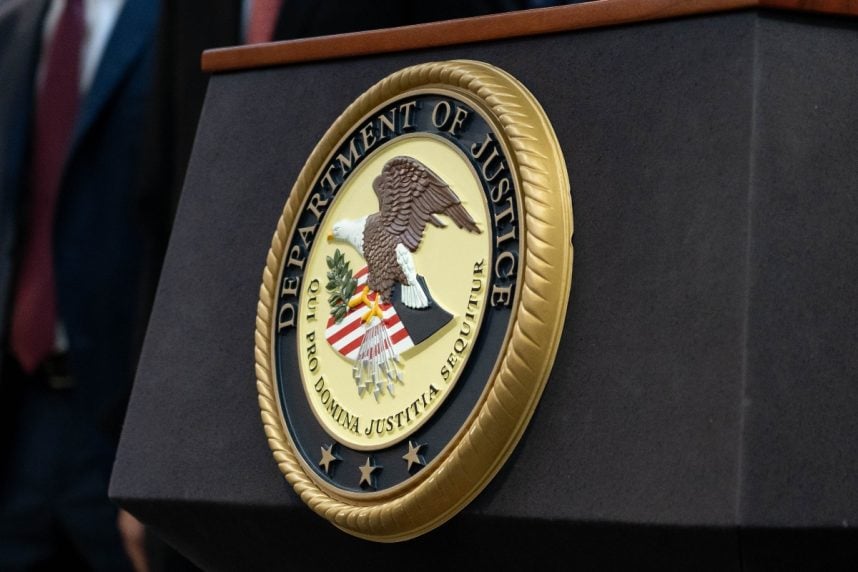
In April, the DOJ announced the new fraud unit, a component of President Donald Trump’s Task Force to Eliminate Fraud. The federal law enforcement agency’s first targets included Calabasas resident Jason Noah Feinman, 52, who prosecutors successfully claimed operated a website used by unlicensed bookies to facilitate their illegal activities.
Feinman pleaded guilty to one count each of tax evasion, operating an illegal gambling business, and money laundering. He was sentenced to 27 months in federal prison.
The federal complaint detailed that Feinman ran an online sports betting website that was based in and operated from Costa Rica. Feinman conspired with five individuals in Costa Rica, who helped him launder the businesses’ money for a cut of the profits.
Federal Prosecution
Feinman admitted to running an unlawful bookmaking service from 2015 through May 2024.
During that time, prosecutors said he “conducted, financed, managed, supervised, directed, and owned an illegal gambling business, specifically, a website that hosted bookmaking businesses involving taking bets on the outcomes of sporting events at agreed-upon odds.”
While Feinman racked in millions of dollars, he reported $0 in federal income tax liabilities for 2018 through 2022. In fact, in 2020, he claimed a $75,503 refund.
The federal complaint alleged, and Feinman acknowledged in his plea, that he failed to report $4.2 million in income. Feinman conspired with the Costa Ricans by giving them cash in exchange for checks written to him or his businesses.
Between May 2018 and January 2024, the complaint detailed that a Costa Rican by the initials “C.K.” provided Feinman with 18 checks, including one for $200,000, in exchange for $1.5 million in cash.
The checks often included references to loans in the memo line.
I am pleading guilty because I am guilty of the charges,” Feinman acknowledged in the plea.
In exchange for his admission of guilt, Feinman was sentenced to a reduced imprisonment of 27 months and forfeiture of $3 million. The charges against him carried a possible imprisonment of 3.5 to five years.
Mysterious Operation
Casino.org has extensively read through the eight-page complaint against Feinman and the 36-page plea deal, and nowhere did the court documents detail the identity of Feinman’s illegal bookmaking business.
The enterprise was a sports betting services platform instead of a consumer-facing online sportsbook. Illegal gambling associates essentially made the bets on the website run by Feinman on their customers’ behalf. Consumers included bettors in California and Costa Rica.
Costa Rica is a hotspot for offshore online casinos and sportsbooks, as the country does not have a gaming regulatory authority or require licenses for such businesses to set up shop. Instead, iGaming and internet sports betting businesses just need to incorporate, which costs about $4,000. Annual renewals are around $3,000.

 Most Read
Another Shooting Near Las Vegas Strip Casino Injures Man
 972,542 views

Vintners Oppose Napa Valley Casino
556,166 views





Conversation (0)
Be the first to comment on this article.