 Main menu


Collegiate Sports
Fair Play Enforcement Act: Colleges Could Face Millions in Fines Under New Bill
Posted on: October 17, 2026, 01:28h.
Last updated on: October 19, 2026, 04:03h.


Key Points
- Bipartisan lawmakers introduced the Fair Play Enforcement Act, which would penalize colleges for fielding athletes who previously played professionally or bet on college games
- The bill proposes federal excise taxes of 5% of athletic department gross receipts for a first violation
- The legislation does not clarify whether betting on college sports through prediction markets would trigger penalties


Prompted by recent eligibility controversies at LSU, bipartisan federal legislation would levy massive tax penalties on colleges that field former professional athletes or student-athletes with gambling violations.
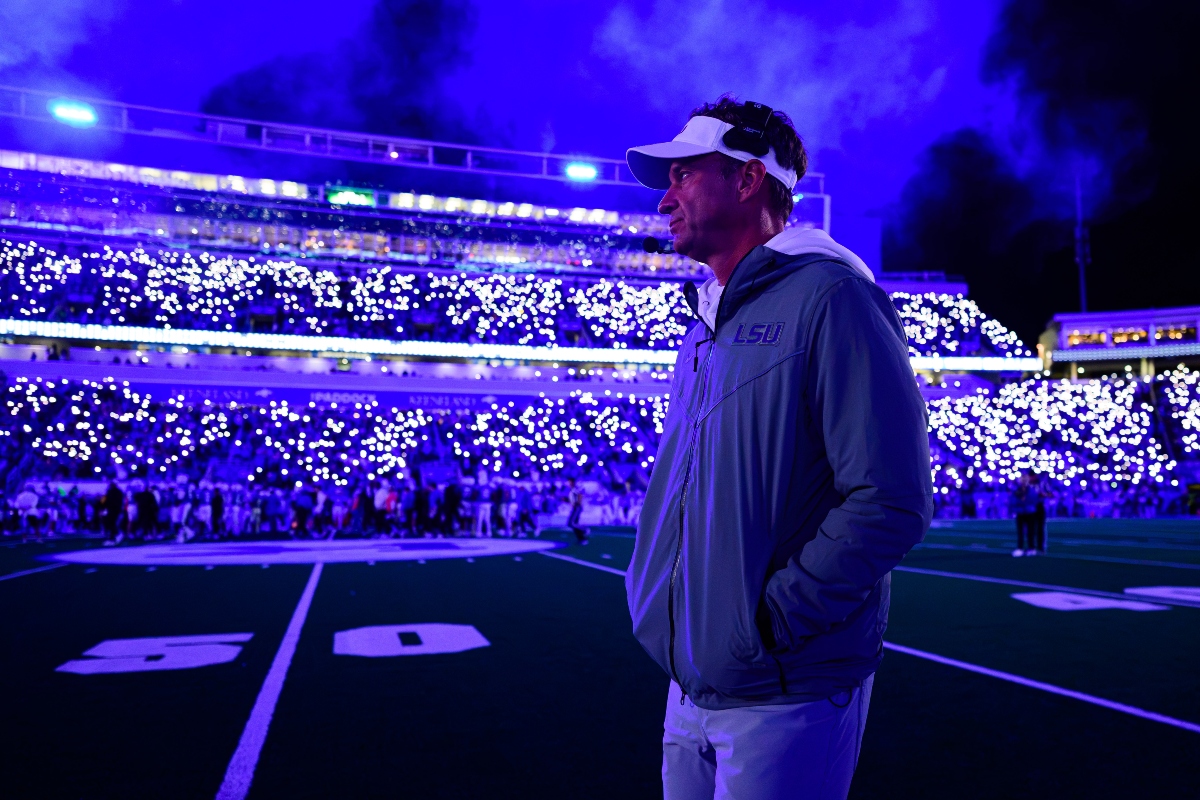
U.S. Representatives Adrian Smith (R-Neb.) and Brendan Boyle (D-Pa.) introduced the Fair Play Enforcement Act earlier this month. The lawmakers say the bill would hold colleges and universities accountable for fielding athletes who violate established standards of fair competition.
College athletics have a long history of bringing people together, fostering competition, and teaching us what it means to represent something bigger than ourselves. Unfortunately, recent developments continue to put the values and traditions that make college sports unique at risk,” said Smith.
“College sports depend on honesty and fair play. Schools should not be fielding players who have bet on games or who have been on professional sports teams. Our commonsense legislation creates a financial consequence for schools that cross that line and helps protect the integrity of college athletics,” added Boyle.
Tiered Excise Tax Structure
If passed into law, the Fair Play Enforcement Act would require college athletic departments to thoroughly vet incoming freshmen and transfer students before allowing them to compete.
The bill imposes a federal excise tax on any school that “knew or reasonably should have known” it fielded an athlete who previously bet on college sports or played professionally in that sport. Crucially, the restriction on professional play applies only to the specific sport in question—meaning a former NFL player could still play college baseball, but would be barred from college football.
Under the bill’s enforcement mechanism, first-time offenders would face a federal excise penalty equal to 5% of the school’s gross athletics receipts. That penalty escalates to 10% for a second violation and 20% for any subsequent offenses.
For a large sports school like Penn State, a first offense could cost almost $13 million. A second offense would be $25.5 million, and a third offense would be $51 million.
Speaking with News Channel Nebraska, Smith said he hasn’t yet spoken with officials at the University of Nebraska.
“I am proposing a tax be levied on a university that would be complicit with these athletes. We just introduced the bill. I am eager to hear from various universities,” Smith said.
Prediction Markets Leave Unanswered Questions
The legislation currently defines an excluded gambler as anyone “who has placed any wager (without regard to the manner in which placed) with respect to any intercollegiate athletic event or competition.”
However, the bill does not explicitly clarify whether trading college sports event contracts on financial prediction markets constitutes an excluded wager.
Representative Smith has separately pushed for tighter federal regulation around derivative trading. He is a chief co-sponsor of the PREDICT Act (Preventing Real-time Exploitation and Deceptive Insider Congressional Trading Act), which seeks to curb insider trading on prediction markets by federal government officials.


 Most Read
Another Shooting Near Las Vegas Strip Casino Injures Man
 973,001 views

Vintners Oppose Napa Valley Casino
556,590 views


Conversation (2 comments)