 Main menu

Financial
Benchmark Initiates Boyd Gaming with Buy Rating, $100 Target as M&A Loom
Posted on: June 22, 2026, 04:34h.
Last updated on: June 23, 2026, 05:06h.


- Analysts believe Boyd Gaming is perfectly positioned to cash in as a wave of merger-and-acquisition (M&A) activity sweeps the casino industry
- As rival casinos consolidate, Boyd’s highly coveted portfolio of Las Vegas Locals properties will gain massive “scarcity value”—commanding a premium from investors
- Thanks to a rock-solid balance sheet, Boyd has the financial flexibility to snap up prime casino assets divested by competitors that are going private
Shares of Boyd Gaming (NYSE: BYD) jumped nearly 2% on Monday (June 21) after Benchmark initiated coverage on the regional casino operator with a ‘Buy’ rating, noting that the company is uniquely positioned to win big in a shifting casino market.
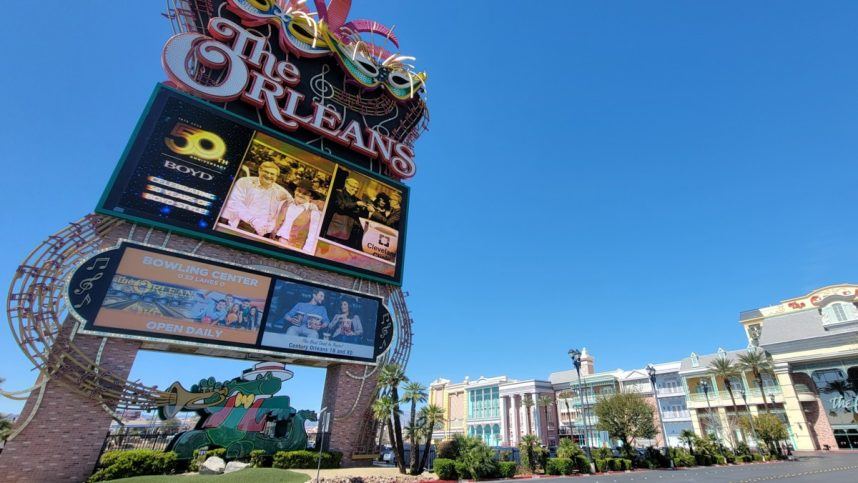
Benchmark analyst Mike Hickey started coverage of the Orleans operator with a “buy” rating and a $100 price target, implying upside of 15.8% from today’s closing price.
In a broad report to clients, Hickey highlights Boyd’s strong pattern of capital allocation, a robust growth pipeline, vibrancy in the Las Vegas locals market, encouraging consumer trends and a wave of casino industry consolidation as potential catalysts for the stock.
Analysts point to Boyd as a natural buyer for any casino assets that Caesars Entertainment (NASDAQ: CZR) may be forced to sell during its upcoming takeover by Golden Nugget owner Tilman Fertitta. The speculation comes amidst a historic reshuffle on the Las Vegas Strip, where MGM Resorts International (NYSE: MGM) is also weighing an $18 billion buyout offer from billionaire Barry Diller.
Recent activity involving Caesars and MGM Resorts has increased investor focus on gaming asset values, strategic alternatives, and the shrinking universe of publicly traded gaming operators,” observes Hickey. “We believe Boyd’s strong balance sheet positions the company to evaluate potential acquisition opportunities that may emerge from future asset divestitures.”
Las Vegas-based Boyd has one of the casino industry’s strongest balance sheets and generated operating cash flow of $977 million last year, confirming it has the resources with which to go shopping if rivals’ properties hit the market.
‘Scarcity Value’ Could Boost Boyd
As of yet, MGM has done no more than confirm it received Diller’s offer, but in a hypothetical scenario, both that company and rival Caesars — the two largest operators on the Las Vegas Strip — will eventually be privately held entities.
That would leave Wynn Resorts (NASDAQ: WYNN) as the lone stock investors could tap to express views on the Las Vegas Strip, but Wynn is a somewhat flawed tool for doing that because it generates the bulk of its earnings and revenue in Macau.
Translation: the population of publicly traded casino stocks of companies with significant Las Vegas exposure of any kind is likely to be lower. Hickey sees Boyd “benefiting from increased scarcity value as operators leave the public market.”
Boyd, the dominant operator of casinos in downtown Las Vegas, and Red Rock Resorts (NASDAQ: RRR) would be the remaining publicly traded operators with heavy Las Vegas footprints assuming both Caesars and MGM go private.
Boyd Likely to Be Choosy
With takeover proposals for Caesars and MGM on the table, asset divesture speculation has largely centered on the former due to geographic overlap between that operator and Fertitta’s Golden Nugget. Some analysts believe it’s essentially a sure thing that voluntary and forced asset sales will be needed to get that deal across the finish line.
Whispers persist that Boyd Gaming could emerge as a buyer for select Caesars and Golden Nugget properties that hit the market during the upcoming merger.
However, the ‘Suncoast operator’ will undoubtedly be a choosy shopper. Management is expected to focus strictly on venues large enough to generate high-margin, long-term returns, while completely avoiding properties where a third-party landlord owns the real estate. Fortunately for shareholders, Boyd doesn’t need a deal to survive—giving it the ultimate luxury of playing hard to get.
“While Boyd’s investment case remains primarily driven by operating performance, free cash flow generation, and capital allocation, we believe ongoing industry consolidation provides incremental valuation support, increases the scarcity value of remaining public gaming equities, and creates opportunities for well-capitalized operators to participate in industry asset rationalization should attractive assets become available,” concludes Hickey.

 Most Read

Another Shooting Near Las Vegas Strip Casino Injures Man
 972,766 views

Vintners Oppose Napa Valley Casino
556,370 views


Conversation (0)
Be the first to comment on this article.