 Main menu

Las Vegas
Trump Administration Applies Pressure for Colorado River Water Rights Deal
Posted on: December 22, 2025, 03:10h.
Last updated on: December 22, 2025, 11:01h.


The Trump administration is turning up the pressure on the seven Western states that need to cut a deal to decrease their water usage from the Colorado River. With negotiators for the states (Arizona, California, Nevada, Colorado, New Mexico and Wyoming) beyond deadlocked, the fed is threatening intervention that would, according to Politico, “almost certainly trigger a Supreme Court fight.”
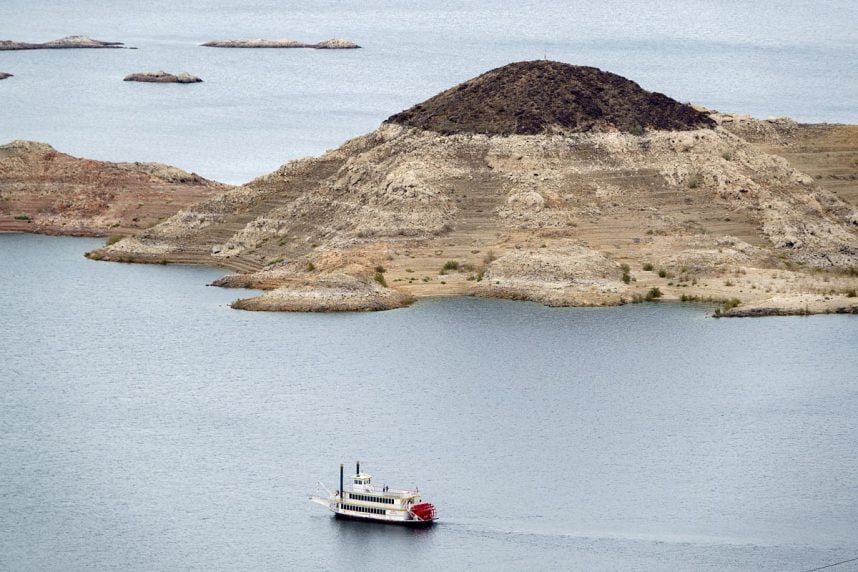
Rules governing the division of the river’s water don’t expire until the end of next year. But, because time is needed for environmental reviews and approvals from several legislative bodies, the US Department of the Interior (DOI) has given the states less than 60 days to reach a new water-sharing agreement.
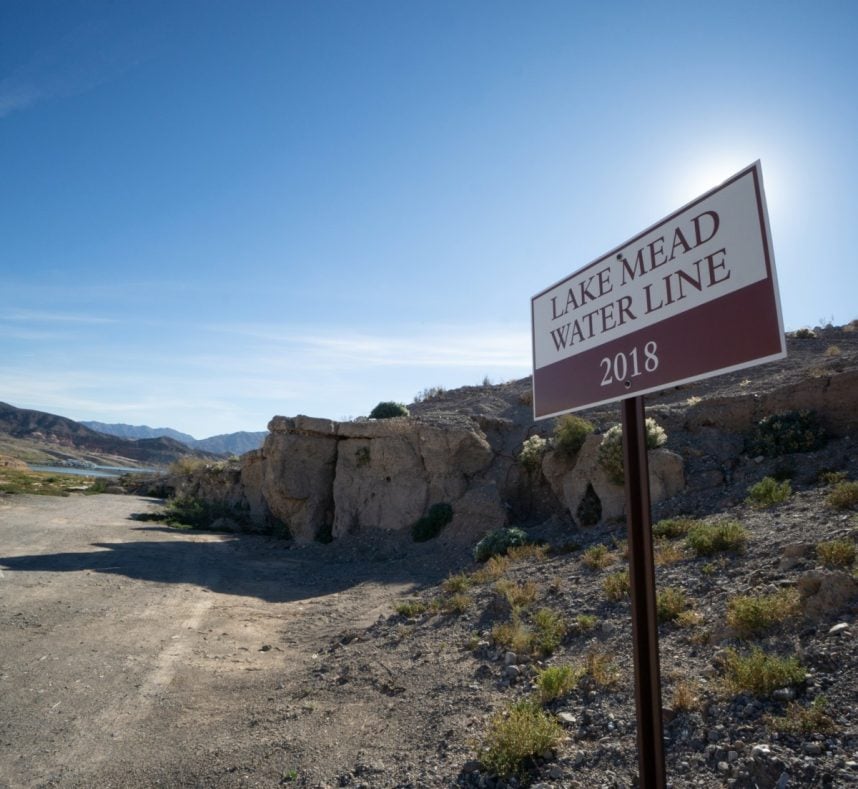
“Give your commissioners room to negotiate and room to compromise — and if you can’t do that, send us representatives that have the authority to best serve your interests,” assistant DOI secretary Andrea Travnicek said during the Colorado River Waters Users Association conference at Caesars Palace in Las Vegas on December 17.
For nearly two years, the seven Western states have been locked in a hardening stalemate over how to shrink their collective water use, this as the Hoover Dam careens toward thresholds that engineers and power managers have spent decades trying to avoid.
Lake Mead, the reservoir created by the dam, currently sits at 1,062 feet above sea level, or 32% of capacity. That’s only 21 feet higher than its all-time low of 1,041 feet in July 2022. And that number already reflects a recently reported 3-foot bump received from heavy California rains.
If the lake falls below 895 feet, it will reach dead pool. This is the point at which gravity will no longer allow water to release downstream from the dam, cutting between 30-35 million people in California and Arizona off from their main water source.
S*** Outta Water
The following regions would face unprecedent repercussions if the Hoover Dam were allowed to reach dead pool…
| Region | % of Its Water from the Colorado |
|---|---|
| 1. Imperial Valley, Calif. | ~100% |
| 2. Tucson, Ariz. | ~70-100% |
| 3. San Diego, Calif. | ~50-70% |
| 4. Phoenix, Ariz. | ~40% |
| 5. Los Angeles, Calif. | ~20-30% |
Note: Percentages are approximate and can fluctuate based on drought conditions, conservation, transfers and alternative sources. Data are from water authority reports (e.g., IID, Tucson Water, SDCWA, City of Phoenix, MWD/LADWP) and recent studies (2023-2025).
Notice that Las Vegas wasn’t listed? That’s because it’s in no immediate danger of running out of water — even though it draws 90% of its supply from Lake Mead!
And that’s because in 2017, the Southern Nevada Water Authority had the foresight, and the funding, to install a deeper intake pipe. This will ensure that the region remains hydrated for the foreseeable — or at least until the water level slips below 860 feet above sea level, where the pipe was installed. (Bizarrely, Vegas will benefit from the dam going dead pool, since any water that can no longer flow downstream will produce a conservation bump.)
Tick Tock
Nature is accelerating the crisis even faster, as inflows to Utah and Arizona’s Lake Powell were just 81-84% of average this year. Without an unusually wet winter, new projections from the Bureau of Reclamation suggest that Lake Powell could drop below Glen Canyon Dam’s hydropower intakes next fall.
Interior Secretary Doug Burgum has been attempting to convene the seven governors for high‑level talks, according to Politico, though no meetings have yet to materialize.
Negotiators can’t even agree on a short‑term “Phase 1” plan covering only five years. Under that proposal, Arizona, California and Nevada would collectively cut use by 1.5 million acre‑feet, while the four Upper Basin states would launch a conservation program to slow the decline of Powell — and by extension, protect Hoover Dam’s inflows.
And even this seemingly impossible goal is is widely acknowledged as an insufficient stopgap.
“The time for serious negotiations is now,” Travnicek said.

 Most Read

Another Shooting Near Las Vegas Strip Casino Injures Man
 972,624 views
Vintners Oppose Napa Valley Casino
556,232 views


Conversation (0)
Be the first to comment on this article.