 Main menu

Prediction Markets
Prediction Market ETFs Shouldn’t Be Approved, Says Expert
Posted on: June 1, 2026, 01:20h.
Last updated on: June 8, 2026, 08:45h.


- Several issuers want to bring ETFs based on political event contracts to market
- The SEC recently delayed those efforts
- At least one financial expert says regulators should reject these ETFs
Several issuers of exchange traded funds (ETFs) are attempting to bring products to market based on political event contracts trading on prediction markets, but at least one expert believes that’s a bad idea.
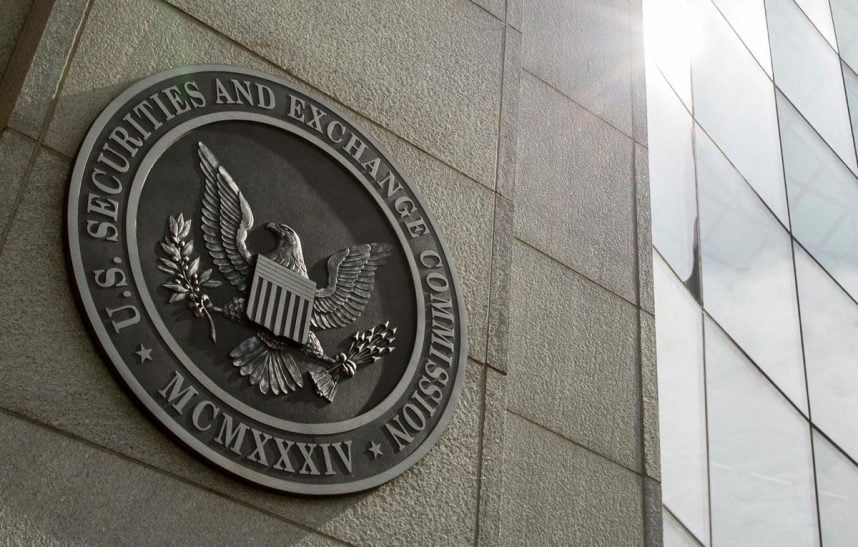
The Securities and Exchange Commission (SEC) recently halted plans by Bitwise Investments, GraniteShares and Roundhill Investments to launch a slew of ETFs based on which political parties will control either chamber of Congress or the presidency.
Morningstar analyst Jeffrey Ptak says it’s a good thing the commission is taking a deliberative approach to the election prediction market ETFs.
Even if event contracts and, thus, these ETFs make it simpler than ever to bet on an event, investors still have to contend with the reality that by the time they place that wager, the odds already reflect that outcome’s likelihood,” he observes. “In a way, it’s not too different from forming a view that something will be ‘good’ for a stock or ‘bad’ for a bond; incorrectly assuming that if that scenario pans out, it’ll yield a tidy profit (which it won’t if that ‘something’ is already baked into the price).”
Prior to the SEC halt, it appeared likely election-linked prediction market ETFs from GraniteShares and Roundhill would debut last month, but SEC Chairman Paul Atkins intervened, noting the proposed funds introduce “novel questions.” The commission is now in the midst of a public comment period on the ETFs.
Prediction Market ETFs Have Flaws
Prior to the industry’s headfirst dive into sports event contracts, political derivatives — particularly those based on the 2024 presidential election — put companies such as Kalshi and Polymarket on the map.
Today, election-linked event contracts remain important sources of non-sports volume for prediction market operators and that’s likely to increase with 2026 being a midterm election year. That is to say there’s ample appetite for political trading on yes/no exchanges and that may carry over to the ETF space, but that doesn’t mean the proposed products are perfect.
If the SEC eventually approves the political prediction market ETFs, the core audience, as is the case with leveraged ETFs, may well be tactical short-term traders, not buy-and-hold investors.
“Traders might hop in and out depending on their assessment of the odds the ETFs are pricing in (which can be inferred from changes in NAV) at various points in time,” adds Ptak. “Others will hold through the event’s occurrence, collecting whatever proceeds come to them based on the outcome.”
Political Prediction Market ETFs Won’t Be Cheap
Even when stripping the dozens of ETFs that have fee waivers, investors can access scores of basic equity and fixed income funds with annual fees of just one, two or three basis points per year. However, the cost efficiencies market participants are accustomed with pure beta ETFs are unlikely to be found with political prediction market ETFs.
Ptak argues those funds, if approved, are likely to be expensive. One reason for that is the presumed use of swaps, which are often priced in accordance with the Secured Overnight Financing Rate (SOFR), plus a spread to compensate the swaps’ counterparty.
“That spread presumably won’t be as wide as you’d see on contracts tied to truly idiosyncratic, difficult-to-hedge events like who will host the Academy Awards,” Ptak adds.
“But it’s still likely to exceed 100 basis points, which, taken together with SOFR, would push the swap cost to nearly 5%. That is a very dear price to pay for exposure to something that has an expected return of zilch.” the analyst concluded.

 Most Read

Another Shooting Near Las Vegas Strip Casino Injures Man
 972,740 views

Vintners Oppose Napa Valley Casino
556,343 views


Conversation (0)
Be the first to comment on this article.