 Main menu

Prediction Markets
Minnesota Becomes First State to Ban Prediction Markets, Prompting Immediate Federal Lawsuit
Posted on: May 20, 2026, 10:15h.
Last updated on: May 21, 2026, 05:38h.


- Minnesota has officially become the first state in the nation to pass an outright ban on prediction markets, transforming legal operators into felons overnight
- The CFTC swiftly launched a federal lawsuit against the state to block the law, declaring an unprecedented clash over who regulates commodities trading
- Striking a sharp political blow, CFTC Chairman Michael Selig publicly slammed Governor Tim Walz, accusing him of “putting farmers last” by prioritizing special interests over agricultural hedgers
Minnesota became the first state in the nation to outlaw prediction markets on Monday after Gov. Tim Walz signed a sweeping ban. The historic move drew an immediate, fierce rebuke from the Commodity Futures Trading Commission (CFTC).
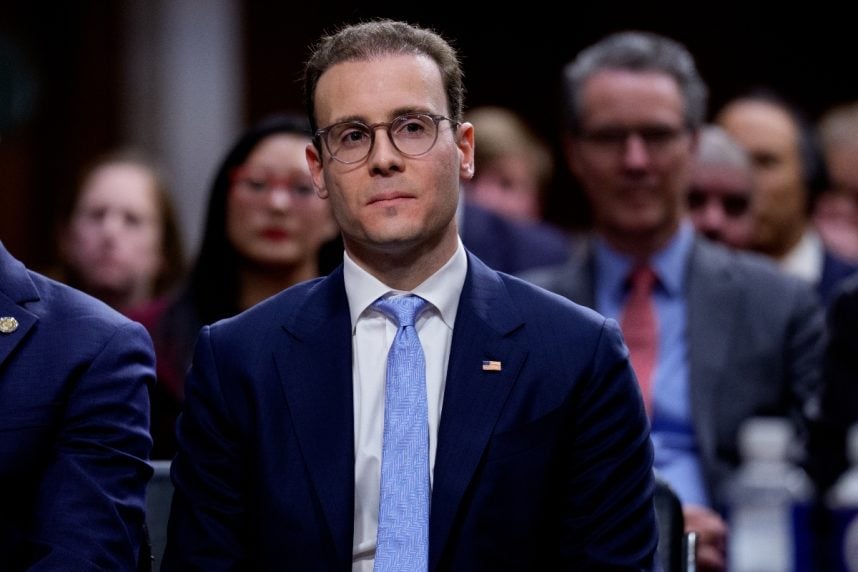
Included in SF 4760, an omnibus public safety bill, are clauses making it a felony to operate or assist in the operation of a prediction market in Minnesota.
The CFTC, which is the federal regulator overseeing prediction markets, says the ban runs counter to Minnesota’s status as a major agriculture state and disadvantages the state’s farmers, many of whom have long relied on contracts regulated by the commission.
This Minnesota law turns lawful operators and participants in prediction markets into felons overnight,” said CFTC Chairman Michael Selig in a statement. “Minnesota farmers have relied on critical hedging products on weather and crop-related events for decades to mitigate their risks. Governor Walz chose to put special interests first and American farmers and innovators last.”
Agriculture producers have long used commodities futures contracts, derivatives regulated by the CFTC, for hedging and risk management purposes.
In Minnesota, CFTC Sees Arizona Parallels
While Minnesota is the first state to ban prediction markets, it’s not the first to go down the road of looking to block yes/no exchanges.
In March, Arizona Attorney General Kris Mayes (D) filed a 20-count criminal complaint — including some felonies — against Kalshi, the largest US prediction market operator, asserting the company violates state laws by offering sports event contracts and derivatives tied to election outcomes.
The CFTC quickly sued Arizona and a federal judge recently granted Kalshi a preliminary injunction, barring Arizona from pursuing criminal charges against the company.
“In a lawsuit filed by the CFTC, a federal court in Arizona recently issued a preliminary injunction blocking Arizona from using its gambling laws to criminally prosecute prediction market operators,” according to the CFTC. “The Commission has also filed lawsuits against Connecticut, Illinois, and New York, and has filed amicus briefs in the U.S. Court of Appeals for the Sixth and Ninth Circuits and the Supreme Judicial Court of Massachusetts.”
Plenty of Political Implications
Walz, the 2024 Democrat nominee for vice president, banning prediction markets in Minnesota may introduce political scrutiny, particularly at a time when the state is under fire for widespread fraud allegations.
On Sunday, the Minnesota Star Tribune published an article in which sources said it was “an open secret” that state officials failed to act on signs of fraud in the state. The paper’s CEO and publisher is Steve Grove, who served as the Commissioner of the Minnesota Department of Employment and Economic Development (DEED) under Walz.
The prediction market industry is often perceived as right-leaning, due in part to Donald Trump Jr. serving as an advisor to both Kalshi and Polymarket.
Behind the scenes, however, the industry is aggressively courting both sides of the aisle. Kalshi recently hired lobbyists with extensive ties to Democratic politicians, while the newly formed Coalition for Prediction Markets (CPM) is led by Sean Patrick Maloney, a New York Democrat who spent a decade in Congress.
The CFTC’s case against Minnesota landed on the desk of US District Judge Laura Provinzino who was appointed to that role by former President Joe Biden.

 Most Read

Another Shooting Near Las Vegas Strip Casino Injures Man
 972,595 views

Vintners Oppose Napa Valley Casino
556,214 views


Conversation (0)
Be the first to comment on this article.