 Main menu

Politics
Elon Musk’s $1M Election Giveaway Was ‘Far From Random,’ Says Federal Judge
Posted on: August 19, 2026, 06:42h.
Last updated on: August 20, 2026, 05:38h.


Key Points
- Federal judge Robert Pitman ruled a jury could find America PAC’s heavily vetted $1 million selection process was not random
- Pitman said jurors could infer Musk knew recipients were not randomly selected or was reckless in claiming they would be
- Musk defeated a breach of contract claim but still faces the fraud case and was previously ordered to give deposition testimony


A federal judge in Texas has refused to dismiss a fraud lawsuit against Elon Musk over his controversial $1 million election “lottery,” ruling that a jury could find its supposedly random selection process was actually rigged.
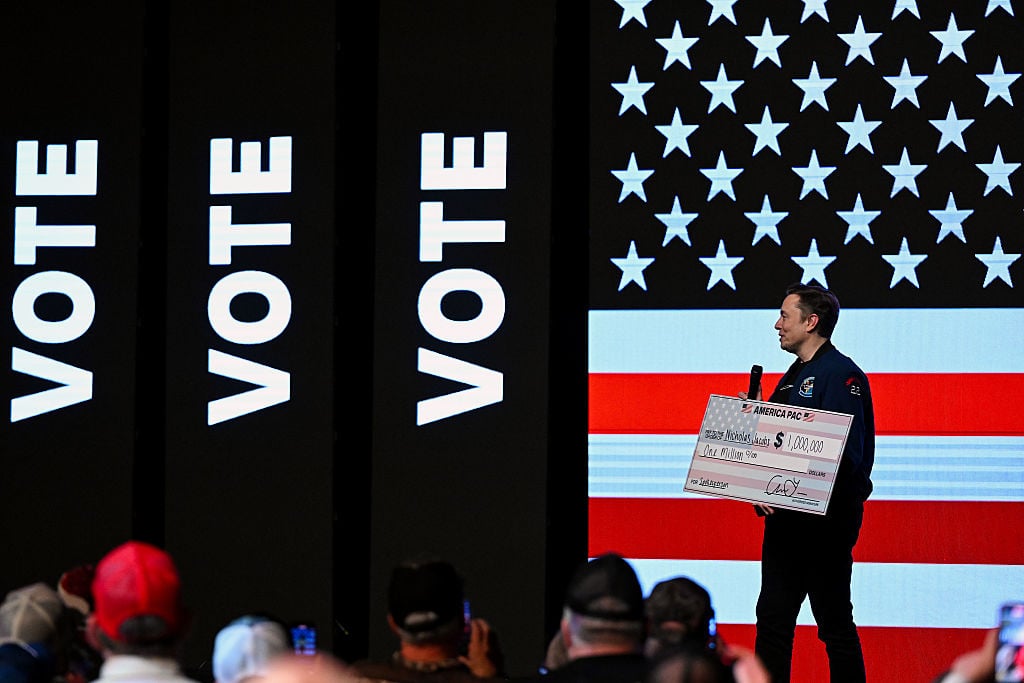
U.S. District Judge Robert Pitman in Austin, Texas, denied a motion to dismiss a fraud claim brought against Elon Musk and his pro-Trump political action committee, America PAC, by plaintiff Jacqueline McAferty.
Swing States Sweepstakes
In the run-up to the 2024 presidential election, Musk and America PAC promoted what appeared to be a $1 million-a-day giveaway for registered voters in seven swing states, with Musk promising that recipients would be chosen “randomly.”
Entrants were required to hand over personal data and sign a petition supporting free speech and gun rights.
The Philadelphia District Attorney’s Office subsequently sued Musk and America PAC in Pennsylvania state court to block the giveaway, accusing them of running an illegal lottery.
While the Pennsylvania judge ultimately declined to halt the promotion, the hearing revealed crucial details about how the payouts actually worked.
No Chance
Musk’s defense attorney, Chris Gober, acknowledged in court that the $1 million recipients were not picked by pure chance. Instead, they were selected in advance based on their suitability to serve as paid spokespeople for America PAC.
Following those revelations, McAferty and fellow Arizona resident Joy Harvick filed class-action lawsuits accusing Musk and America PAC of tricking voters into surrendering personal information for a sweepstakes they had no actual chance of winning.
McAferty argued she would never have submitted her data had she known the drawing was not random.
Legal Standard Met
Judge Pitman found that McAferty plausibly alleged she was misled when told the process was random.
Addressing defense arguments that “randomly” was too vague to be legally binding, Pitman noted that potential recipients underwent an extensive vetting process examining their criminal history, social media activity, and political alignment.
Pitman ruled that a jury could reasonably conclude the vetting process contradicted claims of a random selection, finding sufficient evidence to infer that Musk knew or recklessly disregarded that the payouts were not random.
However, Pitman dismissed McAferty’s breach of contract claim with prejudice, ruling that the petition sign-up did not establish an enforceable contract.

 Most Read
Another Shooting Near Las Vegas Strip Casino Injures Man
 972,133 views

Vintners Oppose Napa Valley Casino
555,786 views


Conversation (0)
Be the first to comment on this article.