 Main menu


Prediction Markets
Pentagon Chief Pete Hegseth Warns Prediction Markets Pose Insider Intelligence Threat
Posted on: October 23, 2026, 02:28h.
Last updated on: October 26, 2026, 06:16h.


Key Points
- Defense Secretary Pete Hegseth warned military personnel that using nonpublic information to trade prediction markets is prohibited
- Hegseth said foreign adversaries could analyze trading patterns to anticipate US military operations
- A watchdog group flagged 152 prediction market accounts suspected of insider trading on military events, reporting a 97.2% win rate


Defense Secretary Pete Hegseth has formally banned U.S. military personnel and defense employees from using nonpublic information to trade on prediction markets, warning that insider betting poses severe national security risks.
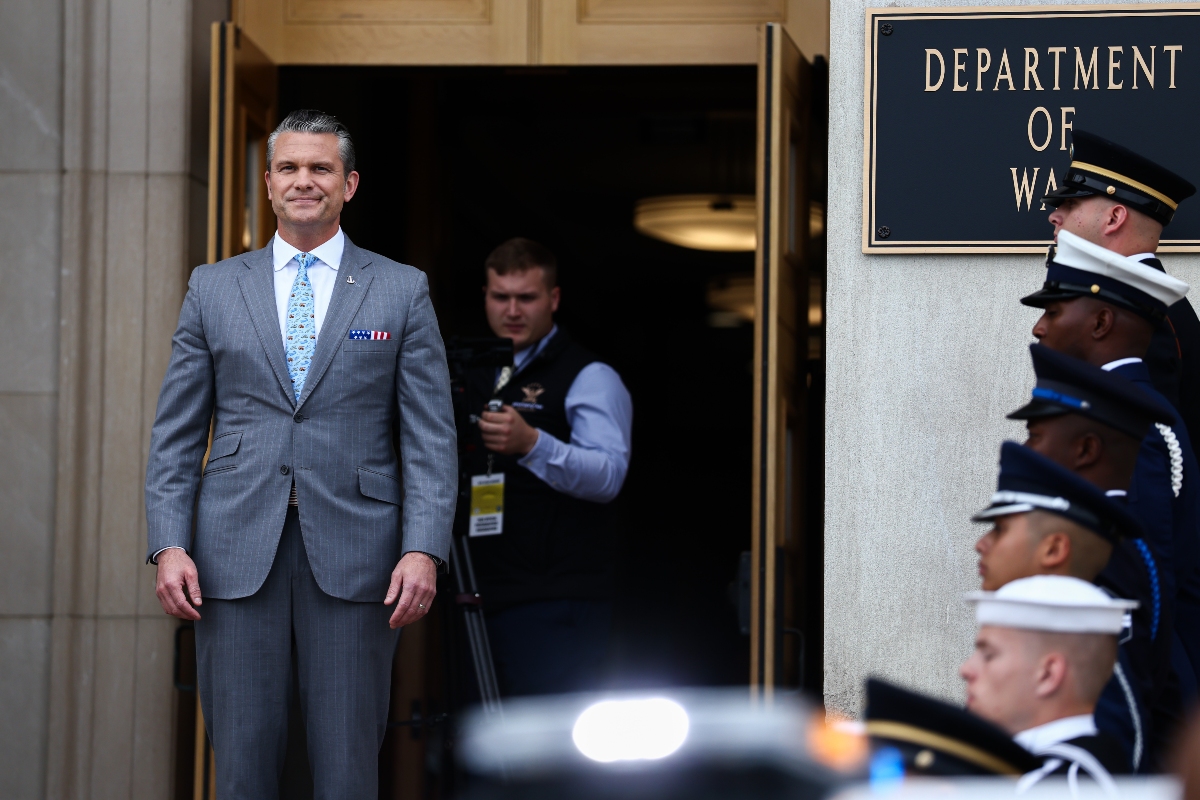
In a letter dated Oct. 20, 2026, Hegseth, secretary of the Department of Defense—known as the Department of War under President Donald Trump’s second administration—reminded the Pentagon and all department personnel that they are prohibited from engaging in financial transactions using nonpublic information, either directly or through a third party.
The ban applies to all financial exchanges, including prediction markets as well as traditional sports betting platforms.
Inside Information: The Threat of Geopolitical Betting
According to Hegseth, foreign adversaries are tracking prediction markets for insider trading patterns that might reveal upcoming US military operations.
Make no mistake why this matters. Our enemies watch movements in these markets,” Hegseth said.
“When an American service member, intelligence professional, or other Department civilian engages in a financial transaction on a military outcome, they create a signal. That signal can be aggregated, correlated, and exploited by hostile foreign intelligence services to anticipate our movements, targets, and timing,” Hegseth wrote.
The defense secretary noted that such signals put U.S. military service members in heightened danger.
“The men and women who carry our flag into harm’s way deserve a force that protects them—not that exposes them to the enemy for personal gain,” the secretary said.
Hegseth said that beyond operational security, a financial stake warps judgment and dilutes the “warrior ethos.”
“We are restoring lethality, discipline, and singular focus on fighting and winning our nation’s wars, and nothing should distract us from that sacred mission. Not entertainment. Not a payout,” Hegseth concluded.
Trading on Confidential Secrets
Hegseth’s directive follows federal charges filed by the Justice Department in April against U.S. Army Special Forces Master Sgt. Gannon Ken Van Dyke, accused of using classified military secrets to profit roughly $409,000.
The federal indictment alleged that Van Dyke placed several perfectly timed trades totaling over $32,500 on when Venezuelan leader Nicolás Maduro would be removed from power.
The federal government alleges that Van Dyke participated in the planning and execution of the US military operation to capture Maduro. The charges claim Van Dyke used his access to classified information to personally profit by trading on the Polymarket prediction market.
In August, the Anti-Corruption Data Collective flagged 152 prediction market accounts for trading on event contracts tied to US military operations suspected to be using nonpublic information. The accounts in question recorded a remarkable win rate of 97.2%, profiting $8 million on $2 million in trades.


 Most Read
Another Shooting Near Las Vegas Strip Casino Injures Man
 973,077 views

Vintners Oppose Napa Valley Casino
556,667 views


Conversation (0)
Be the first to comment on this article.